 English (UK) ▾
 Nederlands
 English (US)
 Deutsch
 Italiano
 Português
 Español
 Français
Special Needs Volunteering Abroad: What the Work Really Is, Who Can Do It and What It Costs
Blog · September 9, 2026 · 11 min read · By Luni
Special needs volunteering abroad means supporting the local staff of a special school, day centre or day hospital that works with children and adults with disabilities — assisting in classrooms, running play and sensory activities, helping at mealtimes and supporting families. Across Volunteering Solutions’ special needs programmes, placements start from £468 for a week in Delhi and every care placement requires a clean criminal background check before you arrive. You do not need a therapy qualification — but having one changes what you are allowed to do.
This is one of the least honestly written-about causes in volunteering abroad. Provider pages tend to promise “life-changing impact” and skip the parts that actually decide whether the trip works: what a person with no clinical training is genuinely useful for, whether the setting is residential or day care, what languages you need, and whether adults with disabilities are included at all. Below is what the work looks like across seven real placements, using the details published on the programme pages themselves.
What is special needs volunteering abroad?
Special needs volunteering abroad — also called disabled care volunteering — is unpaid work supporting people with intellectual, developmental or physical disabilities at an organisation overseas. Volunteers assist qualified local staff rather than replace them: typical duties are classroom support, one-to-one play and stimulation, help at mealtimes, preparing learning materials, and joining outings. Placements usually run 1–12 weeks and require a criminal background check.
What will you actually do day to day?
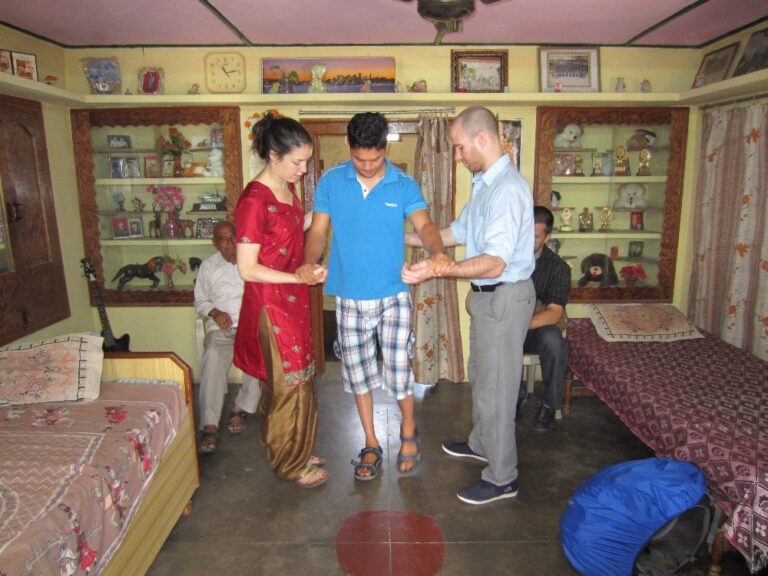
The honest answer is that you will spend most of your time doing two things: giving one person sustained attention that an over-stretched staff member cannot, and taking routine work off that staff member’s hands. Both matter. Neither is glamorous.
In Delhi’s special needs programme that means assisting staff at a special education centre, a skill development centre and an autism centre, teaching specialised skills and finding new ways to get children to participate — on site roughly 10am to 4pm, Tuesday to Friday. In Cusco it means assisting teachers across kindergarten, primary and deaf sections of a specialised school for students aged 3 to 20, running art, craft and music sessions, and keeping students safe on trips to the park, library or shops. In Arusha it means caregiving, supervision, helping at mealtimes and playing with children at a centre that opened in 2023, where around 80% of the children have cerebral palsy and others are deaf, blind, autistic or have Down syndrome.
| Placement | Setting | What volunteers actually do |
|---|---|---|
| Delhi, India | Special education centre, skill development centre and autism centre | Assist staff, teach specialised skills, design activities children will join in with, engage with parents and families |
| Arusha, Tanzania | Day centre for children with disabilities | Caregiving, supervision, meals, play, and training for families and the wider community |
| Cusco, Peru | Specialised school, students aged 3–20 including deaf students | Classroom assistance, indoor games, art, craft and music, supervising outings, computer training |
| Hanoi, Vietnam | Preschools and special education centres | Care and play, teaching drawing, singing, basic English and numbers, helping prepare and serve lunch |
| Chiang Mai, Thailand | Care and education centre for children and adults | Support three developmental classrooms in the mornings, then vocational skills sessions |
| Barcelona, Spain | Children’s day hospital | Adapted activities and crafts for babies and children aged 3 months to 10 years, running the family material bank |
| Porto, Portugal | Adaptive surf project | Assist instructors delivering surf lessons to children and people with disabilities, prepare equipment, beach clean-ups |
Do you need a qualification — and what does one unlock?
No. Every one of these placements accepts volunteers with no background in special education, and the requirements pages ask for patience, flexibility and initiative rather than a degree. What a qualification changes is the ceiling on what you are permitted to do, and the programme pages are unusually specific about this:
- No relevant qualification — classroom and care assistance, activities, play, mealtimes, materials, administration and fundraising support. This is the majority of volunteers.
- Occupational therapy or physiotherapy — in Delhi, participants with these skills can contribute in those roles rather than only as general assistants.
- A psychology or therapy licence — in Cusco, you can work directly alongside the school psychologists.
- Special education teaching, physiotherapy, medicine, occupational therapy, developmental psychology, social work or behavioural therapy — in Arusha these are the skills the centre names as its actual need, and qualified volunteers can also assist with physiotherapy, rehabilitation and training parents.
If you are a student in one of those disciplines, that ladder is the single most useful thing to check before you book. It is also why we would rather say plainly: a two-week volunteer with no training is a helper, not a therapist, and any provider implying otherwise is selling you something.
Is it ethical to volunteer with disabled children abroad?

This is the right question to ask, and the answer turns almost entirely on one structural detail: is the placement a day setting or a residential institution?
The evidence against volunteering in residential care is now settled. Better Care Network and Hope and Homes for Children document the same pattern: most children in orphanages are not orphans, disability and poverty are among the main reasons families are separated, and a rotation of short-term volunteer carers causes measurable attachment harm. Disabled children are over-represented in exactly those institutions, which is why “volunteer with disabled children abroad” deserves more scrutiny than most causes, not less.
Every placement described on this page is a day setting — a special school, a day centre, a children’s day hospital, a preschool, a surf project. Children arrive in the morning and go home to their families. The volunteer is an extra pair of hands inside a service the family already uses, not a substitute carer inside the place a child lives. That is a structural difference you can verify yourself on any provider’s programme page before you pay anything.
The second check is safeguarding, and here the standard is simple: every one of these care placements requires a clean criminal background check before you start. Chiang Mai goes further, also asking for a CV and passport copy and stating outright that without the police check you cannot join. If a provider does not ask you for a background check before putting you in a room with vulnerable people, that is the end of the conversation.
Three more things worth looking for, drawn from what these projects publish about themselves: the work is framed as supporting local staff rather than running the service; families and the surrounding community are part of the programme (Arusha explicitly includes training for families); and the organisation is honest about what it lacks. As a certified B Corporation, we would rather lose a booking than place someone somewhere that fails those tests.
What does it cost, and what is included?
Special needs placements sit at the affordable end of volunteering abroad because they are usually urban, day-based and don’t carry conservation or dive costs. Prices below are the current published starting prices; the European projects cost more because European living costs and included extras (Spanish classes, surf lessons, three meals a day) are higher.
| Programme | From | Duration | Minimum age |
|---|---|---|---|
| Special Needs Care and Support, Delhi | £468 | 1–18 weeks | 18 |
| Special Needs Care, Arusha | £531 | 1–12 weeks | 18 |
| Disabled Care, Cusco | £705 | 1–20 weeks | 18 |
| Childcare and special education, Hanoi | £771 | 2–24 weeks | 17 |
| Special Needs Care, Chiang Mai | £884 | 2–12 weeks | 18 |
| Children with multiple disabilities, Barcelona | £1,024 | 1–8 weeks | 18 |
| Surf with Purpose, Porto | £1,219 | 1–12 weeks | 18 |
Always check the programme page for current pricing. The fee typically covers airport pickup, orientation, accommodation, meals on programme days, placement coordination and 24/7 in-country support; flights, visas, local transport, vaccinations and the criminal background check are yours. If you are weighing the total, our breakdown of the real cost of volunteering abroad sets out the numbers that sit outside the programme fee.
Do you need to speak the local language?
Sometimes, and this is the requirement people most often miss. Barcelona requires a basic to intermediate level of Spanish — it is not optional, because you are working inside a Spanish-speaking clinical team (Spanish classes are included once you arrive). In Cusco, beginner-to-intermediate Spanish is listed as an advantage rather than a requirement. The Asian and African placements do not ask for a second language.
Worth noting, too, that a great deal of this work is non-verbal by nature. With children who are non-verbal or at an early developmental stage, the tools are gesture, music, touch, routine and patience — which is one reason volunteers who are not native English speakers do perfectly well on these projects.
It is not only about children
Almost every “special needs abroad” search result assumes you will be working with children. Two of these placements do not.
The Chiang Mai centre, which operates under the Foundation for the Education of Autistic Children and Royal Patronage, supports around 40 people — roughly half children aged 3–18 and half adults over 18 — across three developmental classrooms, from early-stage learners who are mostly non-verbal through to advanced learners building vocational skills. Adults with intellectual disabilities are one of the most neglected groups in this sector, and if that is the population you want to work with, this is a rare placement.
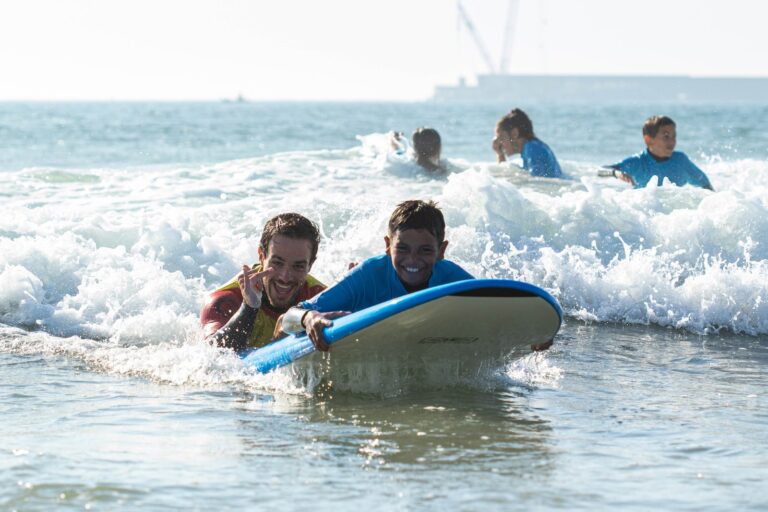
Surf with Purpose in Porto takes a different route again: inclusion through sport. You assist professional instructors giving adapted surf lessons to children and people with disabilities, take four surf lessons a week yourself, and join beach clean-ups. You need to be able to swim; you do not need to have surfed.
And in Hanoi, some of the centres work with children affected by the legacy of Agent Orange, alongside children with autism, cerebral palsy and Down syndrome — a reminder that “special needs” abroad often carries a specific national history behind it.
How to judge a special needs programme before you book
- Is it a day setting or a residential one? Day school, day centre, day hospital, preschool: good. A place children live in: walk away.
- Are you asked for a criminal background check? If not, the provider is not screening anyone else either.
- Does the page say you assist local staff? Programmes that describe you leading therapy or teaching unsupervised are describing a job that should belong to a paid local professional.
- Is there a minimum stay that respects the routine? Chiang Mai and Hanoi ask for two weeks minimum for exactly this reason.
- Does it name the conditions and the setting honestly? Vague copy usually means nobody has visited recently.
- Is your qualification acknowledged, in either direction? Both “you can do more with a licence” and “you cannot do this without one” are signs of a well-run placement.
Related programmes and next steps
If special needs care is not quite the fit, the neighbouring causes overlap heavily: childcare volunteering (see our guide to childcare and community development volunteering), teaching abroad (and the teaching costs and requirements guide) and community development. You can also browse by country — India, Tanzania, Peru, Thailand, Vietnam, Spain and Portugal — or see every option on the special needs care hub.
If you want to talk through which placement suits your background, our in-country teams and coordinators can tell you what a week actually looks like at each one. Get in touch or send us a message below.
Frequently asked questions
Do I need a qualification to volunteer with special needs abroad?
No. All of these placements accept volunteers with no background in special education, asking instead for patience, flexibility and initiative. A qualification in occupational therapy, physiotherapy, psychology, social work or special education does not get you in — it widens what you are allowed to do once you are there, such as working alongside the school psychologist in Cusco or assisting with physiotherapy and rehabilitation in Arusha.
How much does special needs volunteering abroad cost?
Starting prices range from £468 for a week in Delhi to £1,219 for a week in Porto, with Arusha at £531 Cusco at £705 Hanoi at £771 Chiang Mai at £884 and Barcelona at £1,024. Fees usually include airport pickup, orientation, accommodation, meals on programme days and 24/7 in-country support, but not flights, visas, local transport or your background check. Check the programme page for current pricing.
Is it ethical to volunteer with disabled children abroad?
It depends on the setting. Volunteering in residential institutions is widely documented as harmful, because children in them are usually separated from living families and a rotation of short-term carers damages attachment. Day settings are different: a special school, day centre, day hospital or preschool sends children home to their families each evening, and the volunteer supports a service the family already chose. Check which one you are being offered before you pay.
Do I need a criminal background check?
Yes. Every special needs and childcare placement listed here requires a clean criminal background check before you can join, and you pay for it yourself. The Chiang Mai project also asks for a CV and passport copy and states that without the police check you cannot participate. A provider that does not ask for one is a red flag.
Can I volunteer with adults with disabilities, not just children?
Yes, though the options are limited across the sector. The Chiang Mai centre supports around 40 people, roughly half of them adults over 18, in classrooms grouped by developmental stage rather than age, including vocational skills training. Most other special needs placements are child-focused.
How long do I need to go for?
Minimum stays are one week in Delhi, Arusha, Cusco, Barcelona and Porto, and two weeks in Chiang Mai and Hanoi. Longer is better for the people you are working with: routine and familiarity matter more in this cause than in almost any other, and most placements run up to 12–24 weeks.
Ask us about a special needs placement

Luni Chhochoon writes for Volunteering Solutions, a certified B Corporation, covering volunteer abroad programmes, destinations and tips for travelling with purpose.