 English (US) ▾
 Nederlands
 English (UK)
 Deutsch
 Italiano
 Português
 Español
 Français
Volunteer Abroad for Education & Teaching Students
Blog · June 25, 2026 · 9 min read · By Saurabh
Yes — if you are studying education, teacher training or a PGCE in the UK or US, you can volunteer abroad and gain real classroom experience that strengthens both your teaching skills and your CV. You can join individually or travel as a faculty-led student group, supporting lesson planning, literacy and everyday teaching in a partner school overseas. As a certified B Corporation, Volunteering Solutions runs ethical, structured teaching volunteer projects abroad built around cross-cultural and experiential learning, not voluntourism.
What is volunteering abroad for education students?
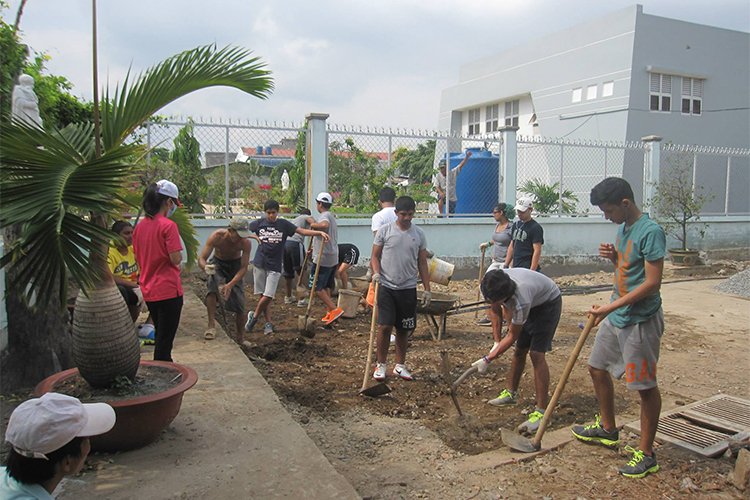
Volunteering abroad for education students means working alongside our in-country teams and local teachers in a partner school overseas — supporting lessons, literacy, conversational English and classroom activities. It gives trainee teachers and education undergraduates hands-on, cross-cultural classroom experience that complements their degree and develops practical pedagogy.
Why is volunteering abroad valuable for education and teaching students?
For anyone heading into teaching, time in a real classroom is the single most useful thing you can put on your CV — and an overseas placement adds a cross-cultural dimension that UK and US employers increasingly value. You learn to adapt your lesson delivery for mixed-ability groups, limited resources and pupils who may speak English as an additional language. That adaptability is exactly the kind of evidence trainee teachers need when building a portfolio toward QTS in the UK or state certification in the US.
Does it help with employability and a teaching career?
It does. A structured volunteer placement demonstrates initiative, resilience and genuine classroom experience before you even start your NQT or ECT year. Interview panels for teaching roles and PGCE/Ed programs look for candidates who can talk credibly about behavior management, differentiation and working with diverse learners. A few weeks supporting lessons abroad gives you concrete, story-rich examples to draw on. It also signals the cross-cultural awareness and global-citizenship values that many schools — particularly international and IB schools — actively seek.
How does it relate to QTS and teacher training?
While an overseas volunteer placement does not by itself award Qualified Teacher Status, the experience maps neatly onto many teaching-standards themes: planning, assessment for learning, adapting teaching and managing behavior. Many of our volunteers use the placement to test whether teaching is right for them before committing to a PGCE, while others use it to deepen experience mid-course. Always check with your university or training provider about what evidence they will recognize.
What will I actually do on an education placement abroad?
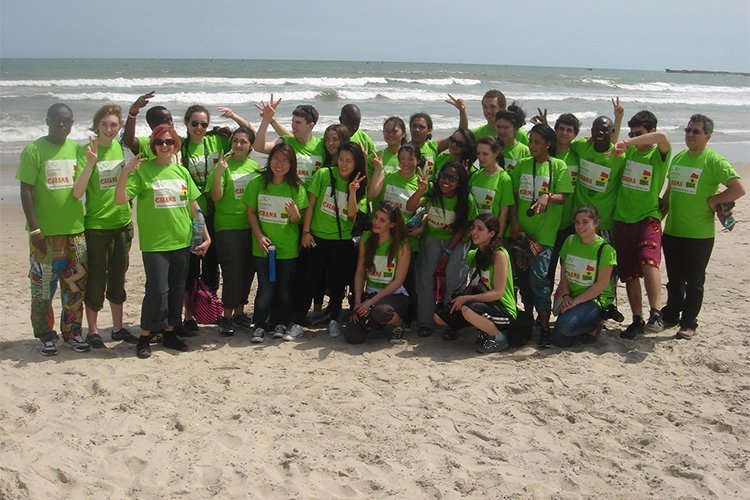
Your day-to-day work is genuinely useful classroom support, planned with our in-country teams and the school’s own teachers so that it meets real local needs. Typical responsibilities include:
- Lesson planning and preparation — designing simple, engaging activities and learning resources alongside local staff.
- Teaching support — assisting with conversational English, basic maths, art, sport and group work.
- Literacy and reading — running small reading groups, phonics-style games and storytelling sessions.
- Pastoral and creative activities — helping with extracurriculars, clubs and confidence-building games.
If you are particularly drawn to early-years and younger children, you may also be interested in our childcare volunteer abroad projects, which sit alongside our teaching placements and suit education students focused on early childhood. All placements are non-clinical and centred on education and care.
Should I volunteer individually or as a faculty-led group?
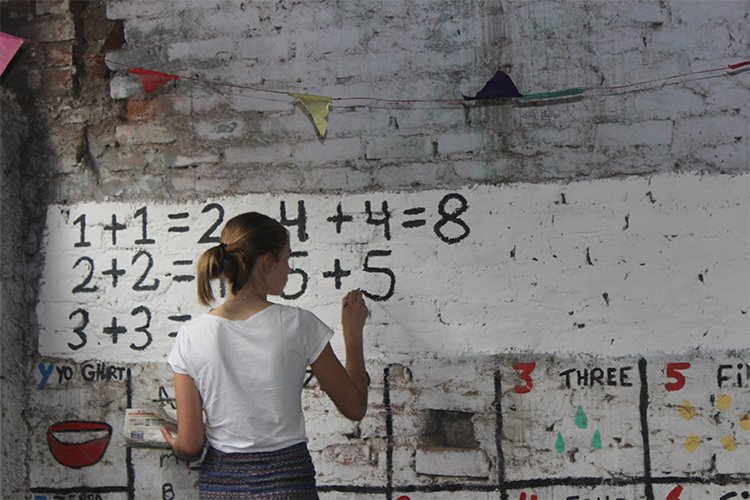
Both work brilliantly — the right choice depends on your goals and how your department prefers to travel.
Volunteering as an individual
Going solo (or with a friend) gives you maximum flexibility on dates and duration, and it pushes your independence and confidence — qualities that come across strongly in teaching interviews. You join a cohort of international volunteers on arrival, so you are never truly alone, and our in-country teams handle the logistics, induction and school placement for you.
Faculty-led and student-group trips
If you are a lecturer, course leader or society organiser, a group trip lets a whole cohort experience an overseas classroom together — ideal for embedding experiential learning into an education module. We design faculty-led group trips abroad around your academic objectives, term dates and budget, with a single point of contact throughout. For practical planning, our guides on faculty-led group volunteering trips abroad and group volunteering abroad for university and college students walk through timelines, roles and what to expect.
How does an education placement fit a degree or count for credit?
Many universities recognize overseas volunteering toward placement hours, work-based learning modules, employability awards or dissertation fieldwork — but recognition is always granted by your own institution, not by us. The best approach is to speak to your course leader or placement office early, share the project description, and ask what documentation they need (learning agreements, supervisor sign-off, reflective logs). Our in-country teams can provide confirmation of attendance and a description of your role to support whatever evidence your program requires. For faculty designing a credit-bearing trip, we can align the itinerary to your stated learning outcomes.
Where can education students volunteer abroad?
We run teaching and education placements across Asia, Africa and Latin America, so you can pick a destination that matches your interests and budget. Popular choices for education students include:
- Nepal — Himalayan setting, welcoming schools and a strong, well-established volunteer community.
- Ghana — English-speaking, vibrant culture and a popular base for first-time volunteers from the UK and US.
- India — enormous cultural depth, busy classrooms and excellent value for longer placements.
Each destination has its own start dates, accommodation and project details, and our team can help you weigh climate, language and cost to find the best fit for your study timetable.
How much does it cost and how can I fund it?
Program fees vary by destination and length, and they typically cover your accommodation, most meals, airport pickup, in-country orientation and the day-to-day support of our in-country teams — flights, visas, insurance and personal spending are usually extra. Because we are a certified B Corporation, we keep our pricing transparent and reinvest in genuine, locally-led partnerships rather than performative projects.
Funding is more achievable than most students expect. Many universities offer travel bursaries, Turing Scheme funding (UK), study-abroad grants or employability scholarships — our university funding guide explains where to look and how to apply. Education students also commonly fund placements through part-time work, departmental hardship funds, society fundraising and crowdfunding. For faculty-led groups, the per-person cost often falls as numbers grow.
Is volunteering abroad safe for students?
Safety is the foundation of every placement. You are met on arrival, given a thorough in-country orientation covering culture, health and local conduct, and supported throughout by our in-country teams with 24/7 emergency contacts. Accommodation is vetted, schools are long-standing partners, and we provide clear pre-departure guidance on vaccinations, travel insurance and staying safe day to day. We always recommend checking your government’s latest travel advice (FCDO in the UK, the State Department in the US) before you book, and we are happy to talk any concerns through with you or your faculty before you commit.
What teaching abroad adds to your career and CV
Beyond the classroom hours themselves, an overseas teaching placement builds the transferable skills that recruiters look for across education and far beyond it. Working in an unfamiliar school system stretches your communication, problem-solving and organization in ways a familiar UK or US setting rarely does, and you come home able to evidence each of them with a specific story rather than a generic claim.
On a CV, the experience reads as proof of independence, cultural intelligence and adaptability — qualities that strengthen applications for teaching posts, international and IB schools, postgraduate study and graduate schemes alike. It gives you concrete material for the competency-based questions interviewers actually ask: a time you adapted a lesson on the spot, managed a large or mixed-ability group, or worked across a language barrier. Many of our volunteers also find the placement clarifies their direction, confirming a love of teaching or steering them toward a particular age range or subject. Documented well — with a reflective log and a role description from our in-country teams — it becomes one of the most distinctive entries on a graduate CV.
How to choose the right teaching project
The best placement is the one that fits your goals, your timetable and your level of experience, so it is worth a little planning before you book. Start with what you want to gain: early-years and literacy support suits education students focused on primary and childcare, while conversational English and subject teaching suit those heading toward secondary or TEFL. Be honest about your comfort with independence too — a confident traveler may thrive solo, while a first-timer might prefer the structure of a faculty-led group.
Next, weigh the practical factors. Check that the project’s start dates and minimum duration line up with your term breaks, and consider destination basics such as language, climate, cost of living and the length of placement that delivers genuine value to the school. Ask how the school partnership works, what an average day looks like, and how our in-country teams support you on the ground. Above all, choose a project built around real local needs rather than photo opportunities — ethical, locally-led placements give you better experience and do more good. Our team is happy to talk options through and match you to a project that fits your study and your budget.
Frequently asked questions
Do I need teaching qualifications to volunteer abroad as an education student?
No formal teaching qualification is required. Our teaching placements are designed for students, trainee teachers and graduates, and you always work alongside local teachers and our in-country teams. Enthusiasm, reliability and a willingness to learn matter more than prior experience.
Can a faculty-led group earn academic credit for the trip?
Credit is awarded by your own university, not by Volunteering Solutions, but many institutions recognize these trips for placement hours or work-based learning. We can align the itinerary to your learning outcomes and provide attendance confirmation to support your application for credit.
How long do education volunteer placements last?
Most placements run from one or two weeks up to several months. Faculty-led groups often travel for one to three weeks within term breaks, while individual students sometimes stay longer to deepen their classroom experience and explore the destination.
Is this a medical or clinical placement?
No. Our education and teaching placements are entirely non-clinical and focus on classroom support, literacy and cross-cultural learning. They are designed for education, teacher-training and PGCE/Ed students rather than healthcare disciplines.
How do I get started or ask about a group trip?
The easiest first step is to contact our team with your discipline, rough dates and any destination ideas. We will reply within one working day with a tailored proposal for an individual placement or a faculty-led group.
Plan your trip — enquire now
Tell our team your discipline, rough dates and any destination ideas and we’ll put together a tailored proposal — individual or group. We reply within one working day.

Saurabh Sabharwal is the founder of Volunteering Solutions and its parent B Corporation, Impact Explorers. He has championed ethical, affordable volunteer travel since 2007 and writes about how to volunteer abroad responsibly.