 English (US) ▾
 Nederlands
 English (UK)
 Deutsch
 Italiano
 Português
 Español
CAS Based Group Programs Abroad for IB Students: A Complete Guide
Blog · June 25, 2026 · 11 min read · By Saurabh
Yes — a well-designed group trip abroad can count toward the IB Diploma’s CAS requirement, as long as it involves genuine Creativity, Activity and Service and students reflect on it against the CAS learning outcomes. This guide explains what a CAS group trip abroad actually is, how it maps to the three CAS strands and the seven learning outcomes, what students do, where they go, and how IB coordinators can plan one safely. Volunteering Solutions runs guided CAS group programs and expeditions built specifically around the IB framework.
CAS based group programs are one of the most rewarding parts of the Diploma because they take learning out of the classroom and into a real community or conservation setting overseas. But to count, the experience has to be more than a holiday — it has to be designed around the CAS model. Here is how that works.
What is CAS in the IB Diploma?
CAS — Creativity, Activity, Service — is one of the three core components every student must complete in the IB Diploma Programme, alongside the Extended Essay and Theory of Knowledge. Rather than being graded, CAS is about personal growth: students take part in a balanced range of experiences across the three strands, demonstrate seven learning outcomes, and reflect on what they learned in a CAS portfolio.
A group trip abroad is a powerful way to hit all three strands at once, in a single, immersive experience — which is exactly why so many IB schools build an international CAS expedition into the Diploma.
What is a CAS group trip abroad?
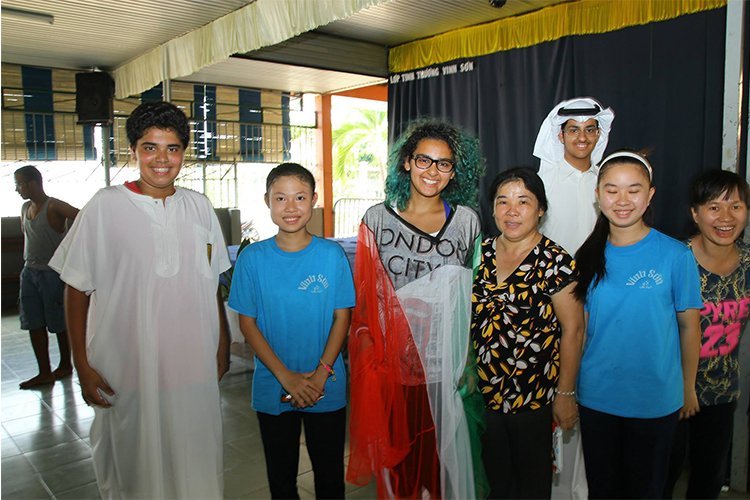
A CAS group trip abroad is a short, structured, supervised program — typically one to three weeks — in which a group of IB students travels overseas to take part in service and experiential-learning projects designed around the CAS framework. The trip is accompanied by school staff and supported on the ground by an in-country team, so students get a genuinely hands-on, culturally immersive experience within a safe, guided structure.
Volunteering Solutions designs these programs for school students aged roughly 14–17, across more than 20 countries in Asia, Africa, Europe and Latin America. Each itinerary is customised to the group, and projects span environmental conservation and nature exploration, wildlife and adventure, cultural exchange, and community-focused service.
Why do it abroad rather than locally? An overseas CAS program compresses a remarkable amount of growth into a short time: students encounter a genuinely different culture, work on a real need they can see and measure, and build independence and teamwork far outside their comfort zone. It also delivers all three CAS strands in one coherent experience, with reflection points built in — which is much harder to achieve by stitching together separate, school-based activities. For many IB students it becomes the standout memory of the whole Diploma.
How a CAS group trip meets the three CAS strands
The strength of an overseas CAS program is that it naturally covers Creativity, Activity and Service together. Here is how the strands typically map onto a trip:
| CAS strand | What it means | On a CAS group trip abroad |
|---|---|---|
| Creativity | Arts and creative or original thinking | Designing lesson materials or workshops, cultural and craft activities, documenting the project |
| Activity | Physical exertion contributing to a healthy lifestyle | Trekking and adventure, conservation fieldwork, sports and games with the local community |
| Service | Unpaid, voluntary work with a learning benefit | Teaching support, community projects, environmental restoration and wildlife care |
Because the three strands are woven into one program, students experience how creativity, activity and service connect in the real world — something that is hard to replicate with separate, school-based CAS activities.
This balance matters for the IB: CAS asks for a reasonable spread across all three strands over the two years, and a single well-designed expedition can contribute meaningfully to each. It is not meant to replace a student’s ongoing CAS commitments, but it can be the centrepiece that ties them together and gives students a concrete, global experience to reflect on.
Mapping a trip to the seven CAS learning outcomes
To count for CAS, students must demonstrate the IB’s seven learning outcomes. A well-run group expedition is one of the easiest places to evidence them:
- Identify strengths and areas for growth — stepping into an unfamiliar culture and role quickly reveals both.
- Undertake new challenges and develop new skills — from teaching a class to working on a conservation site.
- Initiate and plan — students help shape and run project tasks rather than just turning up.
- Show commitment and perseverance — sustained, sometimes physical work over the length of the trip.
- Work collaboratively — with their group, school staff, and the local community and in-country team.
- Engage with issues of global significance — conservation, education access and community development, first-hand.
- Recognize and consider the ethics of choices and actions — responsible, community-led volunteering makes ethics tangible.
Encourage students to capture reflections throughout — photos, journals, short videos — so their CAS portfolio writes itself by the time they get home.
What do students actually do?
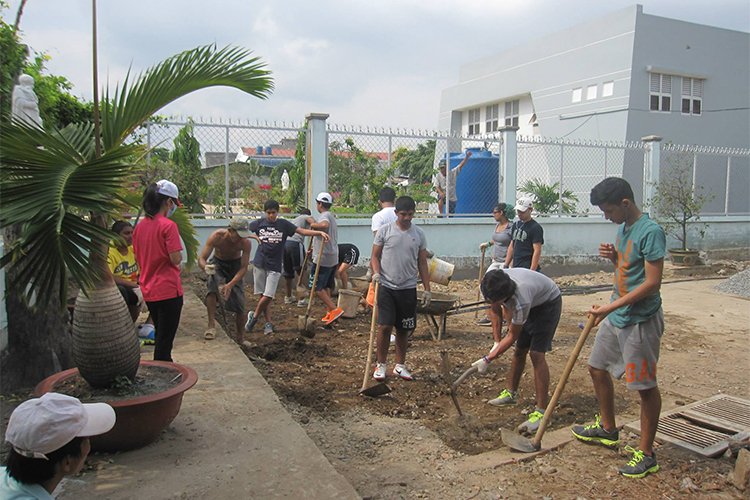
Projects are chosen to suit the group and the destination, and fall into a few broad types: environmental conservation and wildlife programs, community development, teaching and education support, and cultural-exchange and adventure experiences. A typical day blends hands-on project work with cultural immersion and reflection, and many itineraries add an adventure or sightseeing element so students also experience the country they are contributing to.
In practice, a day might start with project work in the morning — supporting a class, working on a conservation site, or helping with a community build — followed by lunch with the in-country team, an afternoon of cultural activity or skills workshops, and a short group reflection in the evening. Rest days and weekends often include an excursion, so students see the wider region rather than only the project site.
This mix is what makes CAS expeditions so memorable: students aren’t observers, they’re participants — and they come home as more confident, globally aware young people. For younger or mixed school groups, see our high school volunteer programs.
Where can CAS groups go?
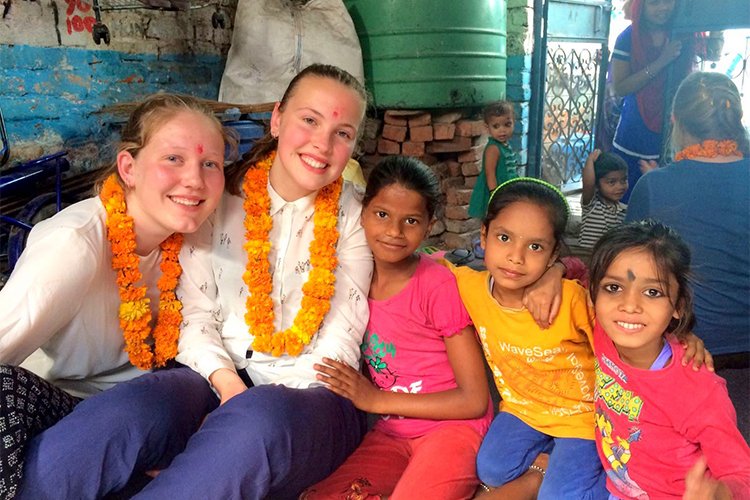
VolSol runs CAS group programs in more than 20 countries. Popular, well-supported choices include Thailand, Nepal, India, Cambodia, Bali, Vietnam, Tanzania, Kenya, Ghana, South Africa, Peru and Spain. Each destination offers a different blend of project type, culture and adventure, so the trip can be matched to your school’s goals. Browse the full list on our destinations page.
Who is a CAS group trip for?
CAS group expeditions suit whole IB cohorts traveling together, smaller CAS groups, and mixed school groups looking for a structured service experience abroad. They work best for students ready to step outside their comfort zone, get hands-on, and engage respectfully with a community. No previous travel or volunteering experience is needed — the program is guided throughout, with school staff and an in-country team supporting students every step of the way. For schools that prefer a non-IB framing, the same trips also work as general service-learning or experiential-learning expeditions.
Is a CAS group trip safe and well supervised?
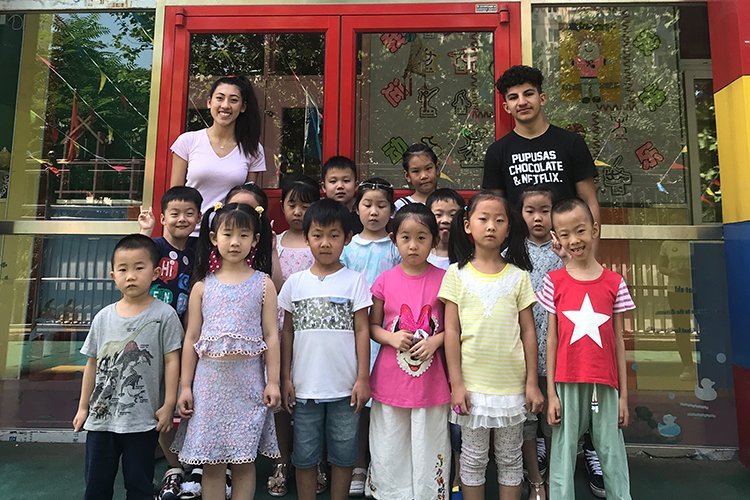
Safety is the first question every coordinator and parent asks. CAS group programs are designed for school-age students, so supervision and safeguarding are built in: trips are accompanied by school staff and supported by our in-country teams who run orientation, accompany the group and provide round-the-clock support. As a certified B Corporation, Volunteering Solutions builds risk assessments, clear codes of conduct and ethical, community-led project design into every program, supporting your school’s own duty-of-care requirements.
For IB coordinators: how to plan a CAS group trip
Organizing a group expedition breaks down into a clear sequence:
- Define your CAS goals — which strands and learning outcomes you want the trip to evidence.
- Choose a destination and project type — matched to your students’ interests and your goals.
- Set dates and group size — most trips run one to three weeks and travel in school holidays.
- Confirm logistics with your provider — accommodation, meals, transport, the project and 24/7 support.
- Handle safeguarding and pre-departure — risk assessments, consent, insurance, vaccinations and a briefing.
- Build in reflection — set students up to record evidence for their CAS portfolios throughout.
If your students are heading to university next, a CAS expedition also pairs naturally with our guide to faculty-led group volunteering trips abroad and our faculty-led group trips for university cohorts.
Getting the most CAS value from your trip
A few simple habits turn a great trip into a great CAS experience. Encourage students to set personal goals before departure against the seven learning outcomes, and to keep a daily reflection — even a few lines or a captioned photo. Build in at least one student-led element, however small, so they can evidence the “initiate and plan” outcome. Talk openly about the ethics of responsible volunteering, so students engage critically rather than treating the trip as tourism. And debrief as a group soon after returning home, while the experience is fresh, to help everyone complete their CAS portfolios well.
How long is a CAS group trip, and how much does it cost?
Most CAS group programs run one to three weeks, slotted into school holidays. Trips are quoted per student and typically include accommodation, meals, in-country transport, airport pickup, the project and 24/7 support; international flights, insurance, visas and personal spending are usually separate. Because every CAS program is customised by destination, duration, project and group size, the best approach is to tell us your parameters and get a tailored quote — see our group volunteering overview or enquire below.
Frequently asked questions
What is CAS in the IB Diploma?
CAS stands for Creativity, Activity, Service — one of the three core components of the IB Diploma Programme. It is not graded; students complete a balanced range of experiences across the three strands, demonstrate seven learning outcomes, and reflect on them in a CAS portfolio.
Can a trip abroad count toward CAS?
Yes, if it involves genuine Creativity, Activity and Service and students reflect on it against the CAS learning outcomes. A structured group expedition built around service and experiential learning is designed to meet all three strands in one experience.
How old do students need to be, and are trips supervised?
CAS group programs are designed for school students aged roughly 14–17. Trips are accompanied by school staff and supported by our in-country teams who provide orientation, supervision and 24/7 support, with risk assessments and codes of conduct in place.
What’s the difference between Creativity, Activity and Service?
Creativity covers arts and original thinking; Activity covers physical exertion toward a healthy lifestyle; Service is unpaid, voluntary work with a learning benefit. A group trip abroad typically delivers all three — for example creative workshops, trekking or conservation fieldwork, and community or teaching service.
How long is a CAS group trip and what does it cost?
Most run one to three weeks during school holidays. Trips are quoted per student and usually include accommodation, meals, transport, the project and 24/7 support; flights, insurance, visas and personal spending are extra. Each program is customised, so request a tailored group quote.
How do students record CAS on a trip?
Students should capture reflections throughout — journals, photos and short videos — and map their experiences to the seven CAS learning outcomes in their CAS portfolio. A well-structured trip makes this straightforward because the strands and outcomes are built into the daily program.
{
“@context”: “https://schema.org”,
“@type”: “FAQPage”,
“mainEntity”: [
{ “@type”: “Question”, “name”: “What is CAS in the IB Diploma?”, “acceptedAnswer”: { “@type”: “Answer”, “text”: “CAS stands for Creativity, Activity, Service — one of the three core components of the IB Diploma Programme. It is not graded; students complete a balanced range of experiences across the three strands, demonstrate seven learning outcomes, and reflect on them in a CAS portfolio.” } },
{ “@type”: “Question”, “name”: “Can a trip abroad count toward CAS?”, “acceptedAnswer”: { “@type”: “Answer”, “text”: “Yes, if it involves genuine Creativity, Activity and Service and students reflect on it against the CAS learning outcomes. A structured group expedition built around service and experiential learning is designed to meet all three strands in one experience.” } },
{ “@type”: “Question”, “name”: “How old do students need to be, and are CAS based programs supervised?”, “acceptedAnswer”: { “@type”: “Answer”, “text”: “CAS group programs are designed for school students aged roughly 14 to 17. Trips are accompanied by school staff and supported by our in-country teams who provide orientation, supervision and 24/7 support, with risk assessments and codes of conduct in place.” } },
{ “@type”: “Question”, “name”: “What is the difference between Creativity, Activity and Service?”, “acceptedAnswer”: { “@type”: “Answer”, “text”: “Creativity covers arts and original thinking; Activity covers physical exertion toward a healthy lifestyle; Service is unpaid, voluntary work with a learning benefit. A group trip abroad typically delivers all three — for example creative workshops, trekking or conservation fieldwork, and community or teaching service.” } },
{ “@type”: “Question”, “name”: “How long is a CAS group trip and what does it cost?”, “acceptedAnswer”: { “@type”: “Answer”, “text”: “Most run one to three weeks during school holidays. Trips are quoted per student and usually include accommodation, meals, transport, the project and 24/7 support; flights, insurance, visas and personal spending are extra. Each program is customised, so request a tailored group quote.” } },
{ “@type”: “Question”, “name”: “How do students record CAS on a trip?”, “acceptedAnswer”: { “@type”: “Answer”, “text”: “Students should capture reflections throughout — journals, photos and short videos — and map their experiences to the seven CAS learning outcomes in their CAS portfolio. A well-structured trip makes this straightforward because the strands and outcomes are built into the daily program.” } }
]
}
Plan your CAS group trip — enquire now
Tell our Groups Team about your school, year group and goals, and we’ll put together a tailored CAS proposal — no obligation. We reply within one working day.

Saurabh Sabharwal is the founder of Volunteering Solutions and its parent B Corporation, Impact Explorers. He has championed ethical, affordable volunteer travel since 2007 and writes about how to volunteer abroad responsibly.