 English (US) ▾
 Nederlands
 English (UK)
 Deutsch
 Italiano
 Português
 Español
Marine Conservation Volunteering Abroad
Restore coral reefs, survey marine species and support a penguin rescue center across Bali, Madagascar, South Africa and Spain, from $724.
How the projects work day to day
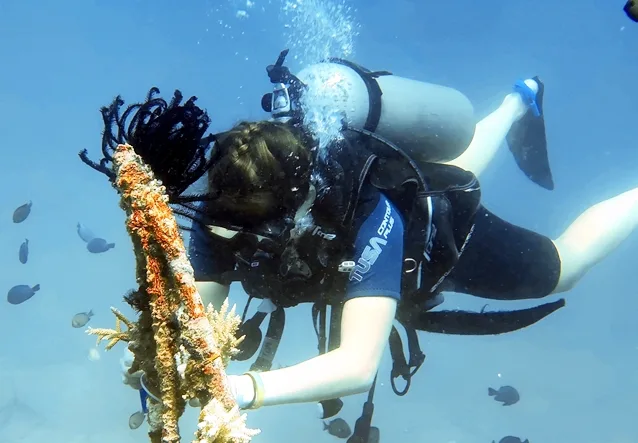
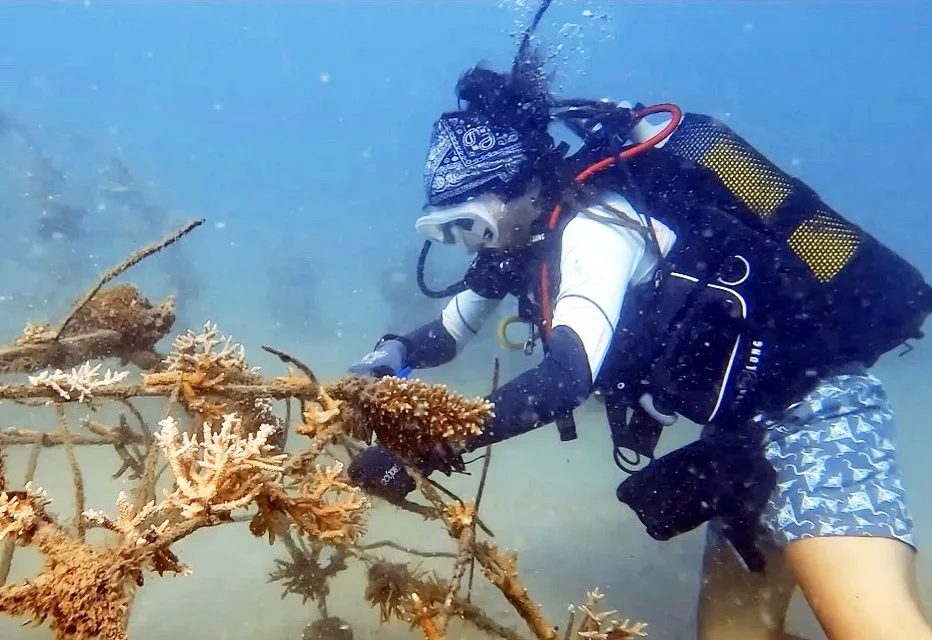
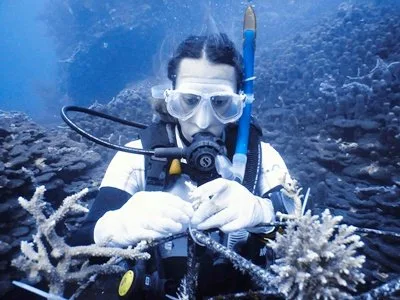
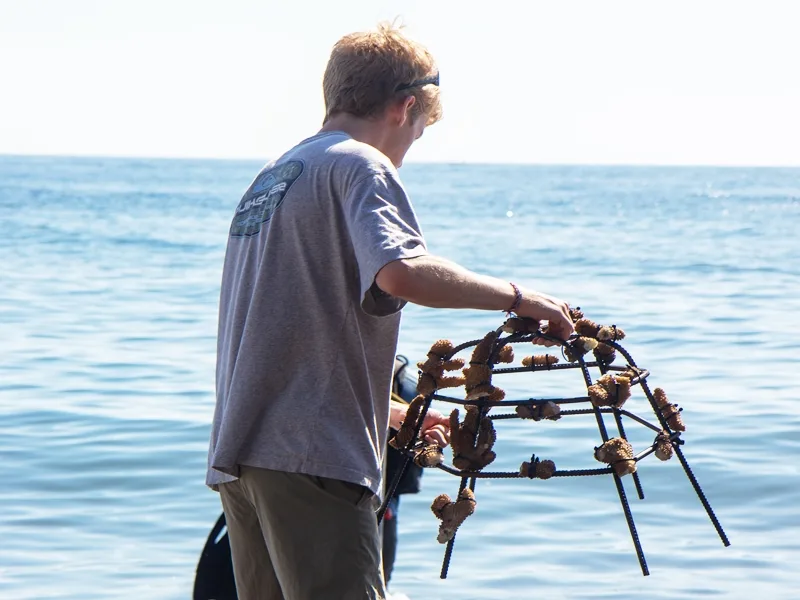
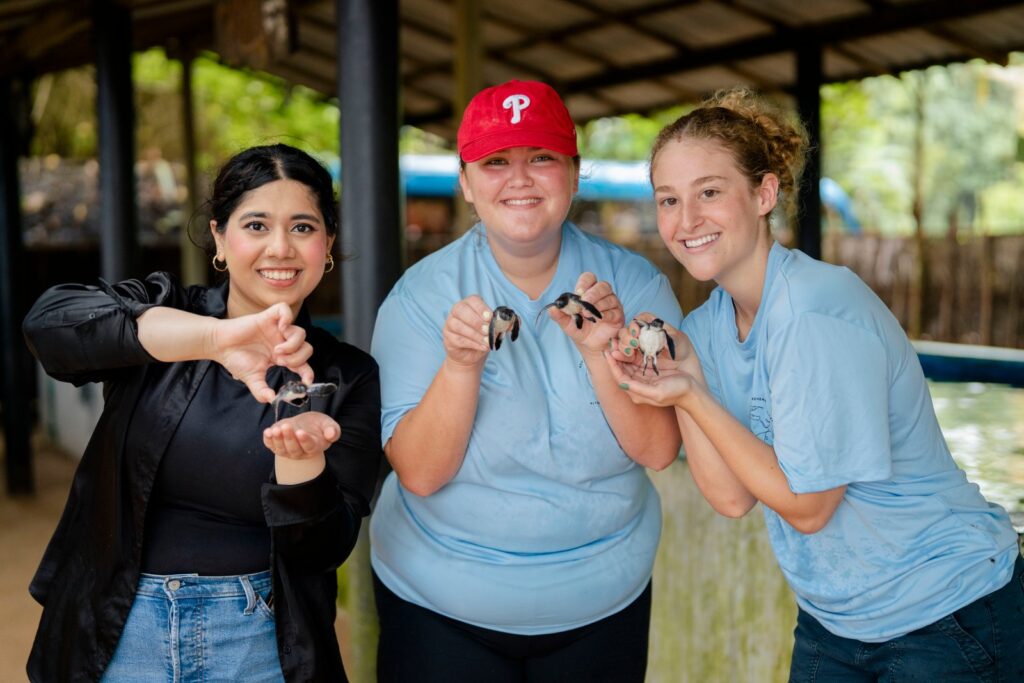
Marine conservation volunteering puts you to work alongside local marine biologists, dive leaders and rescue-center staff rather than in a classroom. Typical days include building and planting coral nursery structures, running reef and species surveys, clearing beaches and dive sites of plastic and ghost fishing gear, or helping keep rescued penguins and marine birds fed, cleaned and monitored. Volunteers support the qualified team on-site; they don't diagnose or treat animals, and there's no swimming with or handling wildlife for photos. If sea turtles are what brought you here, our sea turtle programs go into more depth.
Programs run across Bali, Madagascar, South Africa, Spain, Sri Lanka and Tanzania, with the busiest projects currently in Bali, Madagascar, South Africa and Spain — coral reefs, dive-based restoration, an island research station and coastal cleanups. Fees start from $724, deposit $249 included, and cover accommodation, meals and in-country support from the local team; some reef programs build dive training into that fee. For a full breakdown of what's covered, see where the fee goes.
Projects you can join
7 programs across 6 countries, straight from our booking system — filter by country.
Where you can join a marine project
Each country page lists every program there with live prices, start dates and the local team's details.

Who can join, how long you can stay, and what it costs
Before you apply
- Minimum age 16, with 18+ on some programs — the reef and rescue-center projects tend to set the higher minimum.
- No marine science or diving experience is needed for beach, survey and rescue-center roles; the Bali (Tianyar) and Tanzania reef programs include dive training, though the North Bali coral program asks for an existing Open Water certification.
- Some programs run a background check for volunteers working near vulnerable wildlife or alongside local school groups.
- Comfortable swimming ability is expected on dive and reef-based projects, and a basic level of fitness helps with fieldwork and outdoor days.
- Fees from $724 (deposit $249) cover accommodation, meals and in-country support; flights, insurance and personal costs are separate.
- Programs run on fixed start dates rather than rolling admission — the next start is 26 Sep 2026, so it's worth booking ahead.
Cost by country
| Country | Programs | Minimum age | Duration | From |
|---|---|---|---|---|
| Bali | 2 | 17+ | 1–12 weeks | $724 |
| Sri Lanka | 1 | 16+ | 1–20 weeks | $998 |
| Tanzania | 1 | 17+ | 2–12 weeks | $1,474 |
| South Africa | 1 | 18+ | 4–12 weeks | $1,683 |
| Spain | 1 | 18+ | 2–8 weeks | $2,248 |
| Madagascar | 1 | 18+ | 4–8 weeks | $2,524 |
"From" is the all-in fee for the shortest stay and includes the $249 booking deposit; accommodation, the meals listed for the program, airport pickup where listed, orientation, placement and in-country support are covered. Flights, insurance, visas and personal spending are not. Each program page has the full week-by-week price table.
Marine Conservation Volunteer Programs
From coral nurseries in Bali to penguin rescue in South Africa, our marine conservation programs put volunteers to work on the ocean's front line. Restore reefs by scuba diving in Tanzania, run species surveys from an island research base in Madagascar, or join Mediterranean coastal conservation in Valencia, Spain. Fees start from $475 including accommodation, meals and in-country support — no marine science background required. If turtles are what draw you to the water, start with our sea turtle programs.
What will you do as a marine conservation volunteer?
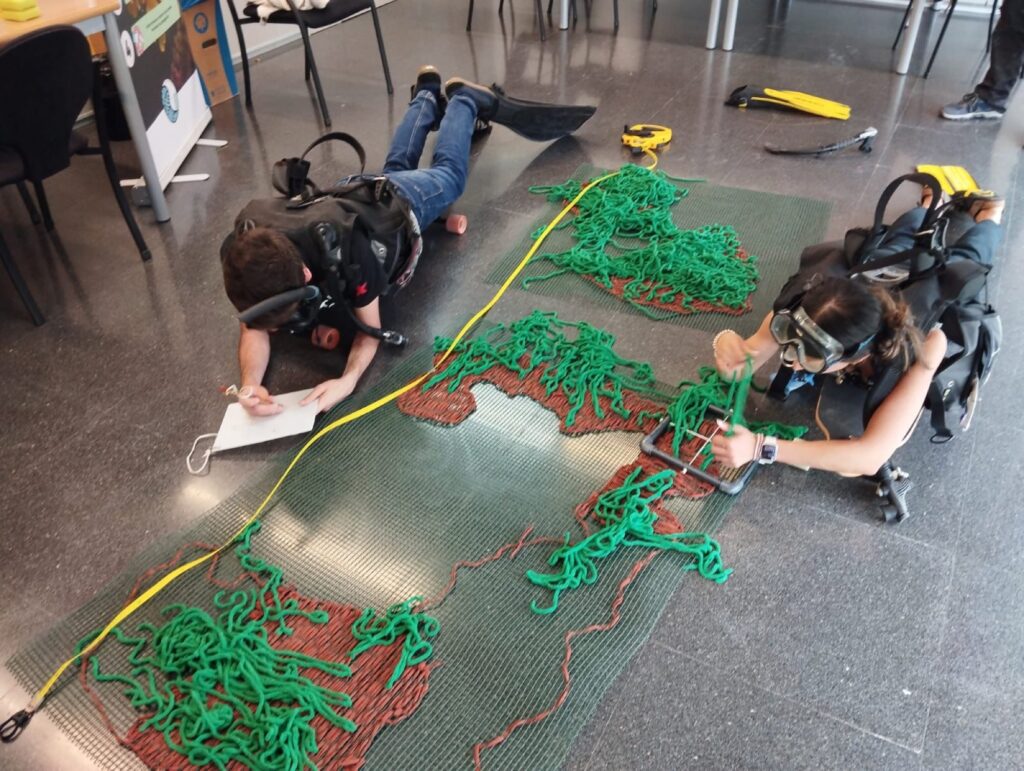
- Restore coral — build and maintain nursery structures, plant coral fragments and monitor their growth.
- Survey reef fish, turtles and other marine species, contributing data to long-term research.
- Join beach and underwater cleanups tackling plastic and ghost fishing gear.
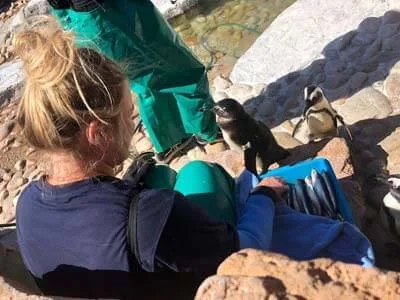
- Care for rescued penguins and marine birds at South Africa's coastal rehabilitation center.
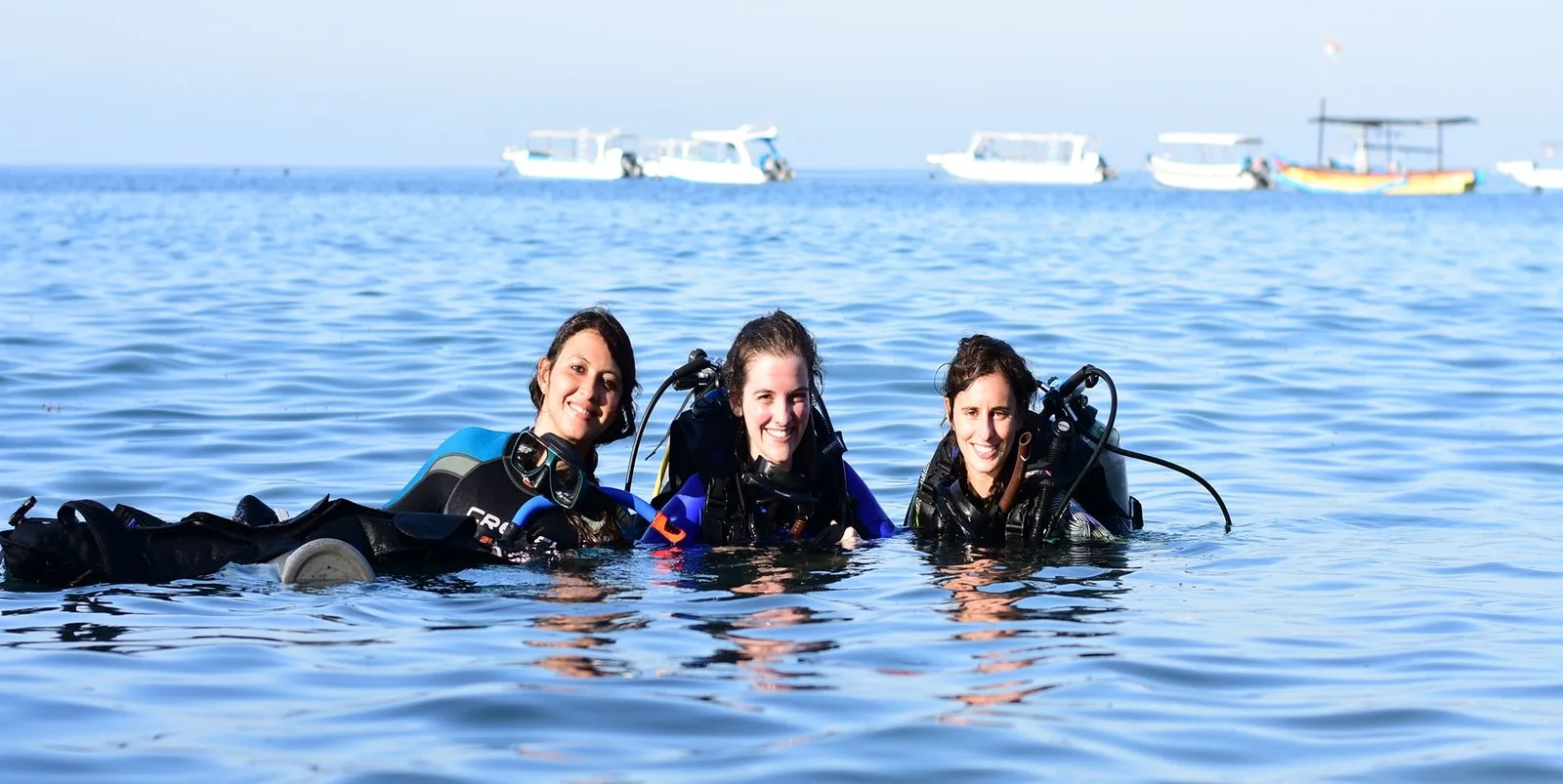
- Learn to dive on the scuba-based projects — dive training is built into the Bali and Tanzania reef programs.
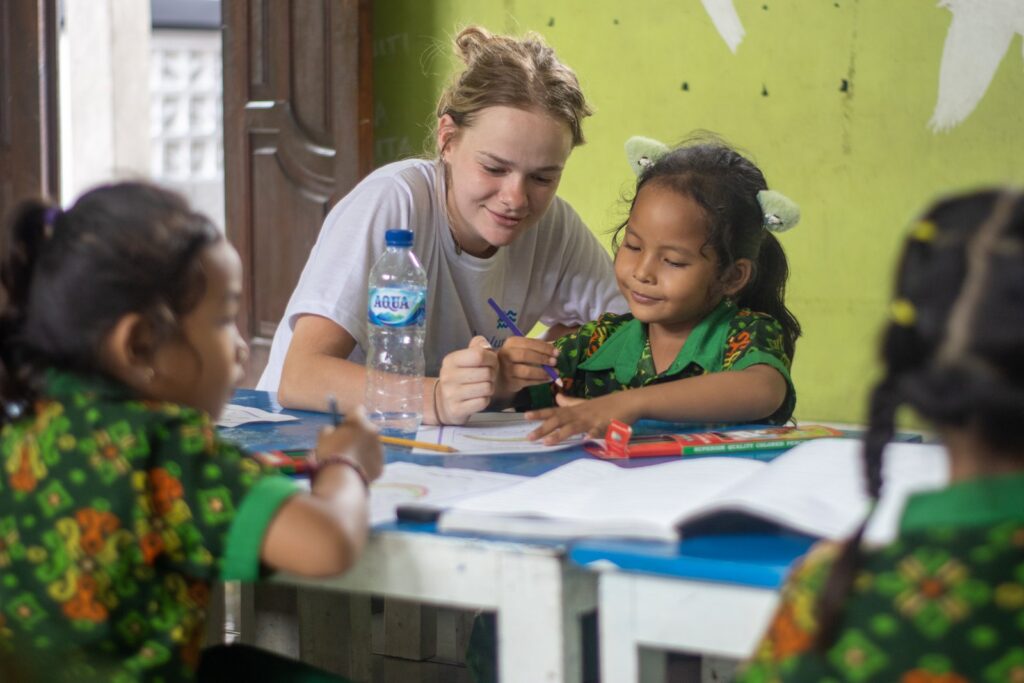
- Run awareness sessions with local schools and communities on reducing plastic use.
What do our past volunteers say?
“My experience joining the Marine Conservation program has been incredible. In addition to learning about the importance of marine ecosystems, I have met wonderful people from all over the world. Their enthusiasm and experience helped me to achieve my goals within the volunteering program.” - Andrea M, Marine Conservation Program
Boundaries that keep the work responsible
Marine conservation projects are chosen for genuine, long-running local need — coral nurseries run by resident marine biologists, a rescue center registered to rehabilitate and release native penguins and marine birds, and a research station that feeds survey data into ongoing monitoring. Volunteers are trained on arrival and work under that local team's supervision throughout, rather than being left to run activities alone.
- No riding, bathing or posing with penguins, marine birds or other wildlife — contact is limited to what feeding and care require, decided by center staff.
- No diagnosing, treating or medicating injured animals; that stays with the qualified vets and rehabilitators on-site.
- Dive-based programs follow standard safety protocols, and volunteers dive within their certification level, not beyond it.
- Community and school awareness sessions are planned by local staff, not improvised by volunteers.
Our standards
- Safeguarding policyVetted placements, a code of conduct and background checks where you work with children or vulnerable adults.
- Child & vulnerable adult protectionHow placements with children are run and what volunteers may and may not do.
- Responsible volunteer travelCommunity-led projects, no work that displaces local jobs, honest about what a short stay can do.
- Certified B CorporationIndependently assessed on impact, transparency and accountability.
What our volunteers say
Marine Conservation Volunteering Abroad: frequently asked questions
What does a marine conservation volunteer do each day?
Work varies by project but centers on hands-on reef and species care rather than classroom study. You might build or plant coral fragments in a nursery, run underwater or beach species surveys, clear plastic and ghost fishing gear from dive sites, or help feed and monitor rescued penguins and marine birds. Days are structured by the local team, and every volunteer works alongside trained staff rather than independently.
Do I need to be a qualified diver to join?
Not for most roles. Beach cleanups, species surveys, school awareness sessions and the penguin rescue center need no diving background at all. The reef restoration programs in Bali (Tianyar) and Tanzania build dive training into the fee, while the North Bali coral program asks for an existing Open Water certification. Check the specific program page for what's required before you book.
Do I need a marine biology degree or prior experience?
No. Volunteers of all backgrounds are trained on arrival and work under qualified marine biologists, dive leaders or rehabilitation staff throughout. Students of marine or environmental science often find the survey and monitoring work directly relevant to their studies, but it isn't a requirement — a genuine interest in ocean conservation and a willingness to follow instructions matter more than a qualification.
Who can join, and is there a minimum age?
The minimum age is 16, rising to 18+ on some programs, particularly the reef and rescue-center projects. There's no upper age limit. Comfortable swimming ability is expected on dive and reef-based projects, and a background check applies where volunteers work near vulnerable wildlife or local school groups. Parents of younger volunteers can find more detail in our parents' guide.
How much does marine conservation volunteering cost?
Programs start from $724, with a $249 deposit securing your place and the balance due later. The fee covers accommodation, meals and in-country support from the local team, plus dive training where it's built into the program. Flights, visas, insurance and personal spending are separate. See program costs explained for a full breakdown.
How long do programs run and when can I start?
Programs run from 1 to 20 weeks depending on the project, and some — like the island research station in Madagascar and the penguin rescue center — set a longer minimum stay than others. Start dates are fixed rather than rolling; the next intake is 26 Sep 2026. Use the start dates explorer to check specific programs.
Where can I do marine conservation volunteering?
Volunteering Solutions runs marine conservation programs across Bali, Madagascar, South Africa, Spain, Sri Lanka and Tanzania, covering coral restoration and dive-based reef work, an island research station, coastal cleanups, and penguin and marine bird rescue. The busiest projects currently run in Bali, Madagascar, South Africa and Spain. Each destination has its own focus, so check the country page for the exact type of marine work on offer.
Is marine conservation volunteering safe, and what support is there?
Every placement has a local team providing 24/7 in-country support, and dive-based programs follow standard diving safety protocols with training built in for uncertified volunteers. Staff supervise all wildlife contact and fieldwork. Volunteers are expected to arrange appropriate cover for diving and outdoor activity; see our travel insurance guidance before you book.
How do you keep marine conservation volunteering ethical?
Projects are chosen for genuine local need rather than tourist appeal — coral nurseries and a research station run by resident marine biologists, and a rescue center registered to rehabilitate and release native penguins and marine birds. Volunteers never ride, bathe or pose with animals, never diagnose or treat injuries, and dive only within their certification level. Local staff plan and lead all fieldwork and community sessions.
How do I book and prepare for a marine conservation program?
Book with the $249 deposit; the flexible booking policy lets you change program or dates free up to 45 days before departure. Once booked, the local team sends a pre-departure guide covering kit, vaccinations and, for dive-based projects, any certification paperwork you'll need to bring. Building up swimming fitness in advance is worthwhile.
What's the difference between the marine conservation and sea turtle programs?
Marine conservation programs cover a broader range of work — coral restoration, reef surveys, cleanups and penguin rescue — across Bali, Madagascar, South Africa, Spain, Sri Lanka and Tanzania. Our dedicated sea turtle programs focus specifically on nesting, hatchery and turtle-monitoring work. Sri Lanka's project combines both, so check individual program pages if turtles are your main interest.
Can I combine marine work with other conservation projects?
Some programs already blend marine and land-based work — the Valencia project in Spain pairs marine data collection with reforestation and coastal cleanups, for example. If you want a broader environmental focus, our environment conservation hub covers land-based projects alongside these marine ones, and the wildlife conservation hub covers non-marine animal work.
Start your marine conservation program
7 programs · 6 countries · from $724 · next start 26 Sep 2026
Free advice, no obligation. Change program, dates or destination free of charge up to 45 days before you start.