 English (US) ▾
 Nederlands
 English (UK)
 Deutsch
 Italiano
 Português
 Español
 Français
Gap Year Volunteering in 2026: A Growing Movement Across Every Age Group
Blog · July 8, 2026 · 13 min read · By Saurabh
The face of volunteering abroad is changing. Across our 17 years of placements at Volunteering Solutions, the classic image of the overseas volunteer — an 18-to-25-year-old on a gap year — no longer tells the whole story. That cohort dominated our programs between roughly 2009 and 2016. Today, a fast-growing share of our volunteers are aged 30 to 70: career-breakers, empty-nesters, professionals on sabbaticals and active retirees. Meanwhile, Gen Z hasn’t stopped caring — the evidence is that they volunteer differently, not necessarily less. This is our honest read on a genuine generational shift, backed by our own booking patterns and independent research.
What we’re seeing in our own bookings
As a certified B Corporation that has placed more than 25,000 volunteers across 24 countries since 2007, we have a long vantage point on who chooses to volunteer abroad and why. In the early-to-mid 2010s, the typical enquiry came from a school-leaver or undergraduate planning a structured, multi-week placement overseas — teaching, childcare, or conservation — as the centrepiece of a gap year.
That enquiry hasn’t disappeared, but its share has shrunk. In its place, we’re fielding far more interest from people in their 30s, 40s, 50s and 60s: someone taking three months between jobs, a couple whose children have left home, a nurse or teacher spending a career break doing something meaningful, or a recently retired traveler who wants more than a cruise. Our senior volunteering and short-term programs are busier than they have ever been. It’s a pattern worth taking seriously — and it mirrors what’s happening across the wider travel and volunteering sector.
And this isn’t just an impression — it’s in our records. Analysing our own booking data (more than 10,000 dated volunteer bookings), the 18–25 age group made up around 78% of participants in 2009–2016, but just 61% in 2023–2026. Over the same period, the share of volunteers aged 36 and over more than doubled, from roughly 7% to nearly 19% — and volunteers aged 50 and above grew from under 3% to almost 10%, a near-fourfold rise. The chart below shows the full shift.
The shift in numbers, at a glance
Our booking pattern doesn’t sit in isolation. Independent research points to the same rebalancing:
- The global gap-year travel market was worth around USD 17.6 billion in 2024 and is growing at roughly 8% a year — but the growth is increasingly driven by older travelers.
- 70% of over-50s planned to travel in 2025, up from the year before, with a sharp rise in appetite for international trips (AARP).
- Nearly half of workers have now taken a career break of some kind, normalising the “adult gap year.”
- Gen Z faces a cost-of-living squeeze worse than millennials did at the same age, with tuition and rent roughly doubled over two decades (The TEFL Academy).
- Around 79% of students now say they’d take a gap year mainly to improve employability — purpose, not partying, drives the trip (National Geographic).
- Gen Z volunteering rates look low on some measures (~20% formal) yet top the table on others — the format is changing, not the willingness.
Share of Volunteering Solutions volunteers by age at booking, 2009 to 2016 versus 2023 to 2026.
The volunteer age mix is broadening
Share of volunteers by age at booking, then vs now
2009–2016
2023–2026
80%
70%
60%
50%
40%
30%
20%
10%
78%
61%
15%
20%
4%
9%
3%
10%
18–25
26–35
36–49
50+
Age group
Volunteering Solutions booking data — share of volunteers by age at booking (n=6,507 in 2009–2016; n=3,825 in 2023–2026).
Did Gen Z stop volunteering? Not exactly

It would be easy — and wrong — to conclude that young people simply care less. The data is genuinely mixed, and honesty matters here. On one measure, formal volunteering among Gen Z sits lower than older generations: US figures compiled by Statista put Gen Z’s formal volunteering rate at around 20% in 2020–21, below Gen X. Yet other research points the opposite way: Charity Times reported that Gen Z and millennials are the most likely generations to volunteer and promote good causes, and the American Red Cross recently credited Gen Z with driving a 25% surge in its volunteer force.
How can both be true? Because Gen Z volunteers on different terms. They gravitate toward virtual, hybrid, skills-based and flexible roles, often close to home, frequently organized through social media rather than a traditional provider. The headline is not “Gen Z volunteers less” — it’s “Gen Z volunteers differently.” What has measurably thinned is one specific format: the long-haul, multi-week, pay-to-participate volunteer-abroad gap year that defined the early 2010s.
So what changed for the classic 18–25 volunteer-abroad gap year?
Several forces converged, and no single one explains it. Together they reshaped who signs up for an overseas placement.
Money got tighter for the young
The economics of being 18–25 have shifted sharply. A 2025 report from The TEFL Academy found that Gen Z faces a cost-of-living squeeze markedly worse than millennials did at the same age, with tuition and rent having roughly doubled over two decades and student-debt repayments far higher in real terms. When disposable income and savings are thinner, a several-thousand-dollar overseas placement is a harder ask for a school-leaver than it was fifteen years ago — even as many still find ways to travel on a tighter budget.
The gap year itself evolved
The gap year hasn’t collapsed — UK deferral numbers have stayed broadly stable, with tens of thousands of students still deferring each year according to UCAS. But its character changed. As National Geographic has reported, today’s students approach a gap year with purpose and employability in mind — around 79% say they’d travel primarily to boost their job prospects, and partying ranks near the bottom of their motivations. Young people increasingly want a placement that’s demonstrably relevant to a future career, not a generic “help out overseas” experience — which raises the bar for what a program has to offer.
The voluntourism reckoning
Between roughly 2016 and 2019, the sector went through a necessary reckoning. Growing scrutiny of “voluntourism” — especially childcare center tourism — exposed real harm: as documented by the Better Care Network, demand for childcare center placements in some places actually drove the institutionalisation of children. Responsible organizations responded — VSO committed to stop sending volunteers to childcare centers back in 2016. For a socially-aware generation, the message landed: don’t sign up for something that might do more harm than good. That healthy scepticism cooled demand for poorly-designed programs — and, we’d argue, pushed the whole industry toward more ethical, community-led models. It’s the reason we’re so explicit about ethics and where the money goes.
A disrupted cohort
The pandemic closed borders for the exact 18–22 window that many would have used for a gap year between 2020 and 2022. Habits form early; a cohort that couldn’t travel at the classic moment didn’t all return to the idea later. Add a generation that keeps in touch, learns and finds meaning largely online, and the “fly across the world for three months” model faces more competition for attention than it used to.
The rise of the 30–70 volunteer
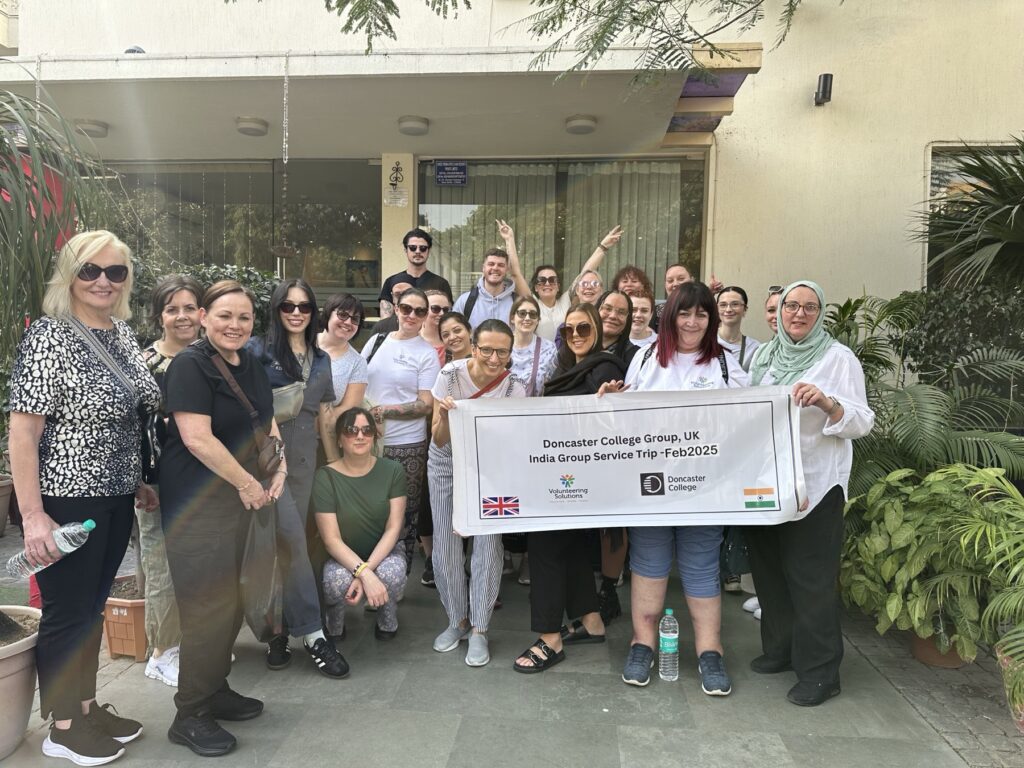
While the youngest cohort was rethinking the gap year, an older one discovered it. The “adult gap year,” “career break” and “golden gap year” have moved from novelty to genuine trend. Forbes reports adult gap years are firmly on the rise, and the global gap-year travel market was valued at around USD 17.6 billion in 2024, growing at roughly 8% a year. Older travelers are leading the charge: AARP found 70% of over-50s planned to travel in 2025 — up year on year — with a notable jump in appetite for international trips.
The reasons are intuitive once you look. People in their 30s to 60s are more likely to have the disposable income a structured placement requires. Career breaks have become socially and professionally acceptable — surveys now suggest nearly half of workers have taken a break of some kind. Empty-nesters and early retirees have both the time and the desire to do something that feels significant, not just relaxing. And crucially, this group values the very things a well-run program provides: safety, structure, a local team on the ground, and flexible durations — a one- or two-week placement fits a career break or a retirement adventure far better than a semester-long commitment. It’s why our guides for retirees and the over-50s are among our most-read.
Why this shift matters

A rebalancing toward older volunteers is, in many ways, good news. Mature volunteers often bring professional skills — teaching, healthcare, trades, business — that partner communities genuinely value, and they tend to arrive with realistic expectations. The growth of the 30–70 segment is helping keep ethical, well-supported programs viable year-round.
But there’s a real cost if young people disengage from international volunteering. A gap-year placement at 18 or 22 can be formative: it builds intercultural understanding, resilience and a sense of global citizenship at exactly the age those things take root. Our own blog on which age group volunteers abroad the most reflects how central young people once were to the movement. If the next generation of leaders, teachers and clinicians never spends meaningful time in a different culture, the world is a little less connected for it. The goal shouldn’t be to replace young volunteers with older ones — it’s to bring young people back on terms that work for them.
Gen Z, this is your sign to go
If you’re 18 to 25 and reading this: the case for volunteering abroad has never been stronger, and doing it young is a genuine advantage. Time abroad at this stage compounds — it builds intercultural skills, resilience, confidence and a network at exactly the moment employers and universities value them most. The evidence backs it up: around 79% of students say a purposeful trip would improve their employability, and a well-chosen placement gives you real, demonstrable experience to talk about in interviews and applications.
The barriers are real, but they’re beatable. You don’t need a gap-year-sized budget or three free months. Short one- and two-week placements fit a summer or a semester break, budget-friendly destinations keep costs down, and there are more funding routes than most students realize — university travel grants, bursaries and scholarships among them (we’ve rounded up the options in our university funding guide). Fundraising and part-time saving do the rest.
And your instinct to question things is a strength, not a barrier. The generation that pushed back on “voluntourism” is exactly the one that can choose well — genuinely ethical, community-led programs that do real good and avoid the traps. As a B Corp, that’s the only kind of trip we run. So whether it’s a gap year, a summer, or a break between studies, don’t wait for the “perfect” moment — start small, choose responsibly, and go. Our guide to volunteering abroad in your 20s is a good place to begin.
How the sector — and Volunteering Solutions — is responding
The organizations that will thrive are the ones that meet each generation where it is. For us, that means a few clear commitments:
- Programs for every age, honestly designed. From teen and 20-something placements to senior volunteering, we build trips around what each group actually needs.
- Flexible, short formats. Our one-week and short-term options suit career-breakers, retirees and budget-conscious students who can’t commit three months.
- Ethics first. As a B Corp, we’re transparent about impact and pricing, work through permanent local teams, and steer volunteers away from anything that isn’t genuinely useful — the very thing young sceptics rightly demanded.
- Employability, made explicit. Because younger volunteers increasingly travel with their careers in mind, we’re clear about the skills, references and experience a placement builds.
The generational shift in volunteering abroad isn’t a decline — it’s a rebalancing, and an opportunity. Whether you’re 19 and saving hard for a first big trip or 59 and planning a second act, there’s a responsible, meaningful way to do it. Talk to our team and we’ll help you find it.
Frequently asked questions
Is Gen Z volunteering less than previous generations?
Not straightforwardly. Some measures show lower formal volunteering rates among Gen Z, while others show Gen Z and millennials as the most likely generations to volunteer. The clearest trend is that Gen Z volunteers differently — favouring flexible, virtual, skills-based and local roles — while the specific format of the long-haul, multi-week volunteer-abroad gap year has declined from its early-2010s peak.
Why are more older people volunteering abroad?
People aged 30 to 70 are more likely to have the disposable income and flexible time a structured placement needs. Career breaks are now widely accepted, empty-nesters and retirees are seeking meaningful travel, and short, well-supported programs fit their lives. Industry data shows adult gap years and over-50s international travel both growing strongly.
What is a “golden gap year”?
A golden gap year is an extended, purposeful trip taken later in life — typically by people in their 50s, 60s or beyond, often around retirement — that frequently includes volunteering, learning or conservation rather than pure leisure.
Did the voluntourism backlash reduce young people volunteering abroad?
It played a part. Scrutiny of poorly-designed programs between roughly 2016 and 2019, especially childcare center tourism, made a socially-aware generation more cautious. That was a healthy correction: it reduced demand for harmful placements and pushed the sector toward ethical, community-led models.
Can you still volunteer abroad affordably as a young person?
Yes. Shorter one- and two-week placements, budget-friendly destinations, and fundraising or university grants all make it possible. Cost is a real barrier for many young people today, but it isn’t an absolute one — flexible formats keep overseas volunteering within reach.
What’s the best age to volunteer abroad?
There isn’t one. Most of our programs welcome volunteers from 17 upward with no maximum age. The right time is whenever you have the motivation, and a placement can be chosen to fit a gap year, a career break or retirement.
{
“@context”: “https://schema.org”,
“@type”: “FAQPage”,
“mainEntity”: [
{
“@type”: “Question”,
“name”: “Is Gen Z volunteering less than previous generations?”,
“acceptedAnswer”: {
“@type”: “Answer”,
“text”: “Not straightforwardly. Some measures show lower formal volunteering rates among Gen Z, while others show Gen Z and millennials as the most likely generations to volunteer. The clearest trend is that Gen Z volunteers differently, favouring flexible, virtual, skills-based and local roles, while the specific format of the long-haul, multi-week volunteer-abroad gap year has declined from its early-2010s peak.”
}
},
{
“@type”: “Question”,
“name”: “Why are more older people volunteering abroad?”,
“acceptedAnswer”: {
“@type”: “Answer”,
“text”: “People aged 30 to 70 are more likely to have the disposable income and flexible time a structured placement needs. Career breaks are now widely accepted, empty-nesters and retirees are seeking meaningful travel, and short, well-supported programs fit their lives. Industry data shows adult gap years and over-50s international travel both growing strongly.”
}
},
{
“@type”: “Question”,
“name”: “What is a golden gap year?”,
“acceptedAnswer”: {
“@type”: “Answer”,
“text”: “A golden gap year is an extended, purposeful trip taken later in life, typically by people in their 50s, 60s or beyond and often around retirement, that frequently includes volunteering, learning or conservation rather than pure leisure.”
}
},
{
“@type”: “Question”,
“name”: “Did the voluntourism backlash reduce young people volunteering abroad?”,
“acceptedAnswer”: {
“@type”: “Answer”,
“text”: “It played a part. Scrutiny of poorly-designed programs between roughly 2016 and 2019, especially childcare center tourism, made a socially-aware generation more cautious. That was a healthy correction: it reduced demand for harmful placements and pushed the sector toward ethical, community-led models.”
}
},
{
“@type”: “Question”,
“name”: “Can you still volunteer abroad affordably as a young person?”,
“acceptedAnswer”: {
“@type”: “Answer”,
“text”: “Yes. Shorter one- and two-week placements, budget-friendly destinations, and fundraising or university grants all make it possible. Cost is a real barrier for many young people today, but it is not an absolute one, and flexible formats keep overseas volunteering within reach.”
}
},
{
“@type”: “Question”,
“name”: “What is the best age to volunteer abroad?”,
“acceptedAnswer”: {
“@type”: “Answer”,
“text”: “There isn’t one. Most Volunteering Solutions programs welcome volunteers from 17 upward with no maximum age. The right time is whenever you have the motivation, and a placement can be chosen to fit a gap year, a career break or retirement.”
}
}
]
}
Whatever your generation, there’s a place for you
The data and our own experience point the same way: volunteering abroad isn’t fading, it’s changing shape. If you’re weighing up a first gap-year trip or a later-life adventure with purpose, tell us your age, your dates and your budget — and we’ll help you find a responsible program that fits.

Saurabh Sabharwal is the founder of Volunteering Solutions and its parent B Corporation, Impact Explorers. He has championed ethical, affordable volunteer travel since 2007 and writes about how to volunteer abroad responsibly.