English (US) ▾
 Nederlands
 English (UK)
 Deutsch
 Italiano
 Português
 Español
 Français
Things to Do in Madagascar
Lemurs, Nosy Be's islands, the baobabs and rainforest found nowhere else — what to see in Madagascar around a volunteer placement.
See volunteer programs in MadagascarMadagascar split from the African mainland around 88 million years ago and evolved almost entirely alone: roughly 90% of its wildlife exists nowhere else on earth. Lemurs, chameleons, baobabs and spiny forest make it one of the planet’s genuine biodiversity hotspots — and one of its most threatened.
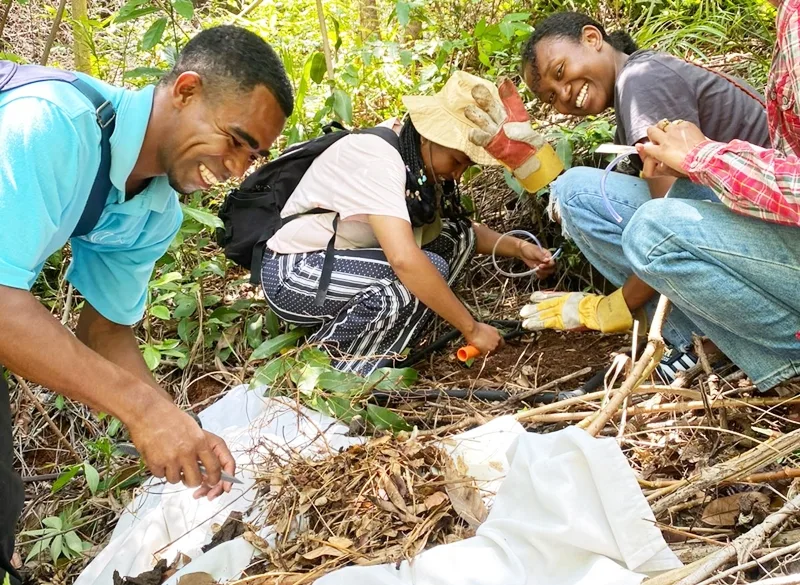
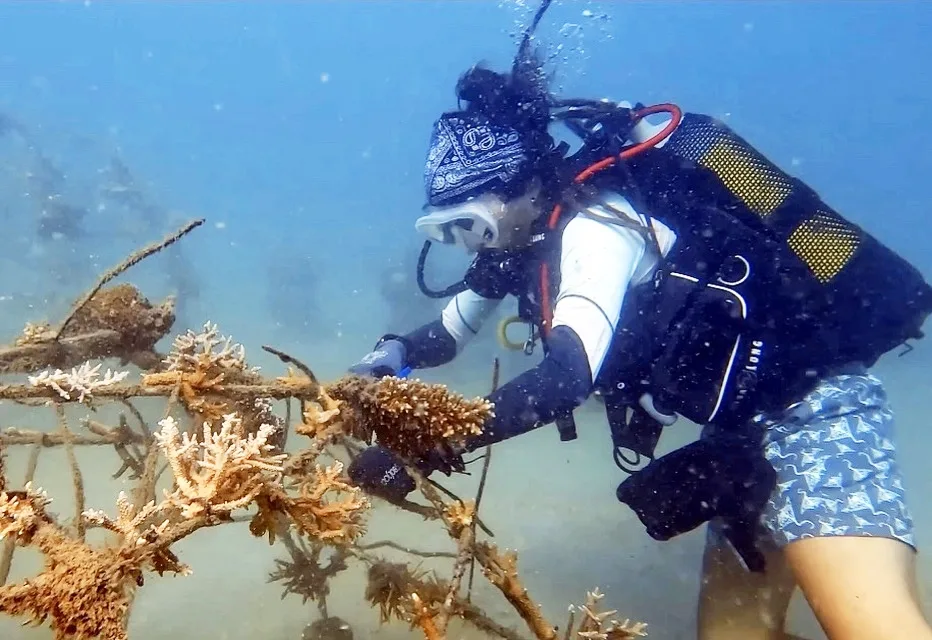
Our placements are on Nosy Komba, a volcanic island off the northwest coast, where marine and forest conservation work happens alongside the communities living there.
The best things to do in Madagascar
1. Nosy Komba and the lemurs
Your base island is home to habituated black lemurs in the forest above Ampangorina village, plus boa constrictors and chameleons. Small, road-free and reached by pirogue — daily life here is the experience as much as the wildlife.
2. Nosy Be and the northwest islands
The main island next door has beaches, markets and ylang-ylang plantations that scent the whole place. Beyond it, Nosy Iranja’s sandbar connects two islands at low tide, and Nosy Tanikely is a marine reserve with turtles and reef fish a snorkel from shore.
3. Whales and marine life
Humpback whales migrate through these waters roughly July to September and are regularly seen from boats around Nosy Be. Whale sharks appear from around September to December — the northwest is one of the most reliable places in the Indian Ocean to see them.
4. The Avenue of the Baobabs
Madagascar’s defining image: a dirt road near Morondava lined with Grandidier’s baobabs, some 800 years old, at their best in the last light of the day. It is a long way south of the northwest, so treat it as a separate trip rather than a weekend.
5. Andasibe-Mantadia
The most accessible rainforest, three hours east of the capital, and home to the indri — the largest living lemur, whose eerie call carries for kilometers. Night walks reveal mouse lemurs and chameleons. The standard stop for anyone flying via Antananarivo.
6. Tsingy de Bemaraha
A UNESCO forest of razor-sharp limestone pinnacles, crossed on via ferrata and rope bridges. Remote, hard to reach and only accessible in the dry season, but there is nothing else like it anywhere.
When to visit Madagascar
The dry season, roughly April to November, is the best time to travel and the only period when remote parks are reliably reachable. Cyclone season runs January to March, when heavy rain can cut roads and disrupt flights in the northwest. Whale season peaks July to September.
Getting around
Travel in Madagascar is slow — roads are poor and distances deceptive, so domestic flights save days when they run to schedule. Around Nosy Komba, everything is by boat. Plan generous buffers and treat any long-distance itinerary as flexible.
Seeing Madagascar as a volunteer
Nosy Komba placements are island-based, with boat trips to the surrounding reserves. Our Madagascar placements are based in Nosy Komba, include accommodation, meals, airport pickup and 24/7 in-country support, and leave evenings and weekends free — which is exactly when most of this list gets ticked off. See volunteer programs in Madagascar for live prices and dates, or read our complete guide to volunteering in Madagascar for costs, visas and safety.
Madagascar travel FAQs
Where is the best place to see lemurs?
There are over 100 species and they are highly localised. Nosy Komba has habituated black lemurs on site; Andasibe near the capital is the classic destination for indri; Ranomafana and Isalo in the south have their own species.
When can I see whales in Madagascar?
Humpbacks pass the northwest roughly July to September, and whale sharks appear from around September to December — both readily seen on boat trips from Nosy Be.
Is Madagascar difficult to travel in?
It is one of the more challenging destinations we work in: infrastructure is limited and journeys take longer than the map suggests. That is also why it stays unspoilt. Our in-country team handles the logistics for placements.
What language is spoken?
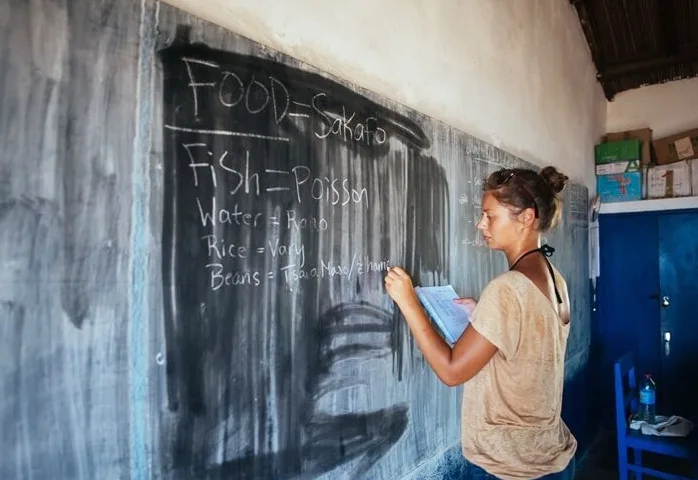
Malagasy and French. English is limited outside tourism, so basic French phrases genuinely help — though our coordinators bridge the gap on placement.
Photo: Bernard DUPONT from FRANCE / Wikimedia Commons (CC BY-SA 2.0)
Volunteer programs in Madagascar
Combine your trip with meaningful project work — housing, meals, airport pickup and 24/7 in-country support included.