 English (US) ▾
 Nederlands
 English (UK)
 Deutsch
 Italiano
 Português
 Español
Sea Turtle Monitoring Program
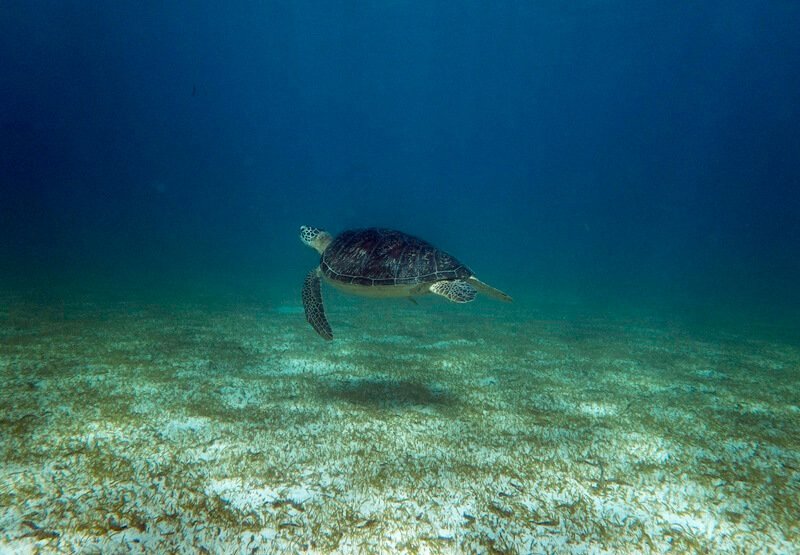
The turtle conservation volunteer program in Madagascar involves monitoring sea turtles on the northern beaches. During the nesting season (November to April), volunteers help track nesting sites, behaviors, and population size. In the off-season (May to October), volunteers assist in identifying turtle activity areas, estimating populations, and restoring nesting beaches. Volunteers also participate in seagrass surveys, turtle watches, and beach cleanups.
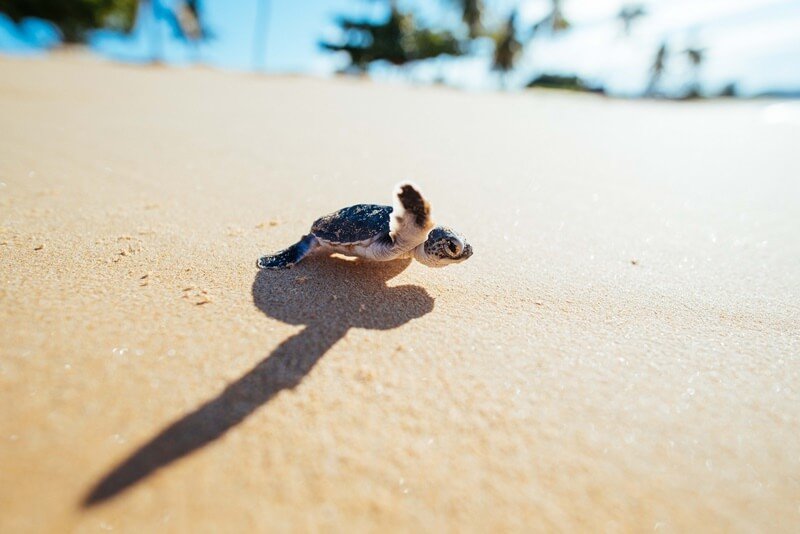
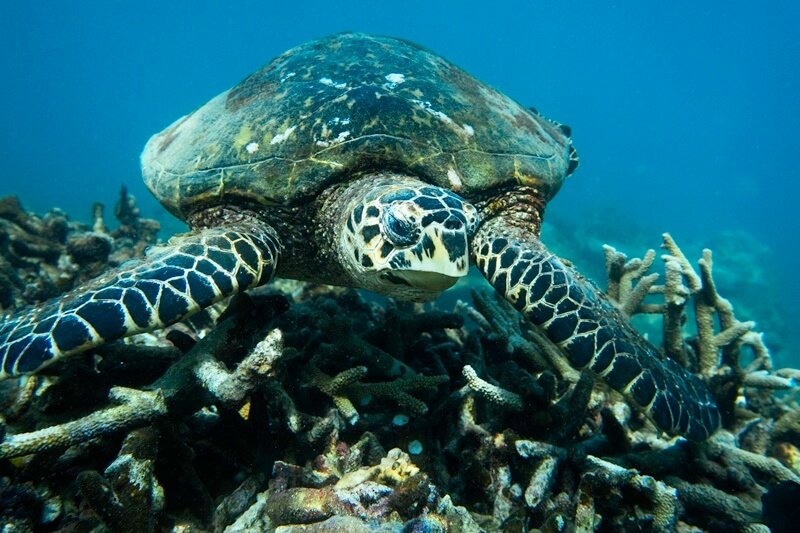
On Nosy Komba, an island off Nosy Be in northern Madagascar, you join a marine conservation camp that monitors two endangered sea turtle species along the surrounding beaches and reefs. Day to day you carry out beach patrols and turtle watches, snorkel-based surveys to photograph and identify turtles, seagrass monitoring, and beach and ocean cleanups, plus data logging for the project's research database. When nesting activity is reported, you may also travel to the Ampohana camp for nest patrols and hatchling surveys. The program suits anyone with no prior experience who has a genuine interest in conservation and research.
The program runs for 1–12 weeks, starting twice a month (sundays), with the next departure on 4 Oct 2026. You live in a shared volunteer house at camp, sleeping in huts with four to six other volunteers, and eat three Malagasy meals a day cooked on site. Programs start from $869, deposit included. Choose this program if you want hands-on marine fieldwork, including snorkel-based turtle identification and seagrass surveys, supported by a resident dive team of Rescue Divers, Dive Masters and Instructors.
- Volunteer to protect endangered sea turtle species in their natural habitat as well as to promote public awareness by further collaborating with local communities and national authorities
- An opportunity to get up close to these beautiful creatures whilst helping to ensure the health and survival of the species
- Work on the beautiful beaches of Nosy Komba and live the beach life to the fullest!
- Gain first-hand international work experience and learn more about the conservation procedures of these endangered species
- Make lifelong friends and return with incredible stories, photos, and memories
Your role on this program
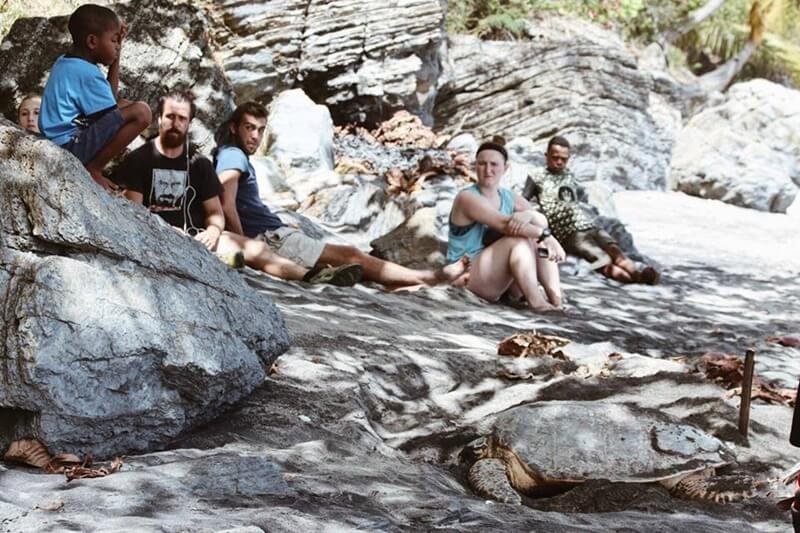
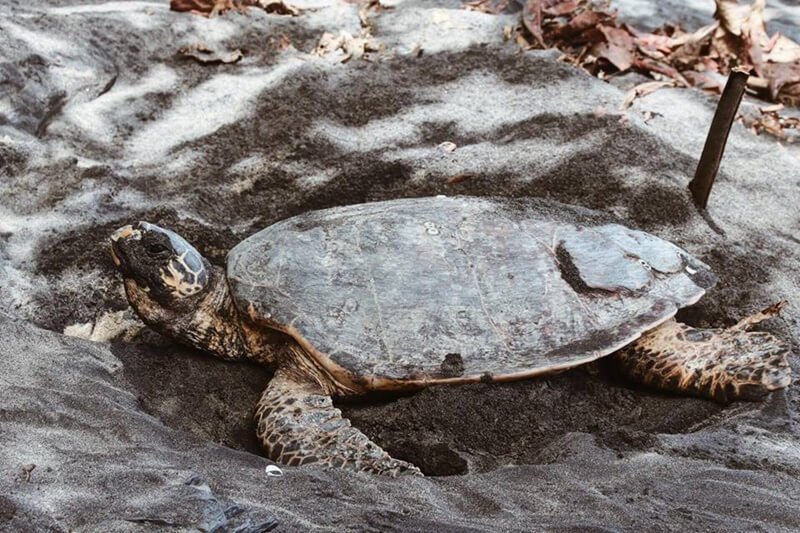
- Conduct beach patrols and turtle watches to spot nesting activity or turtles on the shore
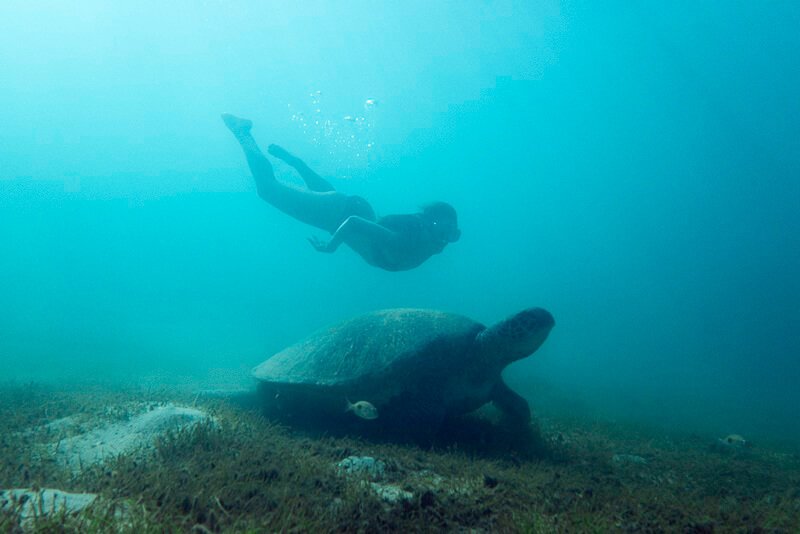
- Carry out snorkel-based turtle surveys, photographing and identifying turtles for the sightings database
- Survey seagrass meadows, assessing density, health and biodiversity
- Carry out beach and ocean cleanups, logging debris collected in the CleanSwell app
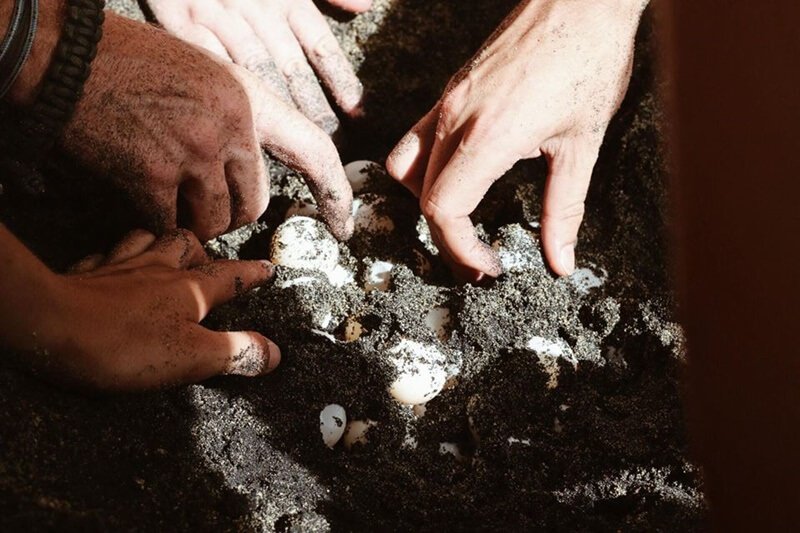
- Assist with turtle nest excavations and hatchling success surveys at the Ampohana camp
- Help construct nest protection barriers and monitor nest conditions when nests are at risk
- Make eco-bricks from non-recyclable plastic and craft bamboo straws for local distribution
- Take part in community engagement activities and Malagasy language lessons with local staff
Exact duties vary with the placement's needs, the season and your experience.
Role boundaries
You take part in monitoring, surveying and data collection under the direction of the Project Coordinator and resident camp staff; you do not make research, veterinary or conservation-strategy decisions on your own. Turtles and other wildlife are only handled or approached under staff instruction, with no riding, bathing, cuddling or posed handling, and any diving activity is supervised by the on-site Rescue Divers, Dive Masters and Instructors.
A typical day and week
Volunteers usually arrive on Sunday and the program will start from Monday.
Monday
07:30 Breakfast
08:30 Orientation Presentation
10:00 Health and Safety Presentation
11:00 Complete and sign forms and paperwork
12:00 Lunch
14:00 Walk to the neighboring village of Ampang for a tour led by staff
17:00 Return to camp (walk or by boat at a cost of 2,000 MGA/person)
18:00 Dinner
18:45 Daily Board Briefing
Tuesday: First official day on project! Generally, you will be doing hands-on activities integrated with staff and other more experienced volunteers. Staff will go over activities and times after dinner on Monday so you know where to go.
Volunteer Activities:
Each program has morning and afternoon activities. After dinner each day, we have a briefing to go over activities for the following day.
Note: Schedule will vary depending on the project, tides, etc.
Sample Schedule:
05:00-07:00 Breakfast on camp
06:00-08:00 Start of morning activities on the project
12:00 Lunch on camp
14:00 Start of afternoon activities on the project
16:00-17:00 Volunteer activities for the day usually conclude
18:00 Dinner in the camp
18:45 Board Briefing to go over activities for the following day
Timings are the placement's usual pattern; the local team confirms your hours at orientation, and they can change with school terms, clinic rotas, weather and the project's needs.
Who can join and what you need
- Minimum age 18; younger volunteers may join with signed guardian permission or when accompanied by a parent
- No prior experience needed, but a keen interest in conservation and research
- Reasonable physical fitness and energy for island life and outdoor fieldwork
- A positive, flexible attitude suited to remote, off-grid living
- Travel and medical insurance, either your own policy or one arranged through Volunteering Solutions
- A criminal background check issued within 12 months of the start date, required because activities include teaching at the Ampohana school
The placement, its limits and your part in it
The Sea Turtle Monitoring Program is run from Volunteering Solutions' camps on Nosy Komba and, when nesting activity requires it, at Ampohana on the Madagascar mainland. Data collected on nesting, sightings and habitat feeds into the project's own records and is shared with partners such as the Olive Ridley Project and Wildlife Conservation Society. Work is organized day to day by resident project staff, with a Project Coordinator briefing volunteers each evening on the following day's activities.
Diving-related work is supervised by qualified Rescue Divers, Dive Masters and Instructors, and all turtle handling follows staff instruction and the project's animal welfare approach rather than volunteer discretion. As a volunteer you contribute practical survey, patrol and cleanup work and help build a research record for a relatively understudied stretch of coastline; the scope and focus of tasks shifts with the season, tides and the project's current needs rather than following a fixed plan.
Our standards
- Responsible volunteer travel policyHow we choose, run and review every project
- Animal welfare policyOur rules for wildlife, marine and animal-care projects
- Certified B CorporationSocial and environmental performance verified by B Lab
- How we volunteer responsibly in MadagascarCountry-level partner context and standards
Start dates
Weekly start dates, year-round — pick any week across the next two years.
Program fees by duration
Prices include your $249 booking deposit — which is deducted from your total program fee. Your deposit stays valid for one year, during which you may enroll in multiple programs. A 5% international banking fee applies to credit-card payments in USD or AUD.
| Duration | Total price | |
|---|---|---|
| 1 week | $869 | |
| 2 weeks | $1,144 | |
| 3 weeks | $1,419 | |
| 4 weeks | $1,694 | |
| 5 weeks | $1,969 | |
| 6 weeks | $2,244 | |
| 7 weeks | $2,519 | |
| 8 weeks | $2,794 |
Indicative conversion — your booking is charged in the currency you choose at checkout.
✓ What you're paying for
- 24 hrs Assistance and support from staff
- Comprehensive Pre- Departure Information
- Orientation
- Sleeping accommodation on camp for the program duration
- Three meals per day, seven days per week on camp
- Supervision and training by staff
- Airport pick-up in Nosy Be
- Transportation to program sites
- Travel & Medical Insurance (Available at an extra cost)
- Certificate of Participation(On Request)
Not included
- Flights
- Visa costs
- Personal items
- Travel and health insurance
- Airport drop-off
Accommodation & meals
Airport Transfer
Volunteers should arrive at Nosy Be Fascene Airport for pick-up on Sunday before their start date. They will be met at the airport or boat port (if arriving overland) and transferred to the volunteer camp on Nosy Komba. The boat ride from Nosy Be to Nosy Komba takes about 45 minutes with the last boat of the day departing around 15:00. If volunteers do not arrive in time for the last boat to camp, our staff will assist in getting them to their hotel (we can provide hotel recommendations). The following day they will be met at a predetermined time and place and transferred to the camp. If there is time before the last boat departs for Nosy Komba, our staff will give them a tour of the town of Hellville where they can purchase snacks, a local SIM card, draw money at an ATM, etc. It is important to note that in addition to time constraints with boat departures and tides, shops and stores all close for siesta between noon and 14:30/15:00 each day.
For your departure: You are responsible to arrange and pay for your own transport back to the airport, however, we are happy to help you book your transport as needed.
Accommodation
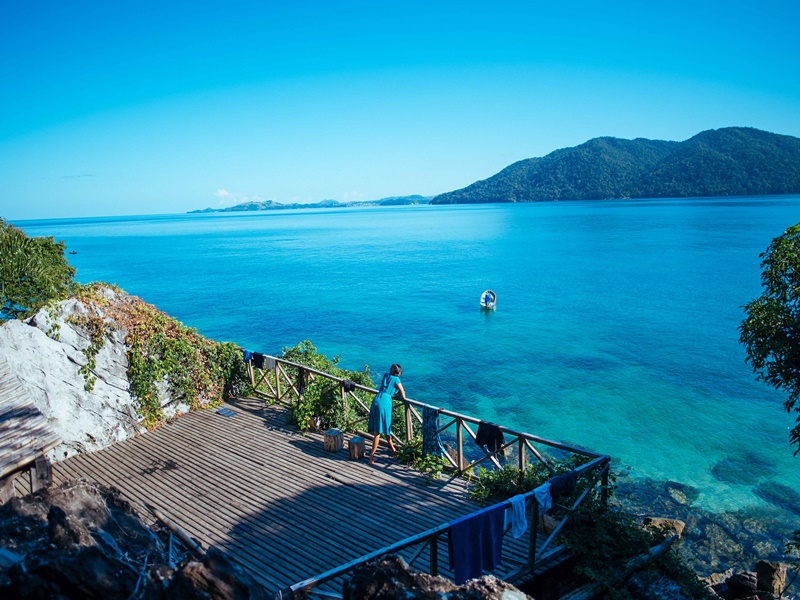
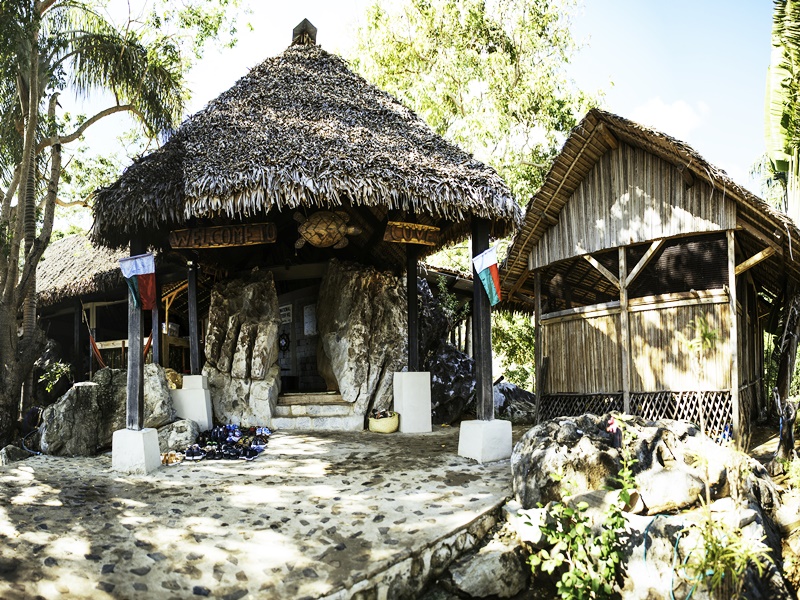
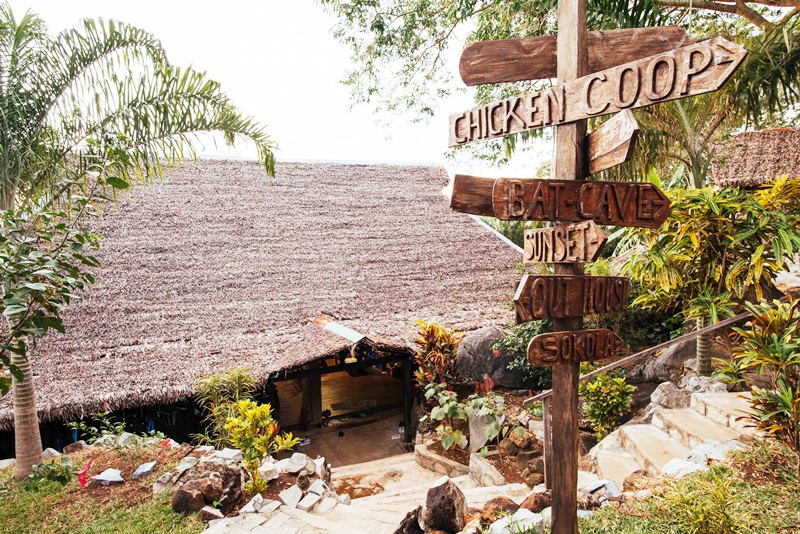
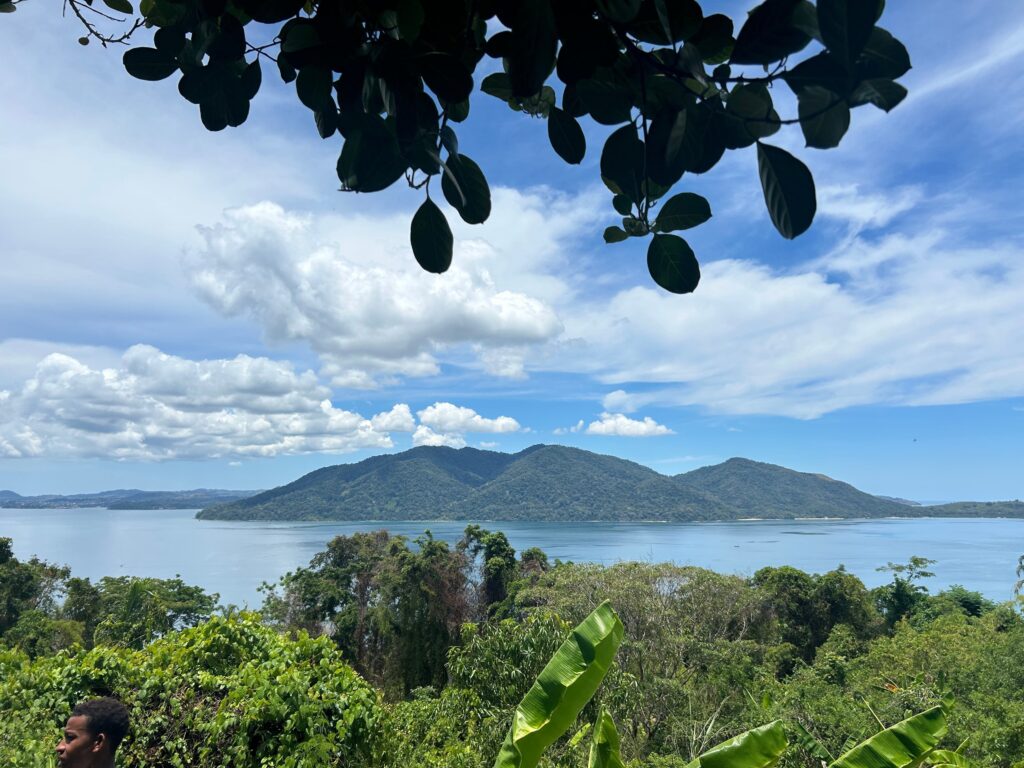
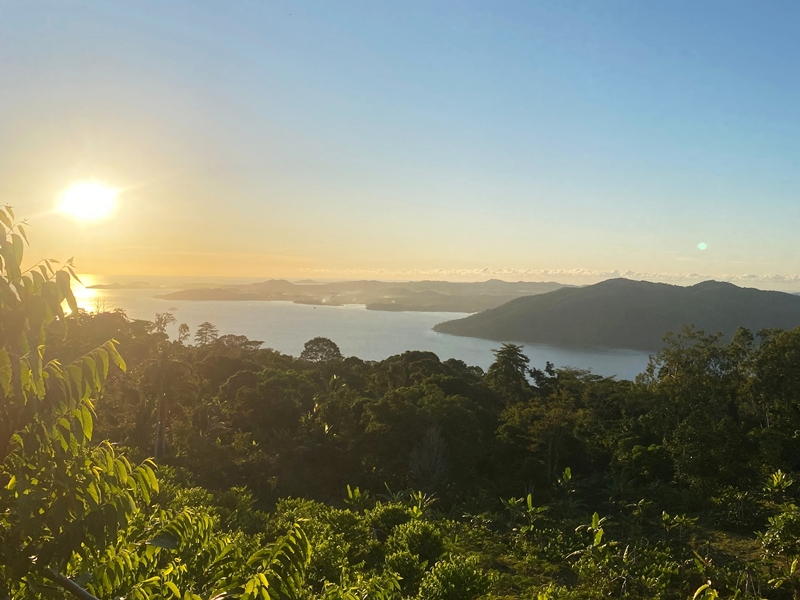
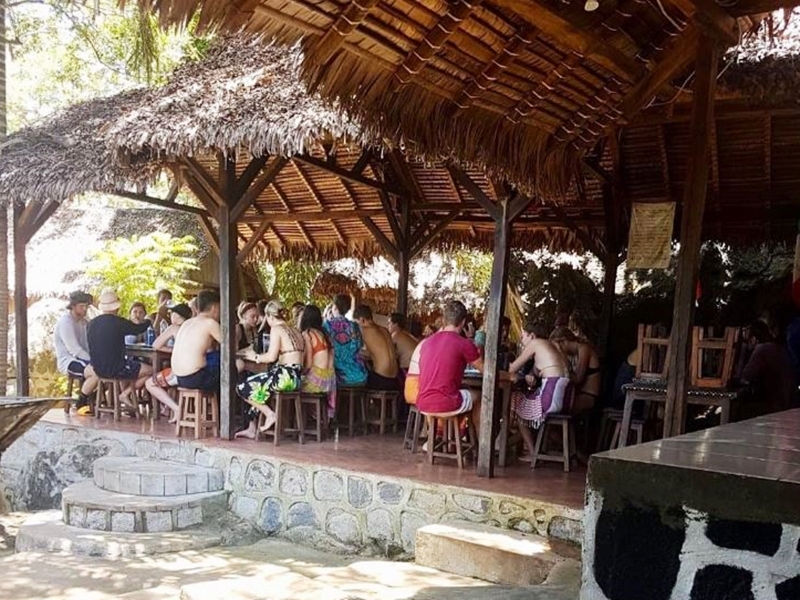
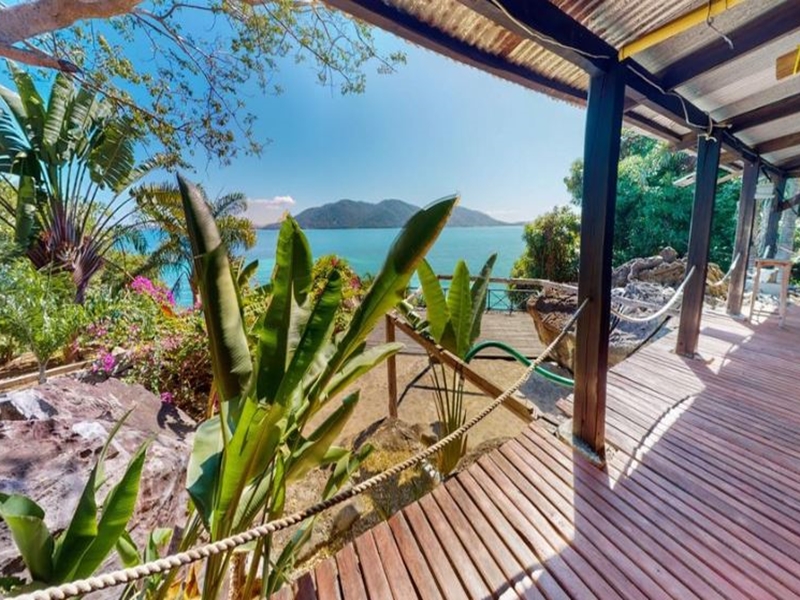
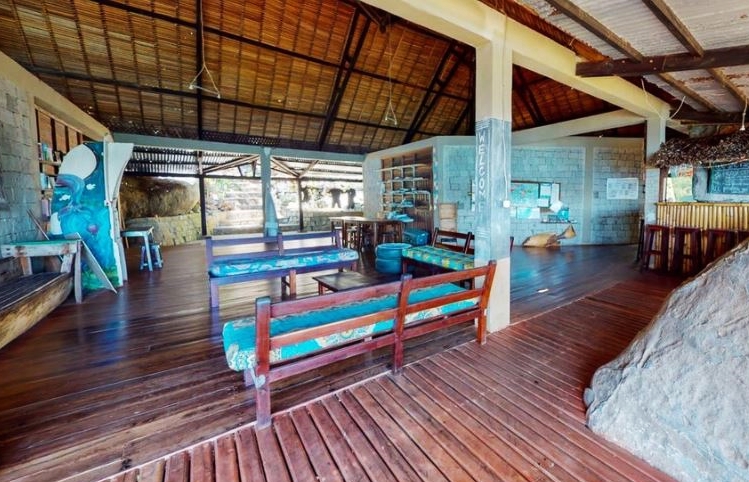
We have 2 accommodation facilities in Madagascar. The first one, Turtle Cove, is built into the steep slopes of Nosy Komba, which is a multi-level compound overlooking the spectacular coral reef below. Climb stone stairs up from an idyllic beach to the main house situated above the dive deck and take in the stunning view of the ocean extending far across all the way to Lokobe Forest Reserve on Nosy Be. The main house accommodates senior staff members and serves as a meeting place and hangout for volunteers during the day. Large decks line the front of the main house complete with hammocks, bean bags, and benches.
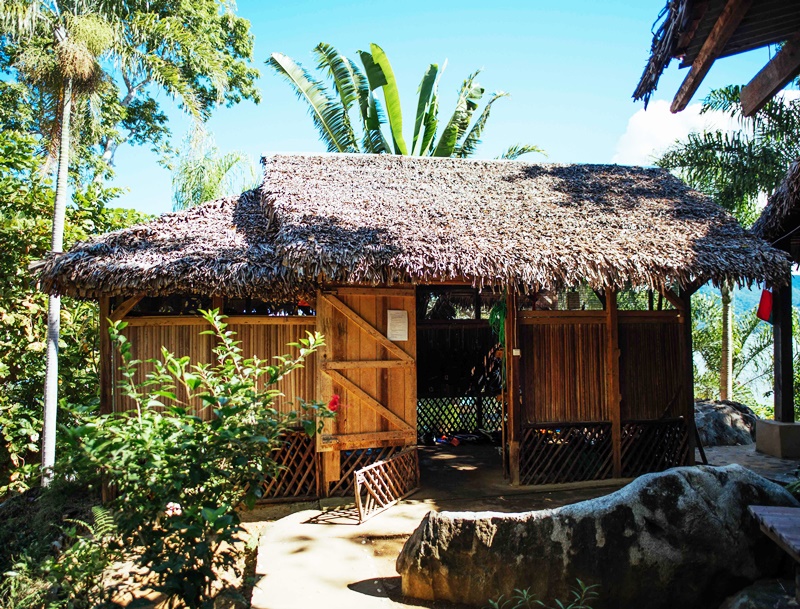
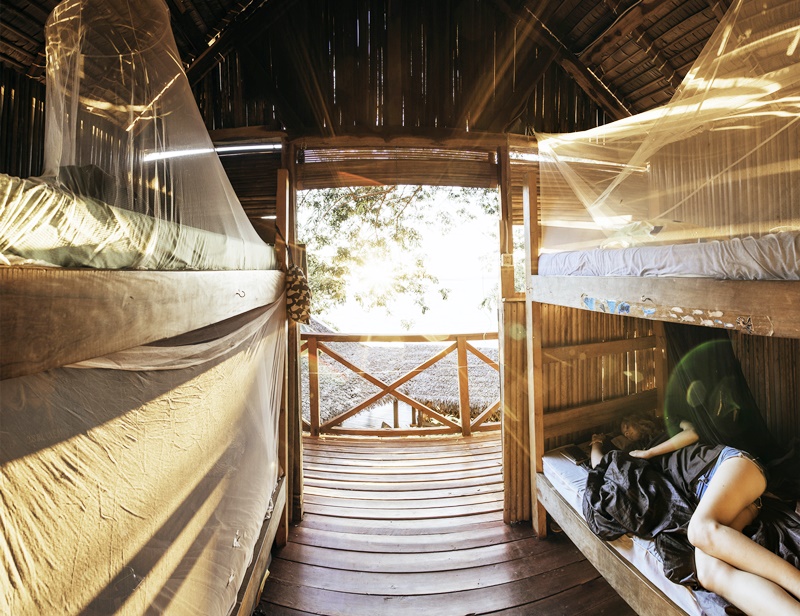
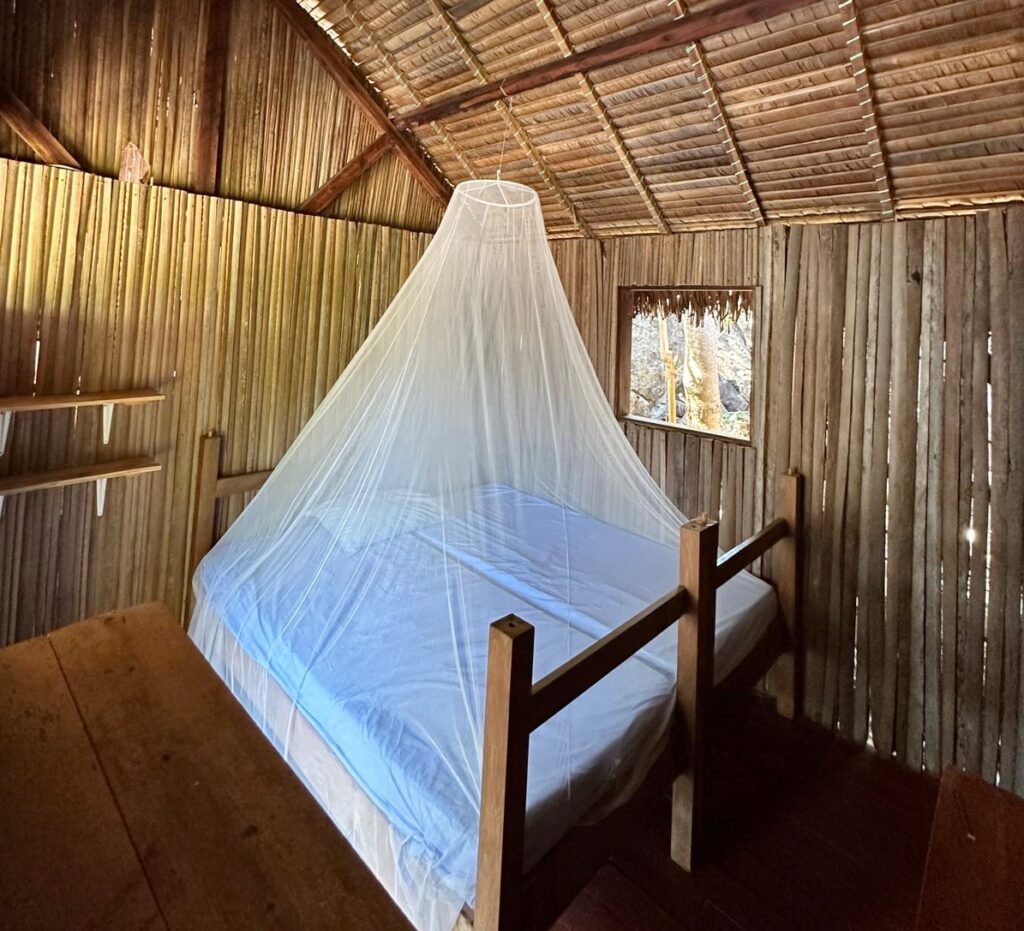
Volunteers can expect to share a hut with four to six other volunteers and will need to bring their own bedding and towels. The huts have several bathroom facilities equipped with running water, flush toilets and cold water showers. There is also a work area for volunteers as well as lockable storage boxes available for each hut to store small valuables. Volunteers should also bring a padlock to secure personal items in their luggage when not in use.
The second camp is located on mainland Madagascar in the small remote village of Ampohana. Volunteers are accommodated in communal A-Frame bungalow fitted with double bunk beds. Our camps are eco-friendly with solar-powered lighting throughout. There are no charging facilities for electronic devices; volunteers are encouraged to bring a solar panel and battery pack to keep their devices charged. Charging ports are available in the neighboring village of Ampang, about a half-hour hike from camp.
We do have an onsite generator for staff use located at our main camp, though volunteers are welcome to charge small devices (no laptops) from this if there is space. Bear in mind that in an effort to go green, the use of the generator is minimal, sometimes only once per week or less.
Wi-Fi is not available on camp, however, there is Wi-Fi access in the neighboring village of Ampang, about a half-hour hike from camp. Volunteers can purchase a local sim card in Hellville along with 2GB of data for $5. Please ensure that your phone is unlocked and sim card compatible.
A hand-washing laundry station is provided on camp with a clean water tap, a concrete work surface for scrubbing, and buckets. Volunteers will need to purchase their own laundry soap (available in neighbouring Nosy Be) and can either do their own washing or pay one of the local kitchen or caretaker staff to do it for them.
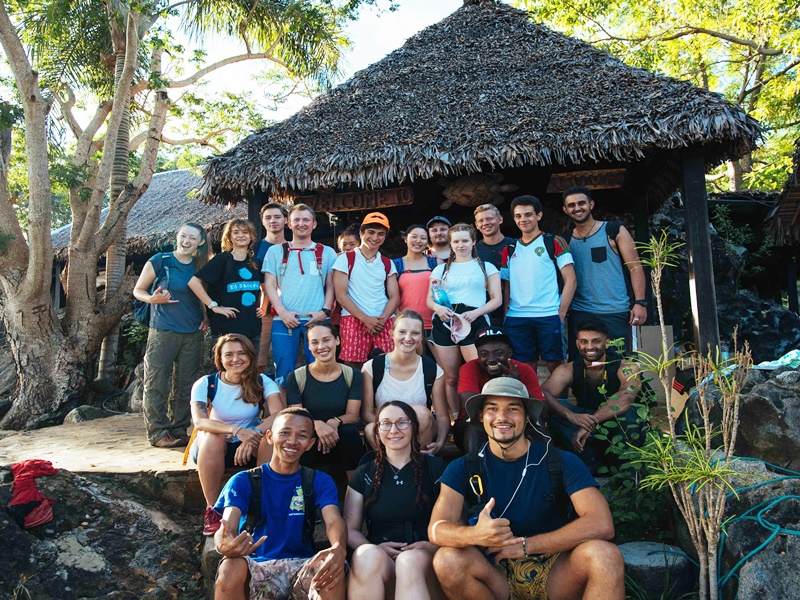
It’ll be great fun to live this life away from the network, where you’ll get ample time to bond with your fellow mates, share your stories and plan out how to make a difference.
Meals
Three meals per day are provided seven days per week. Each meal is prepared by our on-site cooks using traditional Malagasy cooking methods using fresh, locally grown, seasonally available produce. Most meals have a rice base with beans and vegetables on the side (or over rice).
Fruits and vegetables served will change depending on the season and availability of local produce. Some meals will include fish/seafood, beef (zebu), or chicken. Meat, when part of a meal, is typically prepared with a sauce, cut into small pieces, and served over rice. In addition to bananas, breakfast usually consists of either baguettes and jam, eggs or crepes.
There is a vegetarian option for all meals. Due to logistics and the limitations of our remote location, we cannot provide a vegan option. Vegans can help themselves to the vegetable-based foods prepared, but will also need to supplement their diet with foods purchased off camp. If you have special dietary requirements, please let us know. We will do our best to provide accordingly, however you should not expect to eat as you normally do at home.
Know that you are volunteering in a remote region of a developing country and flexibility is necessary.
During your Free Time
A few popular weekend activities/places to visit are listed below.
-
Lokobe Forest Reserve
-
Discovery SCUBA Dive
-
SCUBA Dive Training
-
Explore different areas of Nosy Komba with a local guide and learn about medicinal plants, the endemic wildlife and more
-
Tanikely Natural Reserve
-
Visit Nosy Iranja or Nosy Sakatia (swimming and snorkeling)
-
Whale Shark Watching (seasonal)
-
Visit the Sacred Tree or Sacred Waterfall on Nosy Be
-
Hike up Mount Passot on Nosy Be
-
Visit Lemur Land park on Nosy Be, or the Lemur Park on Ampang Village on Nosy Komba
-
Ankarana National Park
-
Amber Mountain National Park
-
Visit plantations on the mainland in the city of Ambanja
-
Visit the city of Diego Suarez including the Emerald Sea, the Three Bays, Tsingy Rouge rock formation and more
Life on the program
Getting there and who looks after you in Madagascar
Airport pickup
You are met at Nosy Be Fascene Airport (NOS) on the Sunday before your start and taken by boat (about 45 minutes) to the camp on Nosy Komba. The last boat leaves around 3pm; if you arrive later, staff help arrange a hotel in Hellville and you cross to camp the next morning.
First night
You settle into your shared hut at camp ahead of the program's start the following Monday.
Orientation
Monday covers an orientation presentation, a health and safety briefing, and paperwork, followed by a staff-led tour of the neighboring village of Ampang in the afternoon.
First project day and ongoing support
Tuesday is your first hands-on day, working alongside staff and more experienced volunteers. Each evening there is a board briefing to go over the next day's activities, and resident staff provide daily supervision, training and 24-hour assistance.
From volunteers in Madagascar
Frequently asked questions
What will I actually do on this program?
You take part in beach patrols, turtle watches, snorkel-based turtle surveys, seagrass monitoring and beach and ocean cleanups, with the balance of activities shifting depending on the season and turtle activity.
Do I need experience or qualifications to join?
No experience is needed, but you should have a genuine interest in conservation and research, along with reasonable fitness for island fieldwork.
What does a typical day look like?
Activities run seven days a week with a morning and an afternoon session, roughly 6am-8am and 2pm-5pm in the sample schedule, though exact timing depends on tides and the project's needs.
How long can I stay and when do programs start?
You can join for 1–12 weeks, with new starts twice a month (sundays); the next start date is 4 Oct 2026.
What does the price include?
Programs start from $869, deposit included, covering camp accommodation, three meals a day, airport pickup, transport to program sites, orientation, and supervision and training by staff.
Where do I live and what do I eat?
You stay in a shared volunteer house, in huts of four to six people, bringing your own bedding and towels. Meals are three traditional Malagasy dishes a day, rice-based with fish, beans and vegetables, prepared on camp.
How does airport pickup and arrival work?
Staff meet you at Nosy Be Fascene Airport on the Sunday before your start and take you by boat to the camp on Nosy Komba; late arrivals are helped into a hotel in Hellville and cross the next day.
What support is available on camp?
Resident project staff supervise and train you throughout, there is an orientation and health-and-safety presentation on your first day, and the local team gives 24-hour emergency assistance.
Do I need a visa, vaccinations or insurance?
Travel and medical insurance is compulsory, either your own policy or one arranged through Volunteering Solutions; specific visa and vaccination guidance is sent to you before departure.
Will I get to handle turtles directly?
Any contact with turtles happens only under staff instruction as part of surveys, patrols or nest work; there is no riding, bathing, cuddling or posed handling of wildlife.
Do I need a background check for this program?
Yes, because activities can include teaching at the Ampohana school, you need a criminal background check issued within 12 months of your start date.
Who is this program a good fit for?
It suits volunteers aged 18 and over who are comfortable with remote, off-grid camp life and want hands-on marine and beach conservation work rather than a fixed classroom or clinical role.
Related pages
Schedule a meeting with a program advisor
We're here to help — a 20-minute one-on-one with detailed info, expert advice and application guidance.
Book a free meetingMore projects in Madagascar

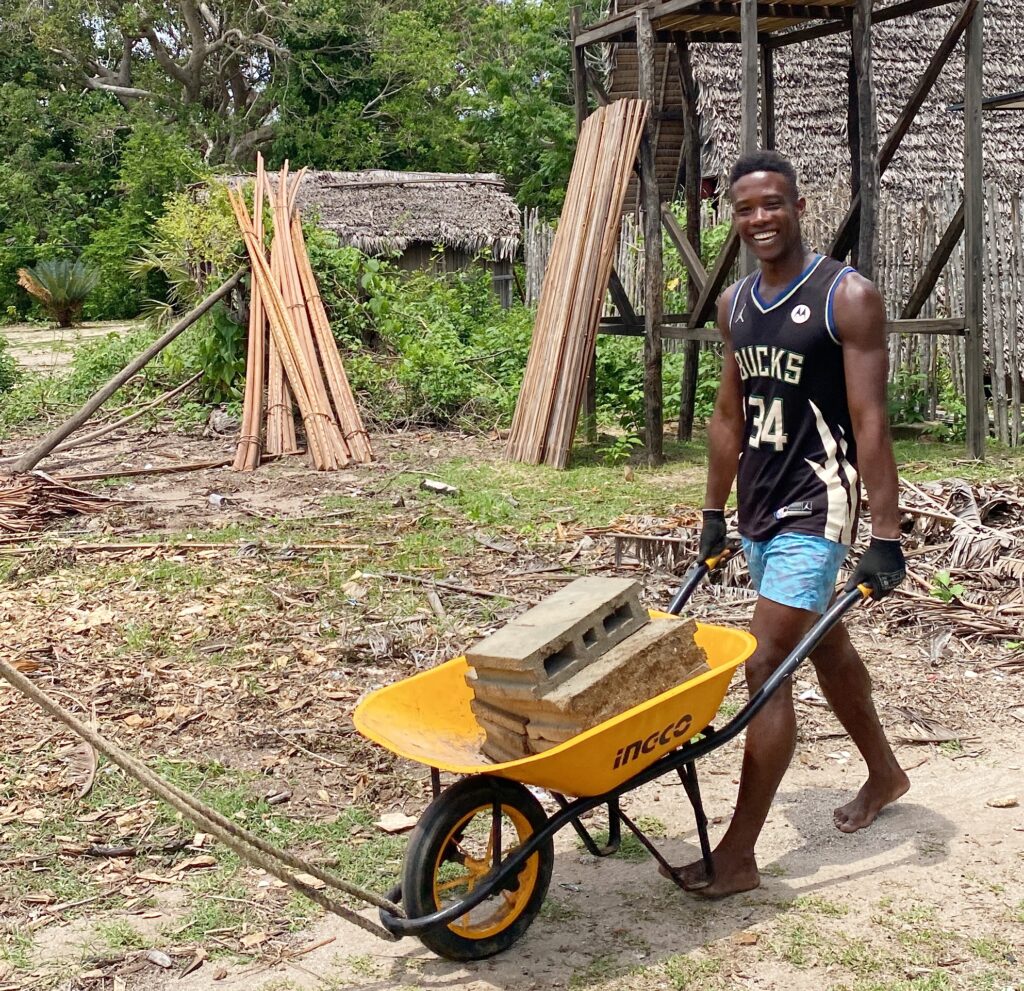
Community Development Volunteering
Be a volunteer and contribute towards the development of infrastructures where the entire community in Nosy Komba gets…
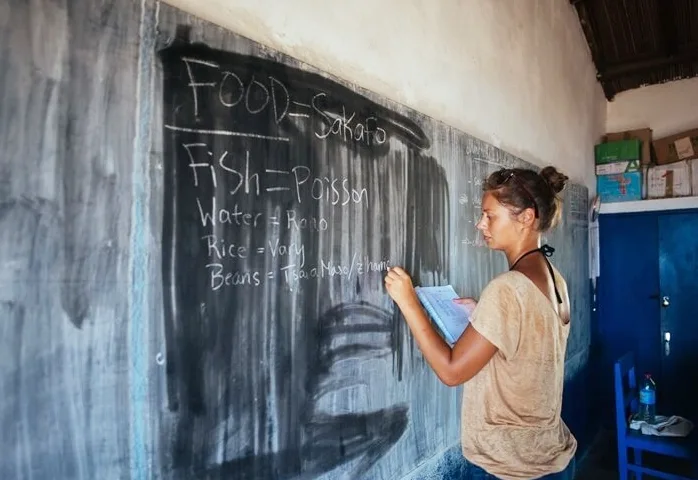
English Teaching Volunteer Program
Make an impact by volunteering in the English Teaching Program in Madagascar, helping young people build a brighter…
Forest Conservation Volunteer Program
Be a volunteer for the Forest Conservation Program in Madagascar and contribute towards protecting the flora & fauna…