 English (US) ▾
 Nederlands
 English (UK)
 Deutsch
 Italiano
 Português
 Español
 Français
How to Write a Faculty-Led Program Proposal for a Service-Learning Trip Abroad
Blog · October 12, 2026 · 11 min read · By Saurabh
A faculty-led program proposal is the document your study abroad office, department chair and finance team use to decide whether your trip runs. For a volunteering or service-learning trip, a strong proposal answers four questions clearly: what students will learn and how you will assess it, how the service work links to your course, how students will be kept safe, and whether the per-student budget stands up. Most institutions want it 12 to 15 months before departure. This guide works through each section and shows which parts you write yourself and which an in-country provider should supply in writing.
It is written for faculty in non-clinical subjects such as education, environmental science, sociology, international development, business, gender studies and languages, who want to take students on a faculty-led group volunteering trip. If you are still deciding whether to run a trip at all, start with our faculty-led planning guide, then come back here when you are ready to write.
What does a study abroad office look for in a faculty-led proposal?
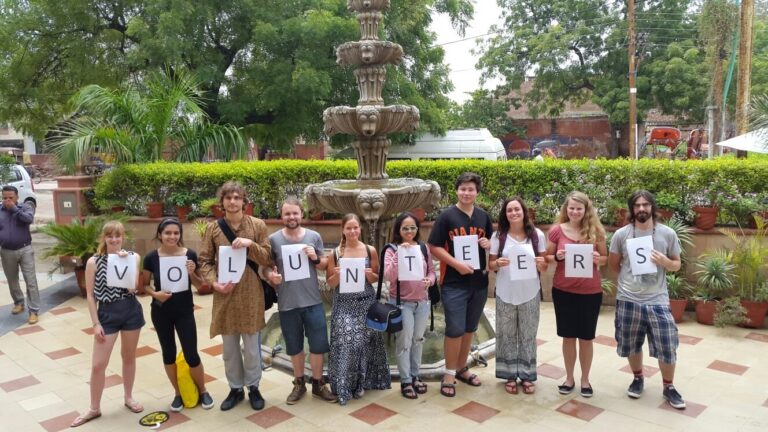
We looked at the published proposal guidelines from a range of US and UK universities. They are worded differently, but the review committees are checking the same four things:
- Academic integrity. Is this a credit-bearing course with outcomes, contact hours and assessment, or a trip with some reading attached? The service work has to be part of the course, not an add-on.
- Duty of care. Who is responsible for students at every point, what are the risks, and what happens in an emergency?
- Financial viability. Does the trip break even at a realistic enrollment number, and what happens if fewer students sign up?
- Institutional fit and reputation. Does the trip fit the university’s mission, and could the service component be criticised as voluntourism?
That last test has become stricter. Reviewers increasingly ask how the community benefits, not only how students do. A proposal that answers this before it is asked stands out.
What sections should a faculty-led program proposal include?
Every institution has its own form, but nearly all of them ask for these ten sections. The third column shows where the information should come from, so you can tell what to write yourself and what to ask for.
| Section | What reviewers want | Who supplies it |
|---|---|---|
| 1. Summary and rationale | Why this place, why this course, why now (one page) | You |
| 2. Course and learning outcomes | Course code, credits, contact hours, measurable outcomes | You (with your department) |
| 3. Syllabus | Pre-departure sessions, in-country content, post-trip assessment | You |
| 4. Day-by-day itinerary | Service hours, teaching time, cultural visits, rest days | Provider drafts it, you add the academic sessions |
| 5. Partner and project description | Who runs the project, what the community asked for, who supervises students | Provider, in writing |
| 6. Health, safety and risk | Risk assessment, emergency plan, insurance, codes of conduct | Provider and your risk office |
| 7. Budget | Per-student cost, break-even enrollment, faculty costs, contingency | You, using the provider’s quote |
| 8. Recruitment and selection | Target students, prerequisites, application process, timeline | You |
| 9. Orientation and re-entry | Pre-departure briefing, arrival orientation, debrief | Shared |
| 10. Evaluation | How you will measure student learning and community outcomes | You, with provider feedback |
How do you write learning outcomes for a service-learning trip?
This is where many first proposals fall down. An outcome such as “students will gain an appreciation of Nepali culture” cannot be assessed. Write outcomes that start with an observable verb and tie the service to the discipline. Some examples:
- Education: “Design and deliver three lessons adapted for multilingual learners with limited resources, and evaluate them against UK or US classroom practice.” This suits teaching placements.
- Environmental science: “Collect and interpret field data from a conservation project and critique its methods against published monitoring standards.” See our wildlife and conservation projects.
- Sociology and development studies: “Analyse how a community organization identifies need and allocates resources, drawing on two development theories from the course.” This works well with community development or women’s empowerment placements.
- Business and sustainability: “Assess the financial sustainability of a social enterprise and propose two evidence-based improvements.”
For assessment, a structured reflection model works better than a free-form diary. The DEAL model (Describe, Examine, Articulate Learning), developed by Sarah Ash and Patti Clayton for service-learning, is widely used and is easy for students to follow on placement. Pair it with a pre-departure assignment and a final paper or presentation after the trip. If colleagues are unsure how service-learning differs from volunteering, our explainer on service learning vs volunteering covers it.
Check your registrar’s rules on contact hours before you finalise the itinerary. Some institutions count supervised service hours towards credit and some count only taught sessions, and that affects how many seminars you need to timetable in-country.
How should you write each section?
Summary and rationale
Keep it to one page. Name the destination, the dates, the course, the expected number of students and the project. Then explain why this destination serves this course better than a domestic alternative. A committee that reads “Nepal” wants to know why your students need Nepal specifically.
Itinerary
Reviewers want to see a realistic balance of service, teaching, cultural learning and rest. A trip with no free time looks unsafe, and one that is mostly sightseeing looks like a holiday. As an example, one of our sample university-group itineraries for India runs for 10 days: arrival in Delhi on day 1, project work at a street-children education center from day 2, project mornings with cultural visits in the evenings until day 5, a full Delhi day on day 6, Jaipur and Agra on days 7 to 9, and departure on day 10. Add your own seminar slots, for example a one-hour reflection session every evening the group is on the project.
Partner and project description
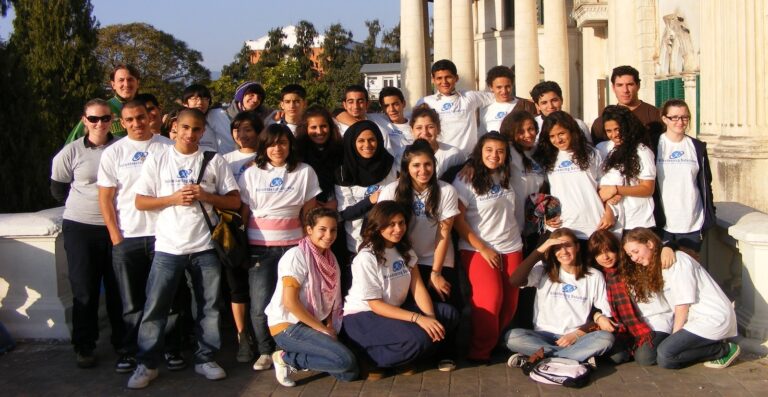
This is the section committees read most closely, and it is where your provider’s answers matter. Ask for written answers to these questions and attach them:
- Who identified the need for this project, and how long has the provider worked with this community partner?
- Who supervises students on site, and what are they qualified to do?
- What will students not be allowed to do? A good answer includes skilled work students are not trained for and unsupervised contact with children.
- Where does the program fee go? It should cover accommodation, meals, transport and in-country support, plus any contribution to the project.
- What happens to the project after your group leaves?
Volunteering Solutions is a certified B Corporation and has hosted more than 200 college and university groups since 2007. Our in-country teams provide these answers for every group proposal, together with our responsible volunteer travel policy and safeguarding policy, which you can attach.
Health, safety and risk
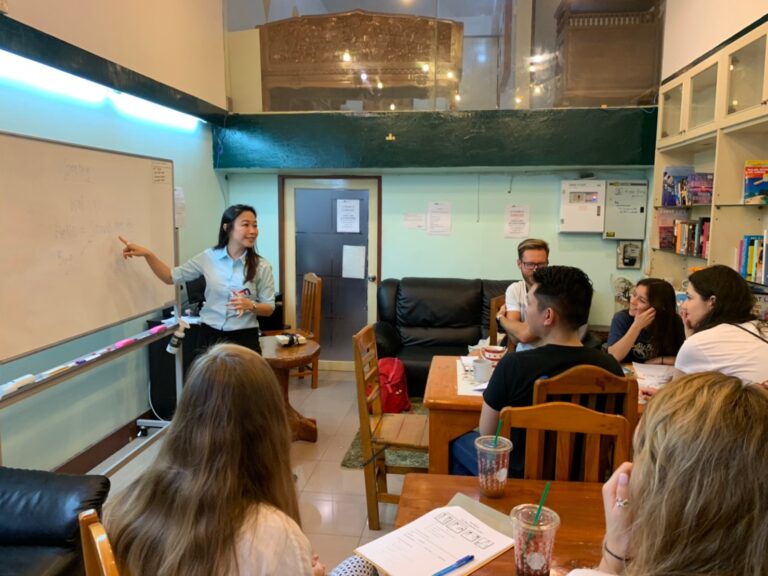
Your institution’s risk office will have its own template. Fill it in using the provider’s site-specific risk assessment, not general country advice. Include the emergency contact chain (faculty leader, provider’s local coordinator, your university’s 24-hour line), the nearest hospital to the accommodation, the insurance arrangement and the student code of conduct. If the university does not provide cover, check what the provider offers. Volunteering Solutions works with Envisage Global Insurance, and the details are on our insurance page. Also include your government’s travel advice for the destination, and say how often you will check it before departure.
Recruitment and selection
State any prerequisites, the application window and how students will be selected if the trip is oversubscribed. Committees also ask about inclusion. Explain how you will support students with access needs or limited funds, and point to sources such as our university funding guide and, for UK institutions, the Turing Scheme guide.
How do you build the per-student budget?
Finance offices reject proposals that are too optimistic. Build the budget line by line and show your break-even point.
| Cost line | How to treat it |
|---|---|
| Program fee (accommodation, meals, in-country transport, placement, support) | Use the provider’s written per-student group quote. Ask how it changes at 8, 12 and 20 students. |
| International flights | Get a group fare estimate, then add 10 to 15% because fares rise before booking. |
| Faculty and staff costs | Add the leaders’ flights and program places, then divide across the minimum enrollment. Ask the provider whether any leader places are included. |
| Insurance, visas, vaccinations | List these separately, even if students pay them directly. |
| Academic costs | Guest speakers, entrance fees for course-related visits, materials. |
| Contingency | Usually 5 to 10%, plus an exchange-rate buffer if the quote is in another currency. |
For a sense of scale, our individual one-week programs include the Delhi street children program from $550, the Jaipur construction and renovation project from $599 and the Nepal one-week special from $699. The India two-week special starts from $817. Group trips are quoted separately per student, so treat these figures as a guide and always check the program page for current pricing. If students need to raise part of the cost, our fundraising ideas page is a good starting point.
Our minimum group size is 8. Set your break-even enrollment a little above that so one or two late withdrawals do not cancel the trip.
What timeline do approval committees expect?
Most universities say a new program takes 12 to 15 months from first idea to departure, and many have fixed deadlines (often the September before a summer trip). A typical schedule:
| Months before departure | Milestone |
|---|---|
| 15 to 12 | Agree the idea with your chair, request a provider proposal and quote, draft the outcomes |
| 12 to 10 | Submit the proposal; respond to committee questions |
| 10 to 7 | Approval; open applications; information sessions |
| 7 to 4 | Select students; collect deposits; book flights; complete risk paperwork |
| 4 to 1 | Visas, vaccinations, insurance; pre-departure classes and safeguarding briefing |
| After return | Assessment, debrief, evaluation report for the committee |
If you are re-running a trip that has already been approved, most offices will accept a shorter cycle of six to nine months.
How do you answer voluntourism concerns in the proposal?
Address this before the committee asks. Committees usually raise four concerns, and each has a straightforward answer:
- Is the work needed? Show that the community partner asked for the project and that it runs all year, not only when groups arrive.
- Does it take local jobs? Explain that skilled work is done by local staff and tradespeople, and that students assist. Our construction and building projects work this way.
- Is it safe for children? Commit to no visits to orphanages or residential care, background checks where required, supervised contact only, and a clear photography policy. Childcare placements need this section in particular.
- Is it about the students? Describe how the community’s view is collected and included in your evaluation.
Why do faculty-led proposals get sent back?
Study abroad staff report the same problems again and again:
- Learning outcomes that cannot be measured, or that do not mention the service.
- No break-even calculation, or a budget that assumes full enrollment.
- Gaps in the itinerary with no indication of supervision.
- No second leader. Most institutions want at least two staff on any trip.
- Vague partner information, such as “a local NGO”, with no named supervisor or project history.
- No inclusion plan for students with access needs or limited funds.
Can a volunteering provider help you write the proposal?
Yes, and most committees expect you to use one for in-country logistics. When you contact our groups team, we send a tailored itinerary, a per-student quote, the project description, a site-specific risk assessment and codes of conduct in a form you can attach to your proposal. Students also receive a Certificate of Program Completion, which some departments use as evidence of placement hours. You remain responsible for the academic content. We run trips in Nepal, India, Vietnam, Thailand, Sri Lanka and across Africa and Latin America. See the group volunteering overview and our page for university and college groups. Planning for secondary-school students? See CAS group programs and high school volunteer programs.
Frequently asked questions
How far in advance should I submit a faculty-led program proposal?
Most universities want a new proposal 12 to 15 months before departure, and many have a fixed annual deadline. A trip that has already been approved can usually be re-proposed six to nine months ahead.
What should a faculty-led study abroad proposal include?
Usually a summary and rationale, course details and learning outcomes, a syllabus, a day-by-day itinerary, partner and project information, a risk assessment and emergency plan, a per-student budget, a recruitment plan, orientation and re-entry plans, and an evaluation plan.
Can a volunteering trip count for academic credit?
Yes, if it is built into a credit-bearing course with measurable learning outcomes, assessed reflection and enough contact hours under your registrar’s rules. The service work has to connect to the course content.
How many students do we need for a faculty-led group trip?
Volunteering Solutions runs group programs from 8 students upwards, with no fixed upper limit; large cohorts can be split across nearby projects. Set your break-even enrollment a little above the minimum to allow for withdrawals.
Who writes the risk assessment for a faculty-led trip?
It is shared. Your institution owns the overall risk assessment, but it should be based on the provider’s site-specific assessment of accommodation, transport and the project. Ask for that document in writing and attach it to your proposal.
Can medical or nursing students use this guide?
Volunteering Solutions groups focus on non-clinical subjects such as education, conservation, community development, social sciences and sustainability. The proposal structure above works for any discipline, but clinical placements have extra regulatory requirements that need a specialist provider.
Request a proposal pack for your group
Tell us your course, rough group size and preferred dates, and our groups team will send an itinerary, a per-student quote and risk documents you can attach to your proposal.

Saurabh Sabharwal is the founder of Volunteering Solutions and its parent B Corporation, Impact Explorers. He has championed ethical, affordable volunteer travel since 2007 and writes about how to volunteer abroad responsibly.