 English (US) ▾
 Nederlands
 English (UK)
 Deutsch
 Italiano
 Português
 Español
 Français
Volunteer in Morocco: The Complete Guide to Rabat Programs, Costs and Timing
Blog · August 17, 2026 · 10 min read · By Saurabh
Short answer: volunteering in Morocco means joining a community project in Rabat, the country’s coastal capital, for anywhere from one week upwards. Volunteering Solutions runs four programs there — childcare, teaching English, sports development and women’s education — and all four start from US$440 for one week, with each additional week adding $240. No qualifications are needed, French helps far more than Arabic, and most Western passport holders enter visa-free for up to 90 days.
Looking for a placement? See all volunteer programs in Morocco: teaching, childcare, women’s education and sports coaching placements in Rabat with host families, with current dates and fees.
Morocco is one of the most accessible volunteer destinations in the world for European travelers — three hours from London or Paris, in a country with deep social need alongside real infrastructure. This guide covers what the projects actually involve, what they cost, when to go (including how Ramadan changes the schedule), which language matters, and the ethical questions worth asking before you book anywhere in the country.
What is volunteering in Morocco?
Volunteering in Morocco is a placement with a local community organization — a nursery, a state school, a sports academy or a women’s education center — where an international volunteer supports the permanent local staff for an agreed number of weeks. Volunteers pay a program fee covering accommodation, meals, orientation and in-country support rather than earning a wage, and most placements are in and around Rabat.
Morocco sits in an unusual position: a middle-income country with strong tourism infrastructure, and at the same time persistent gaps in literacy, women’s economic participation and access to early-years education. That combination is exactly why community projects there need consistent support rather than emergency relief — and why the work is ordinary, useful and unglamorous.
What volunteer projects can you join in Morocco?
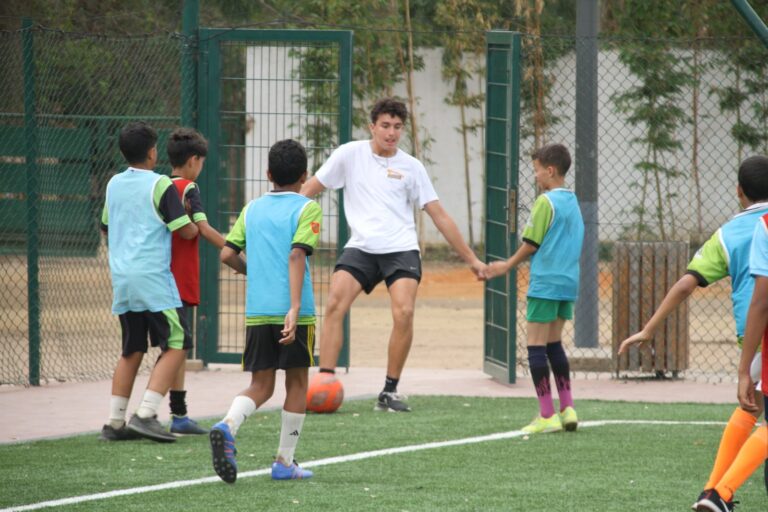
All four programs are based in Rabat, the administrative capital on the Atlantic coast — a UNESCO World Heritage city that is calmer, cheaper and far less tourist-saturated than Marrakech.
- Childcare. Placements in day care centers, nurseries, after-school programs and feeding centers serving children from underprivileged neighbourhoods. You assist the permanent staff with care, play and educational stimulation. Note what this is not: these are day centers children go home from, not residential institutions.
- Teaching English. Supporting local teachers in schools and community centers. English is increasingly the gateway to higher education and employment for young Moroccans, and demand for conversational practice with a fluent speaker consistently outstrips supply.
- Sports education. Structured sports sessions used as a youth-development tool — building discipline and social skills, and giving young people in underserved neighbourhoods somewhere constructive to put their energy. Ideal if you coach, play, or simply have the stamina to run sessions.
- Women’s education. Supporting literacy, language and vocational classes for women facing illiteracy, unemployment and economic hardship — work whose effects reach their children’s schooling too.
By cause, these map to our childcare, teaching, community development and women’s empowerment hubs, each of which lists every country running that project type.
How much does it cost to volunteer in Morocco?
Morocco has the simplest pricing of any of our destinations: all four programs cost the same, and the only variable is how long you stay.
| Duration | Cost (USD) | Effective cost per day |
|---|---|---|
| 1 week | $440 | $63 |
| 2 weeks | $730 | $52 |
| 4 weeks | $1,220 | $44 |
| 8 weeks | $2,180 | $39 |
After the fourth week, each additional week adds a flat $240 — roughly $34 a day including your accommodation and meals, which is less than you would spend feeding and housing yourself in Rabat as an independent traveler. That is the single strongest argument for a longer stay, quite apart from the fact that the project gets more out of you.
The fee covers accommodation, meals as specified, airport pickup, in-country orientation, your placement and supervision, and 24/7 support. It excludes flights, travel insurance, visas and personal spending. Check the individual program page for current pricing before budgeting. If cost is your main constraint, compare against our honest guide to volunteering abroad for free and our most affordable programs.
When is the best time to volunteer in Morocco?
Two calendars matter here, and most guides mention neither: the school year and Ramadan.
| Period | What to expect |
|---|---|
| September – November | The sweet spot. Schools in full session, mild coastal weather, low tourist prices. |
| December – February | Cool and wet on the Atlantic coast; Rabat is chillier than people expect. Projects run normally. |
| Ramadan (moves ~11 days earlier each year; falls in February in 2027) | Schools and centers run shortened hours, the daily rhythm shifts to evenings, and many colleagues are fasting. A fascinating time to be there, but expect reduced project hours — confirm dates before booking. |
| March – May | Excellent weather, schools in session, everything green after the winter rain. |
| June – August | Hot inland, tempered on the coast. Schools break up, so teaching shifts to summer camps and community programs. |
Do you need French, Arabic or any experience?
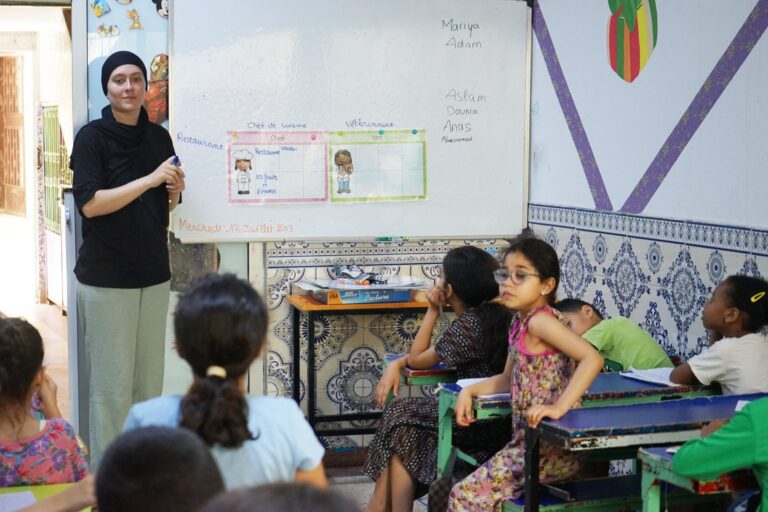
No experience or qualification is required for any of the four programs, and volunteers join from age 18. On language, Morocco is genuinely different from most volunteer destinations: the street language is Darija (Moroccan Arabic), but the language of schooling, administration and business is French. Amazigh (Berber) languages are widely spoken too.
In practice this means French is far more useful to you than Arabic. Anything from GCSE-level French upwards will noticeably change your experience — you will follow staff-room conversation, understand what is written on the board, and be trusted with more. If you have no French at all you will still be placed and supported, and on teaching placements your English is the point. A few weeks of Duolingo before you fly is the highest-return preparation available.
Who joins the women’s education program?
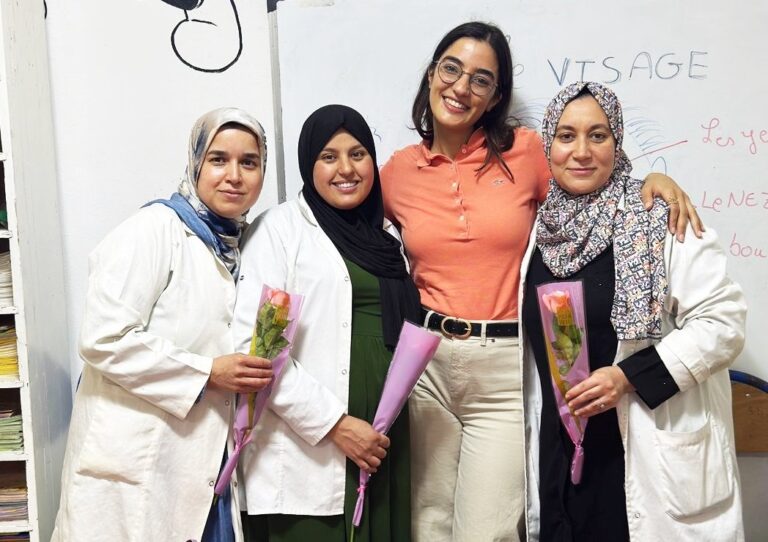
The women’s education placement draws a slightly different volunteer: often older, frequently women, often with teaching, social work or language backgrounds — though none of that is required. The work is literacy and language classes, vocational skills sessions, and the confidence-building that goes with them.
It is also the placement where being a woman is, practically speaking, an advantage — many of the learners are in a female-only environment for the first time in years, and that space is part of what makes the classes work. If you want more on this cause across all our countries, we have a round-up of the best women’s empowerment volunteer programs.
Where will you live, and what is daily life like?
Volunteers stay in shared volunteer accommodation or with a host family in Rabat, with meals provided. Host-family placements in Morocco are among the better ones anywhere in our network, largely because Moroccan hospitality is not a marketing phrase — expect to be fed considerably more than you planned to eat.
Projects generally run Monday to Friday, leaving evenings and weekends free. Rabat itself has the medina, the Kasbah of the Udayas, Chellah and a genuine Atlantic beach; Casablanca is an hour by train, Fez around three, Marrakech about four, and the train network is cheap and reliable. Many volunteers use weekends to see far more of the country than a standard holiday would allow.
How do you volunteer in Morocco ethically?
Morocco has a specific set of ethical pitfalls, and they are not the ones people expect.
- Avoid residential childcare center placements. The evidence against short-term volunteering in residential childcare is now well established: it disrupts attachment and can sustain institutions that should not exist. Day centers, nurseries and after-school programs — where children return home to their families — do not carry that problem, which is why our childcare placement is structured that way.
- Do not pay for the animal attractions. In Marrakech’s Jemaa el-Fna, the chained Barbary macaques and the snake-charmers’ de-fanged cobras are a genuine welfare problem sustained entirely by tourist money and photographs. Walking past is the whole intervention.
- Ask who the permanent staff are. A good project has qualified local employees whom you assist. If a placement implies volunteers are running the service, that is a warning sign about the project, not an opportunity for you.
- Dress and behave for the context. Morocco is a Muslim country with relaxed norms in tourist areas and more conservative ones in the neighbourhoods where you will actually work. Covered shoulders and knees are the practical default, and it is a matter of professional respect rather than rules.
As a certified B Corporation, our social and environmental performance is independently verified rather than self-declared — a claim you can check, which is the point of it.
Visas, safety and practicalities
Most US, UK, EU, Canadian, Australian and New Zealand passport holders enter Morocco visa-free as tourists for up to 90 days, which comfortably covers any of these placements. Rules change, so confirm with official Moroccan government guidance and your own foreign ministry’s travel advice before booking.
Practical notes: the currency is the Moroccan dirham, a closed currency you generally cannot buy before arrival — withdraw at the airport or in town. No vaccinations are compulsory for most travelers, but take medical advice several weeks ahead. Comprehensive travel insurance covering medical treatment and repatriation is a condition of joining. Morocco is a safe country for volunteers, including solo women, with the ordinary caveats of any city: persistent street-level attention in tourist zones is common and best handled with a firm, unbothered no.
Is Morocco the right choice for you?
Choose Morocco if you want short-haul access from Europe, a genuinely different cultural context, useful French practice, and a city base with weekend travel built in. It suits one and two-week volunteers unusually well, because the one-week minimum is real rather than nominal.
Look elsewhere if you specifically want wildlife or marine conservation — that is not what Morocco offers, and our marine conservation guide covers the countries that do. For everything on offer in Morocco, including start dates, see the Morocco destination page, or browse every project type on the volunteer abroad hub.
Frequently asked questions
How much does it cost to volunteer in Morocco?
All four Volunteering Solutions programs in Morocco start from US$440 for one week, $730 for two weeks, $1,220 for four and $2,180 for eight. After the fourth week each extra week adds a flat $240. The fee covers accommodation, meals as specified, airport pickup, orientation, placement and 24/7 in-country support, but not flights, insurance or personal spending.
Do you need to speak French or Arabic to volunteer in Morocco?
Neither is required. Morocco’s street language is Darija (Moroccan Arabic), but the language of schooling and administration is French, so French is considerably more useful to a volunteer than Arabic. Even basic French will improve your placement, and on teaching programs your English is precisely what is needed.
Do I need a visa to volunteer in Morocco?
Most US, UK, EU, Canadian, Australian and New Zealand passport holders enter Morocco visa-free as tourists for up to 90 days, which covers every placement length we offer. Immigration rules can change, so confirm current requirements with official Moroccan government guidance before you book flights.
What is the best time of year to volunteer in Morocco?
September to November and March to May are ideal — schools are in session and the coastal weather is mild. Summer is hot and schools break up, shifting teaching to summer camps. During Ramadan, which moves about 11 days earlier each year and falls in February in 2027, schools and centers run shortened hours, so confirm dates before booking.
Where in Morocco do volunteers work?
All four programs are based in Rabat, Morocco’s capital on the Atlantic coast and a UNESCO World Heritage city. It is calmer and less tourist-dominated than Marrakech, and the rail network puts Casablanca an hour away, Fez around three hours and Marrakech about four, which makes weekend travel straightforward.
Is volunteering in Morocco safe for solo female travelers?
Yes. Morocco is a safe destination for volunteers including solo women, with volunteers housed in vetted accommodation or with host families and supported by a local team. Persistent street attention in tourist areas is the common annoyance rather than a safety threat; dressing to the local norm of covered shoulders and knees in working neighbourhoods reduces it considerably.
Ask us about Rabat
Tell us which of the four projects appeals and how long you have, and we will tell you what the week actually looks like — including whether your dates run into Ramadan or the school holidays. You can also contact the team directly.

Saurabh Sabharwal is the founder of Volunteering Solutions and its parent B Corporation, Impact Explorers. He has championed ethical, affordable volunteer travel since 2007 and writes about how to volunteer abroad responsibly.