 English (US) ▾
 Nederlands
 English (UK)
 Deutsch
 Italiano
 Português
 Español
 Français

Alternative Spring Break Abroad: How to Plan a One-Week Volunteer Trip for Your Group
Blog · November 9, 2026 · 14 min read · By Luni
An alternative spring break abroad is a one-week group trip where students spend their break volunteering on a community or conservation project instead of taking a holiday. It works when three things line up: a destination you can reach in under a day, a project with tasks a group can finish in five working days, and preparation that starts well before departure. One-week programs with Volunteering Solutions start from about US$599 per person before flights, and most groups need four to six months to plan properly.
This guide is for student site leaders, society committees and the staff or faculty advisors who travel with them. It covers which destinations fit a single week, what a group will do each day, what it costs, a planning timeline that works back from a March departure, and how to make five days of service worth the journey. It is written for non-clinical groups: education, environment, community development, social sciences and general service societies.
What is an alternative spring break?
An alternative spring break (often shortened to ASB, or just “alternative break”) is a short, organized service trip taken by a group of students during a college or university holiday. Students work on a project chosen with a local organization, learn about the issue behind it before they go, reflect on it while they are there, and commit to an alcohol- and drug-free week.
The model began on US campuses and was formalised in 1991, when two Vanderbilt University students founded Break Away, the national non-profit that still trains campus alternative break programs. Break Away’s “eight components of a quality alternative break” are the standard most campuses use to judge a trip:
- Strong direct service – hands-on work that a community organization has asked for.
- Alcohol and drug-free – for the whole trip, including free time.
- Diversity and social justice – a mixed group that looks at the causes of the issue, not only the symptoms.
- Orientation – learning about the host organization and community before arrival.
- Education – sessions on the social or environmental issue the project addresses.
- Training – the practical skills needed for the work.
- Reflection – structured time during the week to process what the group is seeing.
- Reorientation – turning the experience into action back on campus.
Most alternative breaks are domestic. An international trip follows the same eight components, with more logistics and a higher bar for preparation. The same format suits a UK Easter break, a Canadian reading week or a winter break. If your trip carries academic credit, it becomes service-learning, and our guide to service-learning versus volunteering explains the difference.
Can you really volunteer abroad in a one-week break?
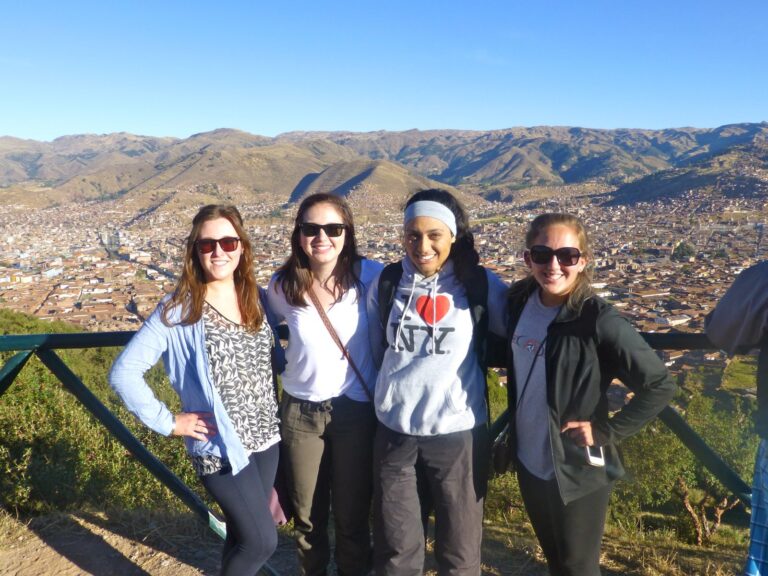
Yes, if you are honest about the arithmetic. A typical US spring break gives you nine days, Saturday to the following Sunday. Take off a travel day at each end and an arrival and orientation day, and you are left with five working days on the project and one free day. That is enough to complete a defined task. It is not enough to build relationships that depend on continuity, and a good program will not pretend otherwise.
Three rules of thumb keep a one-week trip realistic:
- Keep door-to-door travel under about 15 hours each way. Beyond that, jet lag and transit eat the working week. From North America that points to Central and South America, Morocco and southern Europe. From the UK and Europe it points to Morocco, Spain, Portugal and East Africa.
- Match the program’s arrival day to your break. Most programs start on a set weekend day, and some one-week programs run on alternate weeks only. Check start dates before you book flights.
- If the break is two weeks, use both. UK Easter holidays usually give two weeks or more, which opens up India, Nepal, Kenya and Sri Lanka and doubles the time on the project. See our two-week programs.
Which destinations fit a one-week spring break?
The table shows one-week options from our current catalogue that suit student groups. Prices are the lowest listed one-week price per person, including the registration deposit, and exclude flights. Always check the program page for current pricing and dates.
| Destination and program | What the group does | Jet lag from US East Coast | One week from | Spring start pattern |
|---|---|---|---|---|
| Costa Rica: turtle and environment conservation, Osa Peninsula | Beach patrols and clean-ups, plastic sorting, tree planting, English lessons for local residents | Minimal | US$984 | Weekly, Sunday arrival |
| Peru: 1 Week Special, Cusco | Kindergarten or daycare support on weekdays, then Sacred Valley and Machu Picchu | Minimal | US$1,209 | Alternate Sundays |
| Morocco: teaching or childcare, Rabat | English classes and activity sessions alongside local NGO staff | Moderate | US$689 | Weekly, Sunday arrival |
| Spain: community development, Barcelona | Work with a neighbourhood NGO: food bank, community workshops and maintenance (minimum age 16) | Moderate | US$962 | Weekly, Sunday arrival |
| Kenya: 1 Week Special, Nairobi | Childcare center support plus a Nairobi National Park game drive (minimum age 17) | Heavy | US$839 | Alternate Saturdays |
| India: 1 Week Special, Delhi | Activities at a street children’s center, Delhi heritage sites and the Taj Mahal | Heavy | US$636 | Alternate Sundays |
| India: construction and renovation, Jaipur | Painting, repairs and renovation at schools and community centers (minimum age 17) | Heavy | US$599 | Weekly, Sunday arrival |
| Nepal: 1 Week Special, Kathmandu | School renovation, a guided city tour and a visit to Patan | Heavy | US$699 | Alternate Sundays |
Groups of eight or more are quoted separately, and the itinerary can be adjusted to the group, so ask about dates that match your break. The full list is on our one-week volunteer programs page.
What should you know about March in each place?
Spring break dates are fixed, so check what the season means for the work before you commit.
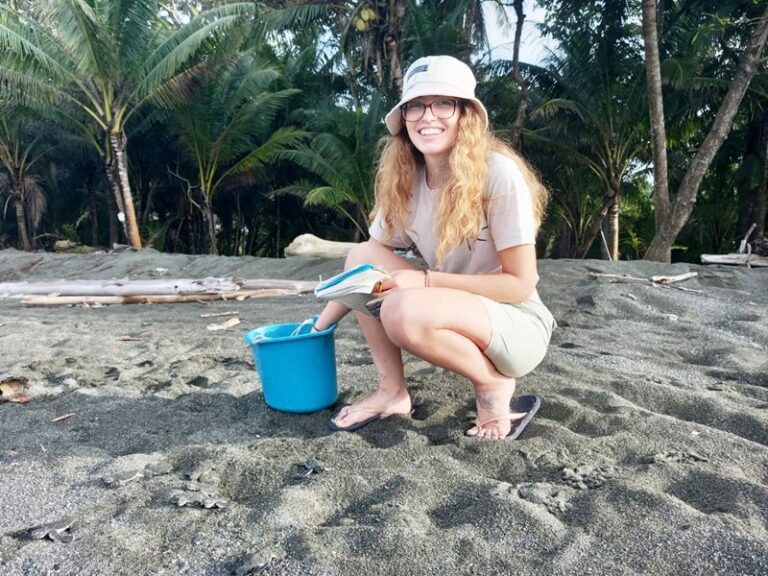
- Costa Rica. March is dry season and peak travel season, so flights cost more. It also sits outside the main turtle nesting months, so a March group will do more beach clean-ups, plastic sorting, tree planting and English teaching than nest patrols. The project camp is on the remote Osa Peninsula, with arrival in Puerto Jiménez, so allow a full travel day from San José. Our Costa Rica guide has a month-by-month table.
- Peru. Cusco is at about 3,400 metres (11,150 feet). Build in a slow first day, and expect rain, as March is the end of the wet season. More in our Peru planning guide.
- Morocco. Ramadan in 2027 is expected to run from about 8 February to about 9 March, depending on the moon sighting. Schools and centers keep shorter hours during Ramadan, and the days after it are a public holiday. A group traveling in early March should ask how the placement timetable changes. See our Morocco guide.
- India and Nepal. March is warm and dry, and Holi falls around 22 March in 2027. These are better as a two-week Easter trip from Europe than a one-week trip from North America.
- Kenya. The long rains usually begin in late March or April. Early March is the safer choice.
What will your group do on the project?
The best one-week projects have a clear task with a visible end. Groups do well at:
- Renovation and construction. Painting classrooms, repairing furniture and improving school grounds are easy to plan around a group and are finished when you leave. See our construction and building projects.
- Conservation. Beach clean-ups, tree planting and data collection are useful from the first day and need many hands. See environment conservation programs.
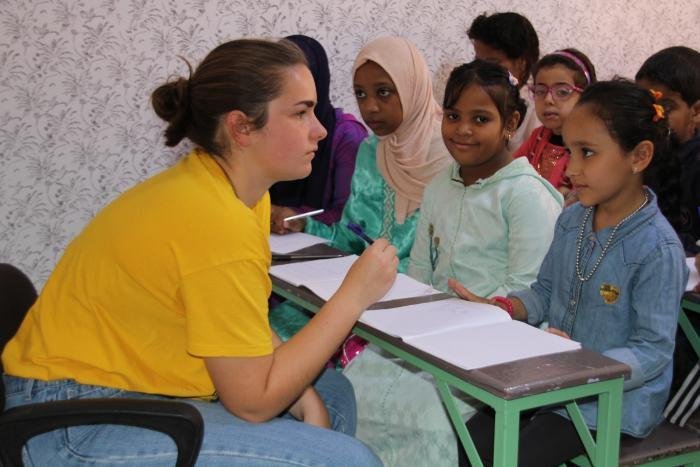
- Structured activity sessions. Sports days, art workshops and English conversation sessions, planned in advance and run alongside local teachers. See teaching programs and community development programs.
A typical weekday is four to six hours on the project, lunch, then an afternoon for a cultural visit, a group reflection session or rest. Weekends are free or used for an excursion.
Be just as clear about what a one-week group should not do. Short-term visitors should not take over a class from a local teacher, provide unsupervised care, or volunteer in an orphanage. Children need consistent adults, and a new group each week is the opposite of that. We place volunteers alongside local staff, never instead of them. Clinical work is also outside the scope of these trips; pre-health and nursing groups need a specialist provider with clinical supervision.
How much does an alternative spring break abroad cost?
Budget per person, then multiply. The program fee is only one of six lines.
| Cost line | What to expect | How to reduce it |
|---|---|---|
| Program fee | About US$599 to US$1,300 for one week, depending on destination and what is included | Compare what each fee covers; excursions such as Machu Picchu raise the price |
| Flights | Usually the largest cost after the fee, and March is peak season | Book as a group as soon as numbers are firm; fly midweek if your break allows |
| Travel insurance | Every participant needs comprehensive cover; it is not included in the program fee (see insurance) | Check whether your university’s travel policy already covers the group |
| Visas and entry fees | Depends on each traveler’s passport, not the group’s home country | Check every passport in the group early |
| Vaccinations and travel health | Varies by destination and by each person’s records | Use the campus health center where it offers travel appointments |
| Weekend meals, local transport and spending money | Not covered on some programs; read the “not included” list | Set a shared daily budget so nobody is caught short |
A program fee normally covers accommodation, most meals, orientation, the project placement and support from our in-country team. Airport pickup is included on most programs but not all; the Costa Rica turtle project, for example, starts in Puerto Jiménez without one. Each program page lists exactly what is and is not included. Our breakdown of the real cost of volunteering abroad explains where the money goes.
Most groups do not pay the whole cost themselves. Ask your student government about travel or service allocations, ask the civic engagement or service-learning office about grants, and start group fundraising in the autumn. Our university funding guide lists the main sources in the US and UK, and the fundraising page has ideas that work for groups.
How do you plan an alternative spring break trip abroad?
Work back from your departure date. This timeline assumes a March trip.
| When | What the site leaders do |
|---|---|
| September to October | Form the leadership team, find a staff or faculty advisor, choose the issue and shortlist destinations |
| October to November | Request a group quote and itinerary, register the trip with student activities and the travel or risk office, apply for campus funding |
| November to December | Recruit and select participants, collect deposits, confirm the program, book group flights |
| January | Check passports, book travel health appointments, start issue education sessions, begin fundraising events |
| February | Hold orientation and training, pay balances, share emergency contacts and the code of conduct, register with your embassy’s traveler program |
| March | Travel, serve, and hold a reflection session each evening |
| April | Hold a reorientation meeting, report to funders, recruit next year’s leaders |
Starting later than this? A March trip can still be organized from November or December if the group already exists and passports are in hand. The two things that cannot be rushed are passports and university approval, so check both in the first week.
Site leaders most often miss these points:
- Passport validity. Many countries require six months’ validity beyond the date of entry.
- International students. A classmate studying on a student visa may need a visa for a country that others enter freely, and will need the right documents to re-enter their country of study. In the US that includes a valid travel signature from the international student office.
- Travel health. The CDC advises seeing a travel health provider at least a month before departure.
- University registration. Most institutions require international student travel to be registered and insured, even for a student-run society.
- The drop-out rule. Agree in writing what happens to a deposit if someone withdraws.
For the committee side of this, our guide to organizing a university society volunteering trip covers roles, selection and group agreements. Advisors planning a credit-bearing version should read the faculty-led planning guide.
How do you make one week of service count?
The week abroad is the middle of an alternative break, not the whole of it. What happens before and after decides whether five days of work mean anything.
- Before: educate and train. Run three or four sessions on the issue, the country and the host organization. Ask the project what the group should prepare, such as activity plans, basic phrases or a materials list.
- During: reflect daily. Twenty minutes each evening with one prepared question is enough. Ask what surprised people, what made them uncomfortable, and what the local staff do that the group did not expect.
- During: follow the lead of local staff. The team on the ground runs the project all year. The group’s job is to add capacity to their plan.
- After: reorient. Decide on one action back home, whether that is a campus talk, a fundraiser for the project, a local volunteering commitment or a handover pack for next year’s group.
Groups that return to the same project each year achieve more than groups that pick a new destination every spring, because each cohort builds on the last.
Who can join, and do you need an advisor?
Minimum ages are set per program. Many accept volunteers from 17, a few from 16, and each program page states its own limit. No previous experience is needed for the programs in this guide.
Whether you need a staff or faculty advisor is your institution’s decision. Many US colleges require one for international travel, and some run alternative breaks only through a campus office. Student-led societies in the UK often travel without one. Ask your student activities or study abroad office before you recruit. Our overview of group volunteering for university and college students compares the student-led and staff-led models.
High school groups travel with their teachers on a different footing. See school group trips, our teen and high school programs, and CAS-based programs for IB schools.
How does Volunteering Solutions support alternative break groups?
Volunteering Solutions is a certified B Corporation and has placed volunteers since 2007, including more than 200 college and university groups. For an alternative break group we provide one itinerary and one per-person quote, accommodation, an orientation on arrival, a placement agreed with the local project, and support from our in-country teams throughout the week.
We take groups of 8 to 40 or more, and large groups can be split across nearby projects. We will also tell you when a destination does not fit your dates. Read more on our university and college groups page, the group volunteering overview and the faculty-led group trips page, or see who we are.
Frequently asked questions
What is an alternative spring break?
An alternative spring break is an organized group service trip taken during a college or university holiday. Students volunteer on a community or conservation project, learn about the issue beforehand, reflect during the week and stay alcohol- and drug-free. Trips can be domestic or international.
How much does an alternative spring break abroad cost?
One-week programs with Volunteering Solutions start from about US$599 per person and go up to about US$1,300, including accommodation, most meals and in-country support. Flights, insurance, visas and vaccinations are extra. Check each program page for current pricing.
Is one week long enough to volunteer abroad?
One week is long enough for a defined group task such as renovation, a beach clean-up program or planned activity sessions run alongside local staff. It is too short for roles that depend on continuity, such as leading a class. Choose a destination within about 15 hours’ travel so the working week is not lost to transit.
How far in advance should we plan an alternative spring break?
Four to six months is comfortable for a March trip: form the team and choose a destination in September or October, confirm the program and flights by December, and run education and training sessions in January and February. A shorter lead time can work if the group already exists and everyone holds a valid passport.
Do we need a faculty or staff advisor?
It depends on your institution. Many US colleges require an advisor for international student travel, while student-led societies elsewhere often travel without one. Check with your student activities or study abroad office before recruiting.
How many students do we need for a group trip?
Volunteering Solutions runs group programs for 8 to 40 or more participants. Smaller groups of friends can still join a one-week program as individual volunteers on the listed start dates.
Request a quote for your alternative break group
Tell us your break dates, rough group size and the kind of project you have in mind. Our groups team will reply with destinations that fit your week, a day-by-day itinerary and a per-person quote. You can also contact us with questions first.

Luni Chhochoon writes for Volunteering Solutions, a certified B Corporation, covering volunteer abroad programs, destinations and tips for traveling with purpose.