 English (US) ▾
 Nederlands
 English (UK)
 Deutsch
 Italiano
 Português
 Español
Volunteer in Costa Rica: The Complete 2026 – 2027 Guide (Programs, Costs, Turtle Season & Ethics)
Blog · July 27, 2026 · 12 min read · By Sahil
Short answer: volunteering in Costa Rica means joining a local conservation, education or childcare project — usually for one to eight weeks — and paying a program fee that covers your accommodation, most meals, in-country support and a contribution to the project. With Volunteering Solutions, Costa Rica placements start from US$735 for one week on the Osa Peninsula turtle project and from US$1,014 for two weeks on the childcare and teaching programs in San Ramón de Alajuela. Sea turtle nesting runs roughly June to February, schools run mid-February to mid-December, and the animal rescue center needs volunteers every day of the year.
Looking for a placement? See all volunteer programs in Costa Rica: sea turtle and wildlife conservation camps, an animal rescue center and childcare, teaching and women’s empowerment placements, with current dates and fees.
This guide sets out what you can actually do, what it costs, when to go for the wildlife you care about, what the visa rules are, and — the part most articles skip — how to tell an ethical Costa Rica project from a badly-run one. Everything below is drawn from programs Volunteering Solutions runs directly with in-country teams; prices are correct at the time of writing and are always confirmed on the program pages.
What is volunteering in Costa Rica?
Volunteering in Costa Rica is a structured placement with a local organization — a sea turtle conservation camp, a wildlife rescue center, a state-regulated childcare center or a public school — where an international volunteer contributes practical work for an agreed number of weeks. Volunteers pay a program fee rather than earning a wage, and the fee funds their accommodation, meals and the project itself.
Costa Rica is an unusually good place to do this. The country abolished its army in 1948 and redirected the spending toward education, health and conservation. It holds roughly 5% of the world’s known species on about a quarter of one percent of the world’s land, and around a quarter of its territory is protected. That combination — political stability, deep biodiversity and an established conservation sector — is why the country attracts more volunteers per head than almost anywhere in Central America.
What volunteer projects can you join in Costa Rica?
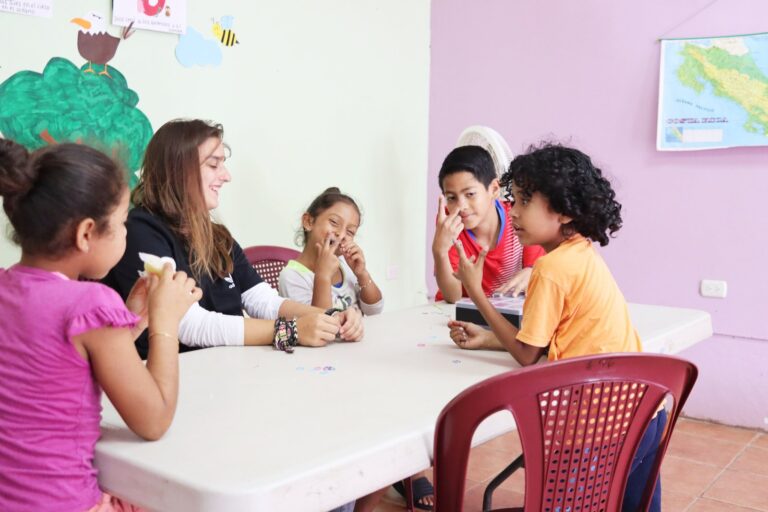
There are five distinct Costa Rica programs, and they are genuinely different from each other — different coasts, different minimum stays, different work.
- Turtle and Environment Conservation, Osa Peninsula. A community-run project protecting 8 km of nesting beach where more than 7,000 olive ridley and Pacific green turtle nests are registered per season. Work is real: morning patrols of three to five hours, night patrols of four to seven, recording nesting females, tagging flippers, excavating hatched nests, hatchling releases, beach clean-ups, plastic sorting and English lessons for local staff. From $735, minimum one week.
- Turtles, Wildlife & Permaculture, Playa Ario, Nicoya Peninsula. Inside the Caletas–Ario National Wildlife Refuge: turtle patrols and hatchery work in nesting season, and permaculture, agroforestry, composting, seed collection and reforestation year-round. Eco-camp accommodation, mostly vegetarian meals, limited Wi-Fi. From $1,227, minimum two weeks.
- Wildlife & Animal Rescue Center, Puerto Viejo (Caribbean). A 49-hectare primary-forest sanctuary founded in 2004, caring for ill, injured and orphaned monkeys, sloths, other mammals, birds and reptiles, with the aim of local release where possible. From $1,543, minimum four weeks.
- Childcare, San Ramón de Alajuela and Santa Bárbara de Heredia. Support in guarderías — childcare centers regulated by the Ministry of Public Education — serving low-income families and single parents. Play, learning activities, colours and numbers, meal preparation, helping the permanent staff. From $1,014, minimum two weeks.
- Teaching English, San Ramón de Alajuela. Assisting local teachers in schools and after-school projects with pupils aged 6–12 and teenagers 13–17, in English, maths, science, music or art. Around six hours a day, Monday to Friday. No teaching qualification required. From $1,014, minimum two weeks.
If you are choosing between causes rather than countries, the wildlife conservation, environment and conservation, teaching and childcare hubs list every country that runs each project type.
How much does it cost to volunteer in Costa Rica?
Here are the real starting prices. Longer stays cost less per week, because the fixed set-up costs are spread out.
| Program | Where | Minimum stay | From (USD) |
|---|---|---|---|
| Turtle & Environment Conservation | Osa Peninsula (South Pacific) | 1 week | $735 |
| Childcare | San Ramón de Alajuela | 2 weeks | $1,014 |
| Teaching English | San Ramón de Alajuela | 2 weeks | $1,014 |
| Turtles, Wildlife & Permaculture | Playa Ario, Nicoya Peninsula | 2 weeks | $1,227 |
| Wildlife & Animal Rescue Center | Puerto Viejo (Caribbean) | 4 weeks | $1,543 |
Additional weeks are much cheaper than the first: on the childcare and teaching programs an extra week adds about $128 — roughly $18 a day including accommodation and meals — which is why a four- or six-week stay is far better value than two. Always check the individual program page for current pricing before you budget.
The fee typically covers pre-departure support and a handbook, arrival arrangements on the program’s set start day, accommodation, meals as specified for that project, in-country orientation, project placement and supervision, 24/7 in-country support and a contribution to the project itself. It does not cover international flights, travel insurance, visas, vaccinations, personal spending or weekend trips. Budget separately for those — and for a spending allowance of roughly $30–60 a week if you plan to travel at weekends.
Costa Rica is not the cheapest place to volunteer: Asian and African programs generally start lower. If budget is the deciding factor, read our guide to affordable volunteer abroad programs before committing, and compare against Thailand or Bali.
When is the best time to volunteer in Costa Rica?
This is the question most guides answer with a generic “December to April is the dry season”. That is true for the weather and useless for choosing a project. What actually matters is what your project does each month.
| If you want to… | Go in | Why |
|---|---|---|
| Patrol beaches for nesting turtles (Playa Ario) | June – February | Nesting season for olive ridley, green and hawksbill turtles |
| Do permaculture, reforestation and trails (Playa Ario) | March – May | Non-nesting months; the project shifts to growing, planting and habitat work |
| Join turtle conservation on the Osa Peninsula | July – April | The Osa project does not run in May and June |
| Teach in schools | Mid-February – mid-December | The Costa Rican academic year, with a two-week break in July |
| Work in childcare centers or the rescue center | Year-round | Guarderías and rescued animals need support every week of the year |
| Have the driest weather | December – April | Peak tourist season — book early, flights cost more |
The May–November “green season” brings rain, usually in afternoon bursts rather than all-day downpours. It is quieter, cheaper to fly into, and overlaps with most of the turtle nesting season — which is why experienced volunteers often prefer it.
Do you need Spanish, a degree or previous experience?
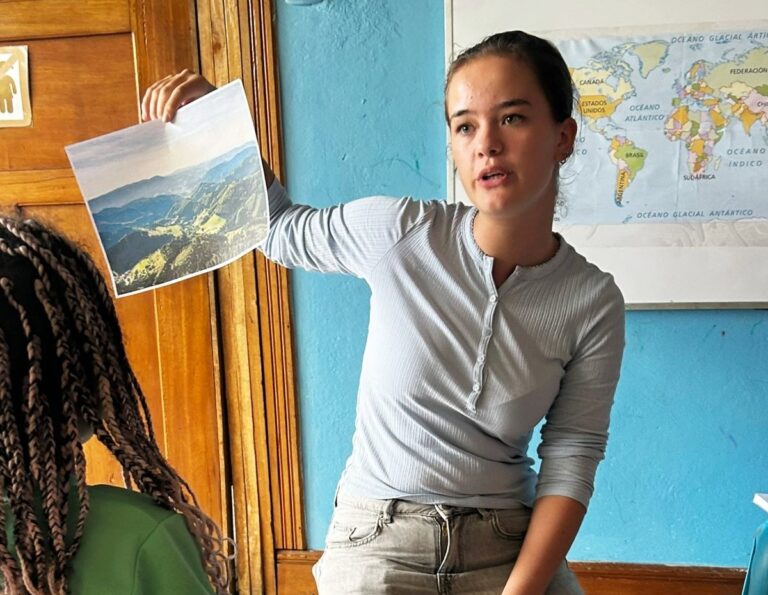
No, no and no — for every one of these programs. Volunteers are accepted from age 18 (younger participants can join through family or group arrangements), no teaching qualification is required for the school placements, and no Spanish is required for any project.
That said, Spanish transforms the experience. Childcare and teaching placements put you with children and staff who mostly do not speak English; a few weeks of basic Spanish before you fly — greetings, numbers, colours, classroom instructions — is the single highest-return preparation you can do. On the conservation projects, patrol work is taught on site and the practical vocabulary is picked up quickly.
What matters more than credentials is temperament: patience, flexibility and a willingness to work outdoors in heat and humidity. Turtle patrols are physically demanding and run at night. Rescue-center work is cleaning, feeding and enclosure maintenance far more often than it is cuddling animals.
Where will you live, and what is daily life like?
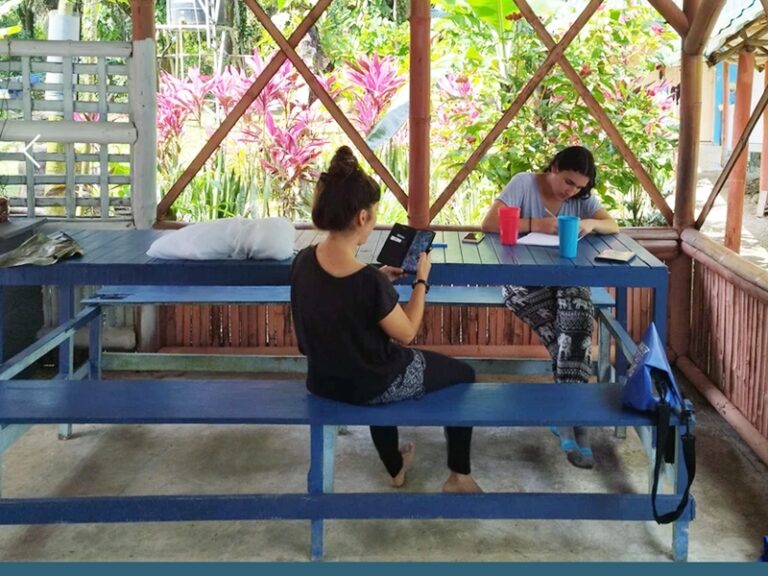
Accommodation depends entirely on the project. On the childcare and teaching programs you stay with a host family or in shared volunteer housing in San Ramón — a working Costa Rican town, not a resort — with meals provided. On the Osa Peninsula you live at a remote beach camp reached by a Monday transfer from Puerto Jiménez, with an overnight in a Puerto Jiménez hostel included the night before. At Playa Ario the accommodation is a simple eco-camp with mostly vegetarian meals cooked from local produce. At the Puerto Viejo rescue center you are in shared volunteer rooms on the sanctuary grounds.
Two honest warnings about the remote projects: Wi-Fi is poor to non-existent, and the work can be tiring. Volunteers who arrive expecting to keep up with a full remote-work schedule are usually disappointed. Volunteers who arrive expecting to be off-grid for a fortnight tend to describe it as the best part.
Weekdays are typically Monday to Friday, and weekends are free — which in Costa Rica means Manuel Antonio, Monteverde’s cloud forest, the volcanoes around Arenal, or simply the beach at the end of your own road. The national phrase, pura vida, is used as a greeting, a thank-you and a philosophy, and you will hear it several times a day.
How do you volunteer in Costa Rica ethically?
Costa Rica’s wildlife tourism is largely excellent and partly exploitative, and the difference is not obvious from a website. As a certified B Corporation, we assess placements against the same standards we apply everywhere. Use this checklist on any provider, including us.
Green flags
- The rescue center’s stated goal is rehabilitation and release, with permanent residency only for animals that cannot survive in the wild.
- Handling of wild animals is minimised and justified by care, not by photographs.
- Turtle work follows a research protocol — tagging, nest data, hatchery management — and the data goes somewhere.
- Local people are employed and paid, and the project explains where your fee goes.
- Childcare placements are day centers that support working families, with permanent local staff you assist.
Red flags
- Holding sloths or posing with monkeys for photos. Sloths are acutely stress-sensitive; a “sloth selfie” is a warning sign, not a highlight.
- Any project that lets untrained volunteers take primary care of children in a residential setting, or that markets childcare center placements.
- Guaranteed wildlife encounters. Nature does not guarantee anything, and providers who promise it are managing the animals for your benefit.
- No mention of what happens to your fee, or a refusal to name the local partner.
Our marine conservation guide goes deeper on turtle-project ethics specifically, and the wildlife programs round-up covers the same test across other countries.
Visas, safety and practical planning
Most US, UK, EU, Canadian, Australian and New Zealand passport holders enter Costa Rica visa-free as tourists. The permitted stay is granted by the immigration officer on arrival and can be up to 180 days, but shorter stays are sometimes issued, and proof of onward travel plus adequate funds may be requested. Volunteer placements of a few weeks fall comfortably within tourist entry, but immigration rules change — check the official Costa Rican government guidance and your own foreign ministry’s travel advice before booking flights.
Other practicalities: the currency is the Costa Rican colón, though US dollars are widely accepted; no vaccinations are compulsory for most travelers arriving from Europe, North America or Australasia, but a yellow-fever certificate is required if you are arriving from a country where it is a risk — take medical advice at least six weeks before you fly. Comprehensive travel insurance covering medical treatment and repatriation is a condition of joining, not an optional extra. Costa Rica is one of the safer countries in the region; petty theft in tourist areas is the realistic risk, not violence.
Is Costa Rica the right choice for you?
Choose Costa Rica if you want conservation work with genuine scientific structure, a safe and easy first solo trip, and Spanish practice. Look elsewhere if your budget is tight, if you need a placement shorter than a week, or if you specifically want a large volunteer cohort — several of these projects are small and remote by design.
It is a strong gap year destination and a workable short-term one, given the one-week Osa option. University students should also read our university funding guide — travel grants and bursaries cover more of these costs than most students realize. Full details of every placement, start date and price sit on the Costa Rica destination page, and our flexible booking policy explains what happens if your plans change.
Frequently asked questions
How much does it cost to volunteer in Costa Rica?
With Volunteering Solutions, Costa Rica programs start from US$735 for one week of turtle and environment conservation on the Osa Peninsula, and from US$1,014 for two weeks of childcare or teaching in San Ramón de Alajuela. Additional weeks on the childcare and teaching programs add about $128 each. Fees cover accommodation, meals as specified, in-country support and a project contribution, but not flights, insurance or visas.
What is the best time of year to volunteer in Costa Rica?
For sea turtle work, June to February covers the nesting season at Playa Ario; the Osa Peninsula project runs July to April and pauses in May and June. School placements follow the Costa Rican academic year from mid-February to mid-December, with a two-week break in July. Childcare centers and the wildlife rescue center take volunteers year-round.
Do I need to speak Spanish to volunteer in Costa Rica?
No. None of the programs require Spanish, and no prior experience or qualification is needed. Basic Spanish makes childcare and teaching placements noticeably easier and more rewarding, so a few weeks of study before you travel is worthwhile, but it is not a condition of joining.
Do I need a visa to volunteer in Costa Rica?
Most US, UK, EU, Canadian, Australian and New Zealand passport holders enter Costa Rica visa-free as tourists, with the length of stay granted on arrival — up to 180 days, though shorter periods are sometimes issued. Proof of onward travel may be requested. Short volunteer placements fall within tourist entry, but always confirm current requirements with official Costa Rican immigration guidance before booking.
How long do you have to volunteer in Costa Rica?
The minimum is one week on the Osa Peninsula turtle project, two weeks for childcare, teaching and the Playa Ario turtles and permaculture program, and four weeks at the Puerto Viejo wildlife rescue center. Longer stays cost far less per week and, on conservation projects, allow you to see nests through from patrol to hatchling release.
What is the minimum age to volunteer in Costa Rica?
Individual volunteers must be 18 or over on all five Costa Rica programs. Younger participants can take part through family placements or organized school and university groups, where supervision arrangements are built into the trip.
Talk to someone who has been there
If you are weighing up coasts, months or projects, tell us what you want out of the trip and we will tell you honestly which of the five fits — including when the answer is “not this month”. You can also contact the team directly.
Ready to plan your trip? Browse all volunteer abroad programs — 115+ affordable placements in 23 countries, rated 4.8/5.

Sahil Sabharwal is part of the team at Volunteering Solutions, a certified B Corporation. He writes about affordable volunteer abroad programs, gap years and traveling responsibly.