 English (US) ▾
 Nederlands
 English (UK)
 Deutsch
 Italiano
 Português
 Español
Sports Coaching Volunteering Abroad: What You’ll Actually Coach, Who Can Do It and What It Costs
Blog · September 17, 2026 · 14 min read · By Sahil
Sports coaching volunteering abroad means assisting local coaches and PE teachers to run training sessions, games and fitness activities for children in schools, clubs and community centers that cannot afford paid sports staff. Across Volunteering Solutions’ sports coaching programs in six countries, placements start from US$440 for a week in Rabat, no coaching qualification is required, and most of the actual coaching happens in the afternoon, after school. You will need to be 17 or 18 depending on the placement, physically fit, and cleared by a criminal background check.
Most pages about sports volunteering are written to sell the idea, not to explain the job. They rarely say when the sessions run, why a school in Cape Town would need an unqualified volunteer in the first place, or that one placement will feed you three meals a day while another hands you a hostel kitchen. This guide answers those questions using the details published on the six program pages themselves, so you can judge whether the work suits you before you pay a deposit.
What is sports coaching volunteering abroad?
Sports coaching volunteering abroad — also called sports development volunteering — is unpaid work supporting the physical education and youth sport provision of schools, clubs and community centers overseas. Volunteers assist local coaches rather than replace them: planning and running drills, refereeing matches, organizing equipment, teaching basic technique and modelling teamwork and fair play. Placements typically run 1–12 weeks and require a criminal background check.
What will you actually coach — and when?
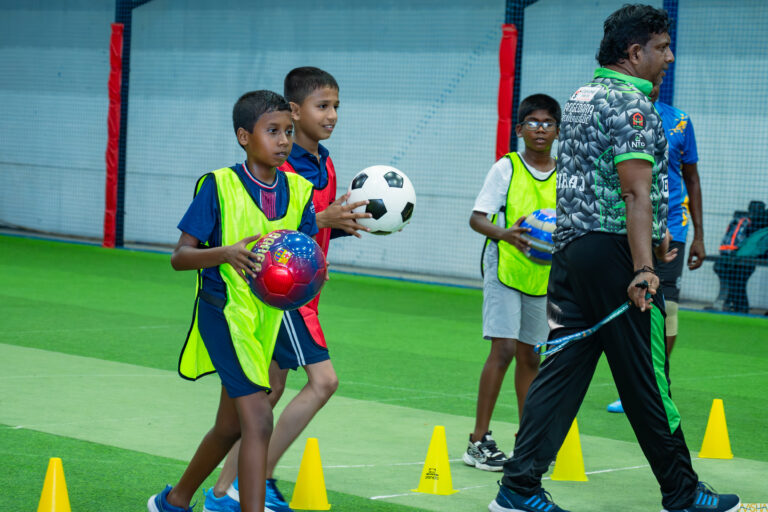
The single most useful thing to understand before you book is that children are in school for most of the day, so most coaching happens outside school hours. In Rabat the sessions run from roughly 3pm to 5pm, and the program page is honest that volunteers work two to four hours a day because of the physical nature of the work. In Córdoba the club runs from 4pm to 8pm during the Argentine school year (March to December) and switches to 9am to 1pm in the January–February summer, when activities move to swimming pools and outdoor games. In Galle volunteers travel to the project each weekday afternoon with the local coordinator.
The exception is Cape Town, where the placement is inside a government primary school and runs on a school day — 8am to 3pm — because your coaching hours are the school’s PE periods. Outside those periods you assist the class teacher, which is why the program page tells you to expect classroom time too. In Accra you follow a football club’s own training timetable, Tuesday to Friday, so the hours vary week to week.
| Placement | Setting | Sports you will coach | Typical hours |
|---|---|---|---|
| Galle, Sri Lanka | Rural community project for children aged 9–14, plus school and village outreach | Football two afternoons a week, supervised swimming lessons two afternoons, one outreach day | Weekday afternoons |
| Accra, Ghana | Community football club for children and youth | Football only: training, drills, fitness, refereeing, kit management, life-skills mentoring | Tue–Fri, on the club’s schedule |
| Cape Town, South Africa | Government primary schools (e.g. a 430-pupil school in Athlone, ages 6–13) | PE lessons and school sport; classroom assistance in off-field hours | 8am–3pm school day |
| Rabat, Morocco | Community centers, schools and youth programs | Football, basketball, volleyball, handball, rugby, athletics and games you introduce yourself | About 3pm–5pm, 2–4 hours a day |
| Córdoba, Argentina | Community sports club | Football, basketball, handball, artistic gymnastics, athletics, rugby, hockey; pools and camps in summer | 20–25 hrs/week; 4pm–8pm in term, 9am–1pm Jan–Feb |
| Porto, Portugal | Adaptive surf project on the northern coast | Assist instructors teaching surfing to children and people with disabilities; occasional beach clean-ups | 4–5 hrs/day, morning or afternoon shift |
Do you need a coaching qualification?
No. None of the six placements asks for a coaching badge, a PE degree or a playing career. What they ask for is more specific and worth reading carefully, because it differs by country:
- Age. 17 in Galle and Accra (with a parental consent form if you are under 18); 18 in Cape Town, Rabat, Córdoba and Porto.
- Criminal background check. Required in Accra, Cape Town and Córdoba, and standard practice for any placement that puts you with children. You pay for it yourself and it is not included in the fee.
- Fitness. Accra and Porto state that you must be fit and healthy; every placement assumes you can run a session on your feet in heat.
- Language. Córdoba requires you to speak and understand Spanish — it is a hard requirement, not a preference. In Rabat the program notes that French is the useful second language. Galle, Accra, Cape Town and Porto run in English.
- Swimming. Porto requires you to be able to swim (you are in the sea daily); Galle’s swimming sessions are led by qualified instructors, with you supporting.
- Minimum stay. One week in Galle, Rabat and Porto; two weeks in Accra, Cape Town and Córdoba.
What a qualification or a playing background changes is how much you can lead. A volunteer who has coached a junior team at home will usually be handed a warm-up or a skills station within the first week; a volunteer with none will start by assisting drills and refereeing. Either is genuinely useful — but if you want to lead, bring a written set of age-appropriate session plans with you, because you may be the only person at the placement who has one.
Why do these schools and clubs need volunteers at all?
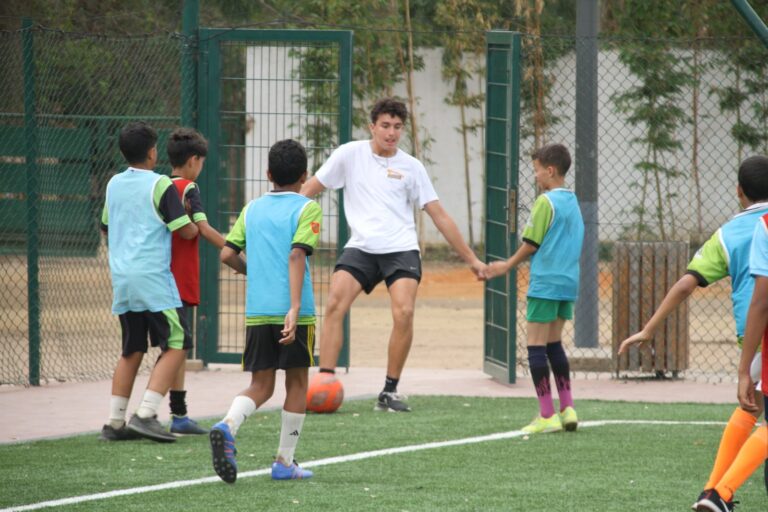
This is the question the sector tends to skip, and the Cape Town program page answers it more bluntly than most. Physical education was only recently introduced into the government school system there, private schools have invested heavily in PE and coaches while public schools “have to prioritise academics, leaving little to no budget for physical education teachers, sports coaches, or the necessary equipment” — and, in the page’s own words, some schools suspend their PE classes when volunteers are unavailable. That is the honest shape of the need: you are not adding polish to a well-resourced program, you are the reason the PE period happens.
The other placements describe the need differently but the logic is the same. Galle’s project serves children from under-served rural communities around the town. Accra’s club exists to give young players from under-resourced backgrounds structured training and a safe environment, and explicitly asks volunteers to mentor on goal-setting and discipline as well as coach. Rabat frames sport as a tool to keep teenagers engaged and reduce the risk of antisocial behavior in under-served neighbourhoods. The World Health Organization recommends that children and adolescents average at least 60 minutes of moderate-to-vigorous physical activity a day; in many of these communities, an organized session with a coach present is the only place that happens (WHO physical activity fact sheet).
Be equally clear about what you are not: you are not a talent scout, and you should never suggest to a child or a parent that a trial, a scholarship or a move abroad is on the table. Nothing damages a community club faster than a foreign volunteer who raises that hope and leaves.
It is not only football
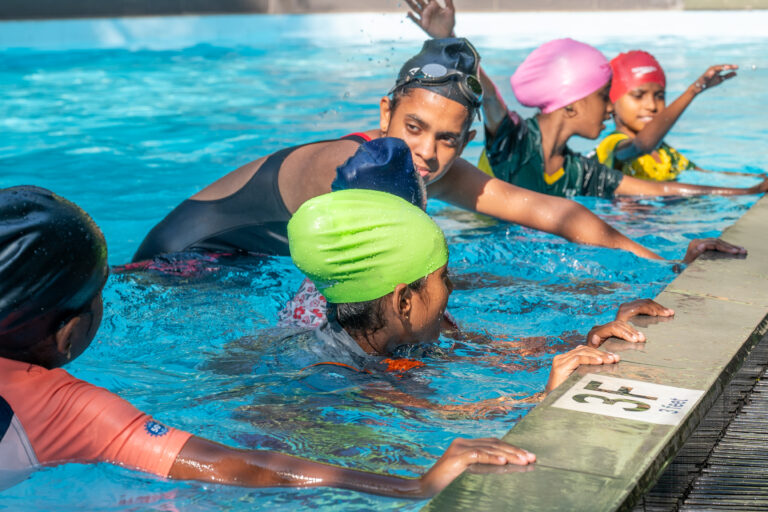
Football is the common thread, because it is the game every child already plays, but half of these placements deliberately go wider. Galle splits the week between football and supervised swimming — water confidence matters on a coast where many rural children never get a formal swimming lesson. Córdoba’s club runs basketball, handball, artistic gymnastics, athletics, rugby and hockey alongside football, and Rabat’s community centers cover basketball, volleyball, handball, rugby and athletics and encourage you to introduce sports the children have never tried.
Porto is different again: the Surf with Purpose project has you assisting professional instructors who teach surfing to children and to people with disabilities, so it sits between sports coaching and special needs volunteering. It is the one placement where your own sport improves too — the fee includes four surf lessons a week adapted to your level — and the one with the highest price, because you are in Western Europe with three meals a day in a central hostel.
If you have a background in a specific sport — netball, athletics, swimming, rugby — say so on your application. Cape Town and Rabat in particular are asked to be flexible and use initiative because equipment is thin, and a volunteer who can coach something other than football is more valuable there than one more football coach.
What does it cost, and what is included?
Every program fee below is the published “from” price on the program page at the time of writing; always check the program page for current pricing. The key thing to compare is not the headline figure but what a week of it buys you, because the six placements handle meals and transport very differently.
| Placement | Min age | Min stay | Shortest stay | 4 weeks | 8 weeks | Meals |
|---|---|---|---|---|---|---|
| Rabat, Morocco | 18 | 1 week | US$440 | US$1,220 | US$2,180 | Three meals a day with a host family |
| Cape Town, South Africa | 18 | 2 weeks | US$525 | US$900 | US$1,755 | Breakfast at the accommodation; dinner with a host family, self-catered in the volunteer house |
| Accra, Ghana | 17 | 2 weeks | US$550 | US$950 | US$1,750 | Breakfast and dinner at the volunteer house |
| Galle, Sri Lanka | 17 | 1 week | US$675 | US$1,195 | US$1,895 | Meals and local transport to the project included |
| Porto, Portugal | 18 | 1 week | US$1,184 | US$2,629 | US$4,554 | Three meals a day; hostel dorm on the Douro |
| Córdoba, Argentina | 18 | 2 weeks | US$1,400 | US$1,900 | US$2,900 | No meals; hostel with a full kitchen |
A few things stand out from the tables that a headline price hides. Cape Town is the cheapest place to stay a long time — eight weeks works out at just over US$30 a day — but what you eat depends on whether you choose the host family or the volunteer house. Accra does not include your daily transport to the club or your lunch, so budget a few dollars a day on top. Córdoba’s fee looks steep until you notice it covers a centrally located hostel in Argentina’s second city plus a donation to the club and cultural activities; it just does not cover food. Galle is the only placement that bundles local transport to the project into the price.
Across all six, the fee covers airport pick-up, orientation, accommodation and 24/7 in-country support from our in-country teams. It never covers flights, visas, vaccinations, travel insurance (available as an add-on) or your background check. If you are weighing this against a genuinely free route, our guide to volunteering abroad for free does the arithmetic honestly.
How to be a useful sports volunteer, not a disruptive one
Sports coaching is one of the lower-risk causes in volunteering abroad — you are working alongside a local coach in a public setting, not in a residential institution — but short stays still carry a cost for the children if you get the basics wrong. Volunteering Solutions is a certified B Corp and we would rather you arrive with the right expectations than book on a whim. A short checklist:
- Ask the coach what they need before you plan anything. The Cape Town page says you will need to observe first and get to know the school’s structure. That instruction applies everywhere.
- Do not run a parallel program. Slot into the existing session; the local coach stays in charge after you leave.
- Stay two weeks or more if you can. Children remember the volunteer who came for a fortnight and turned up every day, not the one who came for three afternoons. Galle and Rabat allow one-week stays, but the work is better at two-plus.
- Follow safeguarding rules literally. Never be alone with a child, never photograph children without the coach’s permission, never share your contact details with players.
- Bring equipment the coach asked for, not what you assume they need. A bag of size-4 balls, bibs and cones asked for in advance is worth more than boots that fit nobody.
- Do not promise trials, scholarships or contacts. See above — this is the single most damaging thing a sports volunteer can do.
When is the best time to go?
Because the coaching follows the school year, timing matters more here than in many causes. Córdoba is the clearest case: term-time (March to December) means evening sessions at the club; January and February mean morning sessions at pools and camps, so choose according to the kind of work you want. Rabat runs year-round, but the Morocco guide explains that during Ramadan (which falls in February in 2027 and moves about eleven days earlier each year) project hours shorten. Cape Town follows South Africa’s four-term school year with a long break from mid-December to mid-January, when there are no PE periods to coach. Galle’s afternoon sessions run through the year, though the south coast is driest from roughly December to March. Accra follows a club, not a school, so it is the least seasonal of the six.
Which sports coaching placement is right for you?
A short decision guide, based purely on what the program pages say:
- You want football, all day, in a club setting → Accra.
- You want to teach PE inside a school and see what a classroom is like too → Cape Town.
- You want variety, short hours and a host family, on the lowest budget → Rabat.
- You speak Spanish and want a serious multi-sport club with 20–25 hours a week → Córdoba.
- You want football plus swimming, and you are 17 → Galle.
- You want to be in the water yourself and coach inclusive sport → Porto.
If you are planning a gap year and want to combine coaching with another cause, Rabat lets you add a second project in the free mornings, Accra suggests pairing the football club with teaching or community work, and Galle’s outreach day already blends the two. Schools and university sports clubs wanting to bring a team (minimum group size is eight) should start with our group volunteering page and the faculty-led planning guide — a sports tour with a coaching placement built in is one of the most common group formats we run.
Related programs and next steps
Browse every placement on the sports coaching programs hub, or read the country guides for Ghana, South Africa and Sri Lanka. If you only have a week, Rabat, Galle and Porto all accept one-week stays and the one-week programs hub lists other short options, and if you would rather coach in a classroom than on a pitch, see the teaching programs. For anything the program page does not answer, contact us — our in-country teams can tell you exactly what the placement looks like in the month you want to travel.
Frequently asked questions
Do I need a coaching qualification to volunteer as a sports coach abroad?
No. None of Volunteering Solutions’ six sports coaching placements requires a coaching badge or PE degree. You need to be 17 or 18 depending on the placement, fit enough to run sessions outdoors, and able to provide a clean criminal background check. Córdoba additionally requires Spanish and Porto requires you to be able to swim.
How much does sports coaching volunteering abroad cost?
Published from-prices range from US$440 for one week in Rabat to US$1,400 for two weeks in Córdoba. Cape Town is US$525 for two weeks and US$1,755 for eight, Accra US$550 for two weeks, Galle US$675 for one week and Porto US$1,184 for one week. Fees cover airport pick-up, orientation, accommodation and 24/7 support, but not flights, visas, insurance or your background check. Always check the program page for current pricing.
What sports will I coach?
Football is the common thread everywhere. Galle adds supervised swimming, Córdoba and Rabat add basketball, handball, rugby, athletics, hockey and volleyball, Cape Town covers whatever the school’s PE curriculum needs, and Porto is adaptive surfing for children and people with disabilities.
When do the coaching sessions take place?
Mostly in the afternoons after school: around 3pm–5pm in Rabat, 4pm–8pm in Córdoba during term, and weekday afternoons in Galle. Cape Town is the exception, running 8am–3pm inside a primary school with classroom assistance between PE periods. Accra follows the football club’s own timetable, Tuesday to Friday.
How long should I volunteer for?
The minimum is one week in Galle, Rabat and Porto and two weeks in Accra, Cape Town and Córdoba, with most placements running up to 12–24 weeks. Two weeks or more is better for the children, because consistency is most of what a volunteer coach adds.
Can under-18s volunteer as sports coaches abroad?
Yes, at two placements: Galle (Sri Lanka) and Accra (Ghana) accept volunteers from 17 with a parental consent form. Cape Town, Rabat, Córdoba and Porto require you to be 18. School groups of eight or more can travel younger on a supervised group program.
Ask us about a sports coaching placement

Sahil Sabharwal is part of the team at Volunteering Solutions, a certified B Corporation. He writes about affordable volunteer abroad programs, gap years and traveling responsibly.