 English (US) ▾
 Nederlands
 English (UK)
 Deutsch
 Italiano
 Português
 Español
Turtle and Environment Conservation
Volunteer in a community-driven conservation project that aims to conserve sea turtle nesting beach habitat on the Osa Peninsula in Costa Rica. Osa Peninsula is one of the most stunning destinations on Earth, located in Costa Rica’s Southern Pacific region. This untamed paradise is home to 2.5% of the world’s biodiversity, featuring rare wildlife, vibrant tropical birds, and expansive rainforests as far as the eye can see.
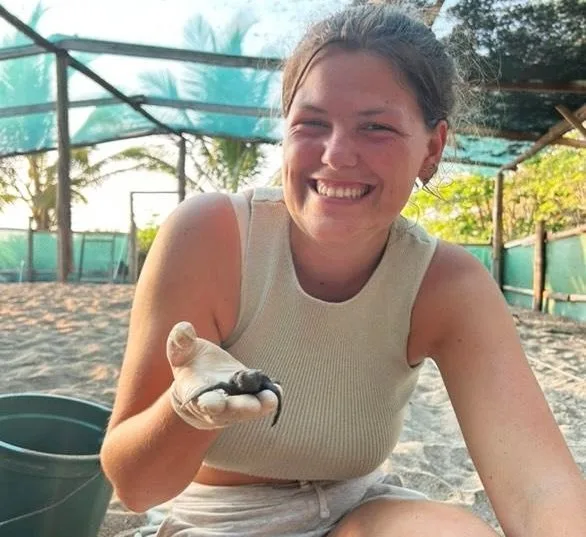
You join a community-run sea turtle conservation project on the Osa Peninsula, based at a rustic camp reached via Puerto Jiménez in Costa Rica's southern Pacific region. Day to day you take part in morning or night turtle patrols, record data on nesting females, tag flippers, protect and occasionally relocate nests, and help excavate hatched nests and release hatchlings. Between patrols you join beach clean-ups, sort collected plastic, teach English to community members, give short conservation talks, and help with tree planting. The program suits anyone 18 or older who is fit, comfortable outdoors, and willing to work without constant supervision, no prior conservation experience is required.
Placements run 1–8 weeks, starting every week (sundays), with the next start on 20 Sep 2026. You live at the camp in mixed dormitory cabins with shared bathrooms and a communal kitchen, with all meals included (mostly vegetarian). Prices start at $984, deposit included. The camp itself is the draw here: a remote beach location shared with a small international group, built around daily patrols rather than a fixed classroom-style schedule.
- Opportunity to experience life in the most legendary and also most remote destinations in all of Central America
- Work with a bunch of enthusiastic people during turtle patrols
- Observe the turtles, protect their eggs, and indulge in doing something meaningful for Mother Nature
- Gain first-hand work experience while assisting the local team
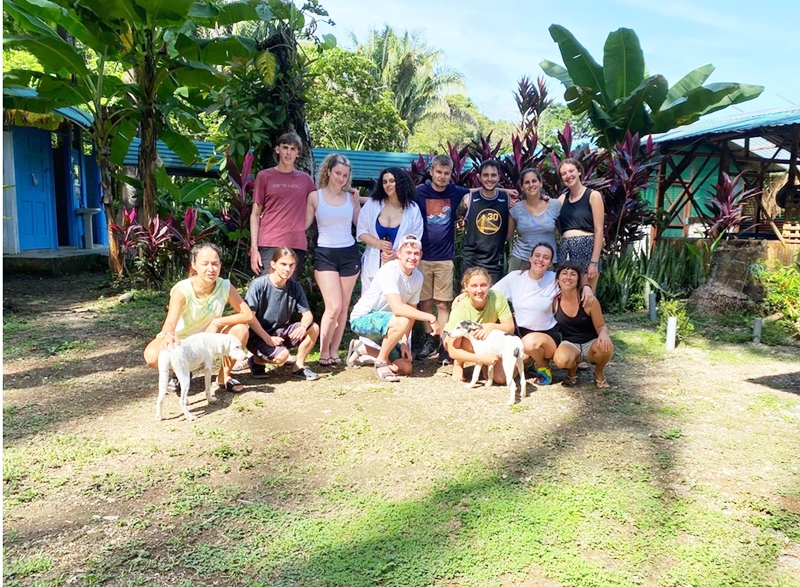
- Meet some amazing like-minded travelers from all across the world
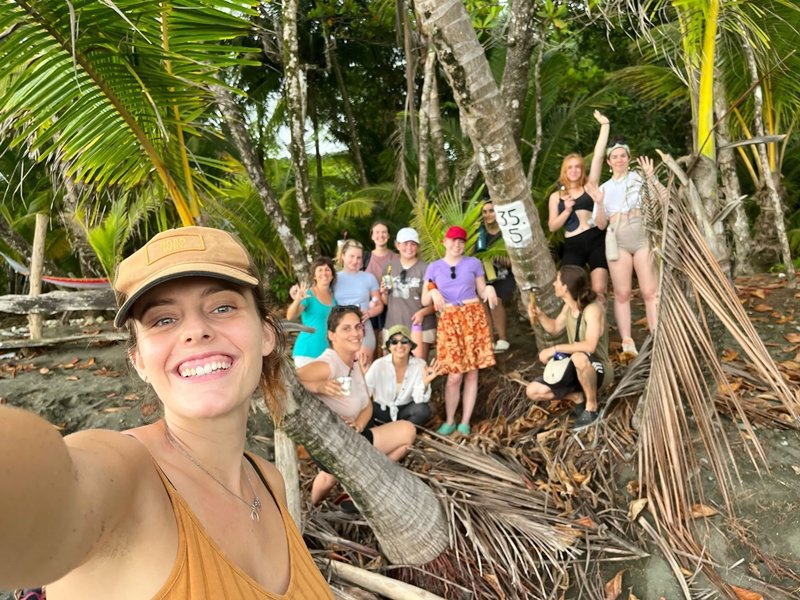
- Experience the joy of staying in a beautiful isolated beach location
Your role on this program
- Join morning turtle patrols (3-5 hours) or night patrols (4-7 hours) along the nesting beach
- Record data on nesting turtles and tag flippers under staff instruction
- Protect nests and, when needed, relocate eggs to a hatchery
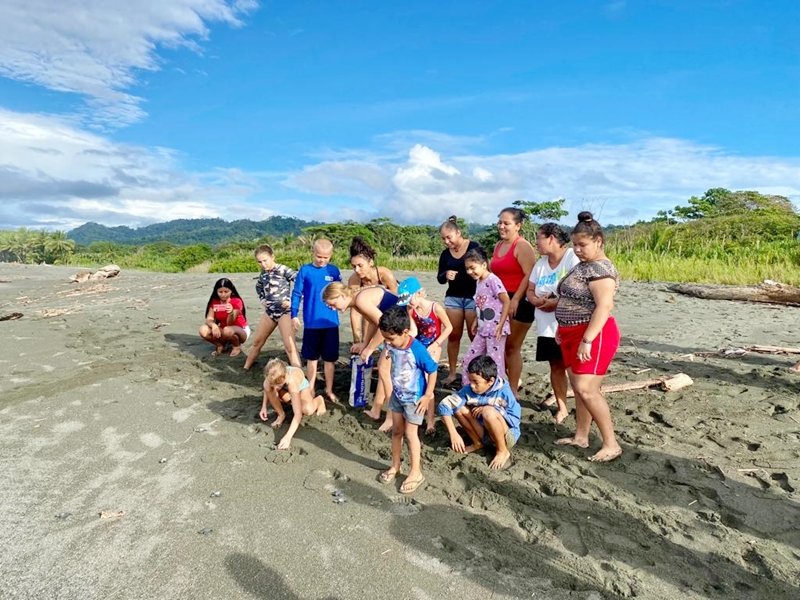
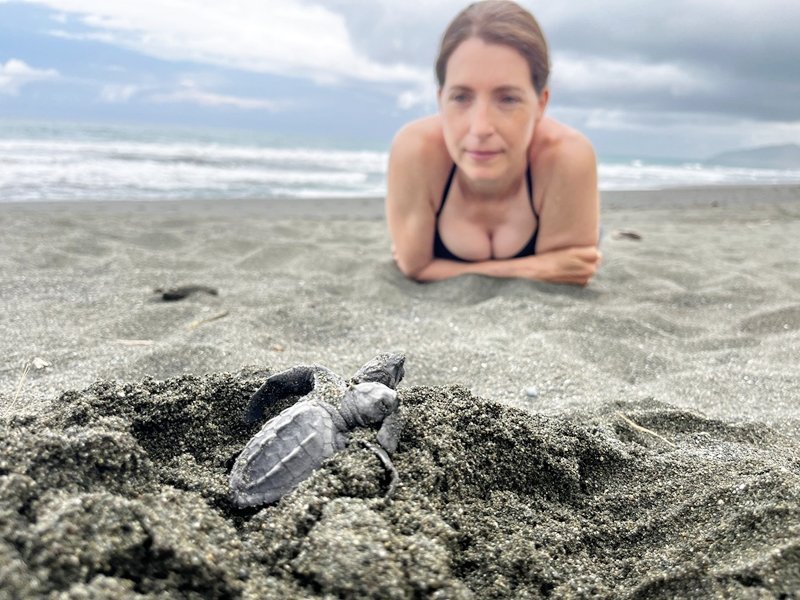
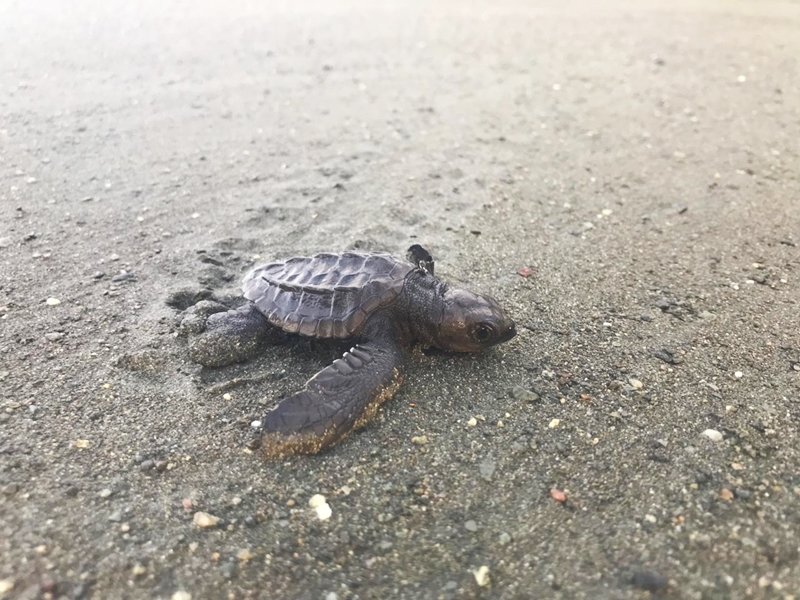
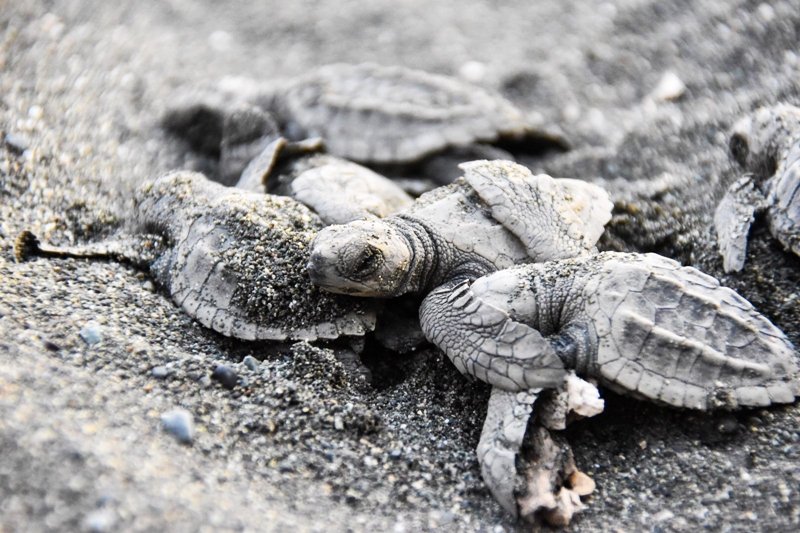
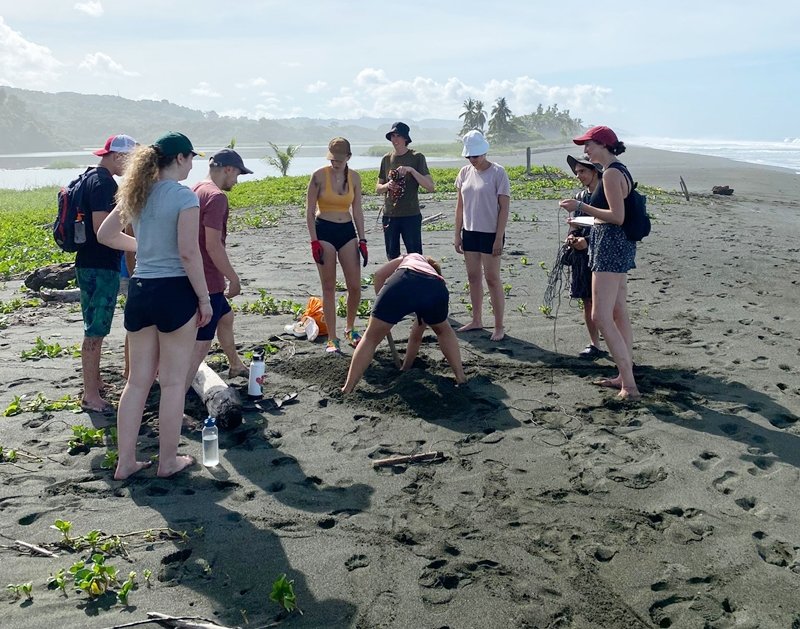
- Excavate hatched nests and assist with hatchling releases
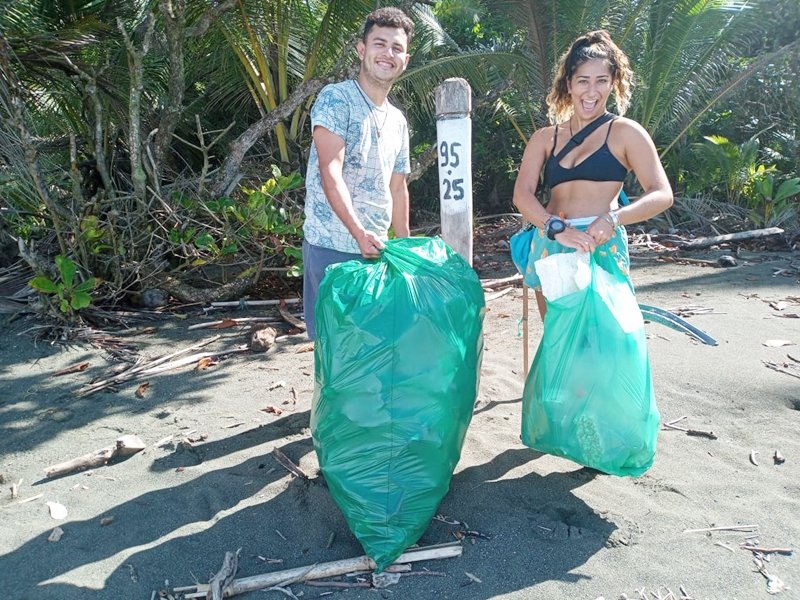
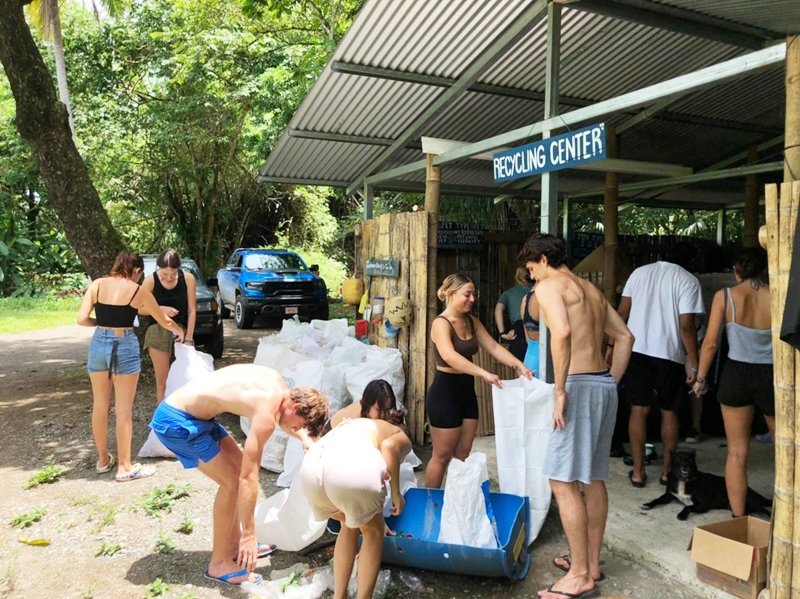
- Take part in beach clean-ups and sort collected plastic waste
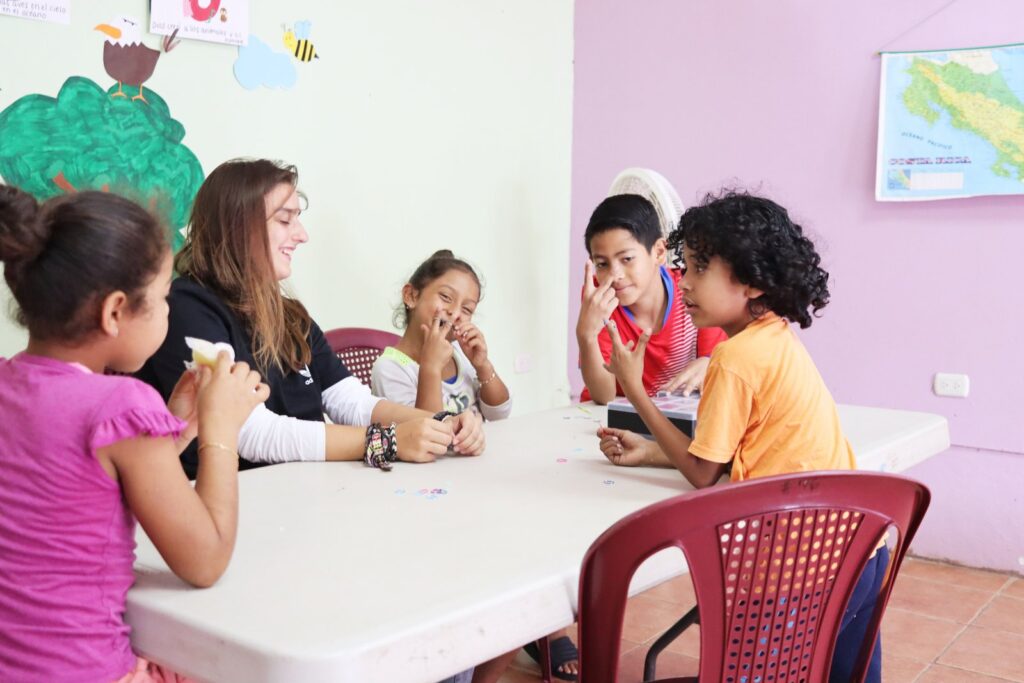
- Teach English lessons to members of the local community
- Give short sea turtle conservation presentations, including at local schools
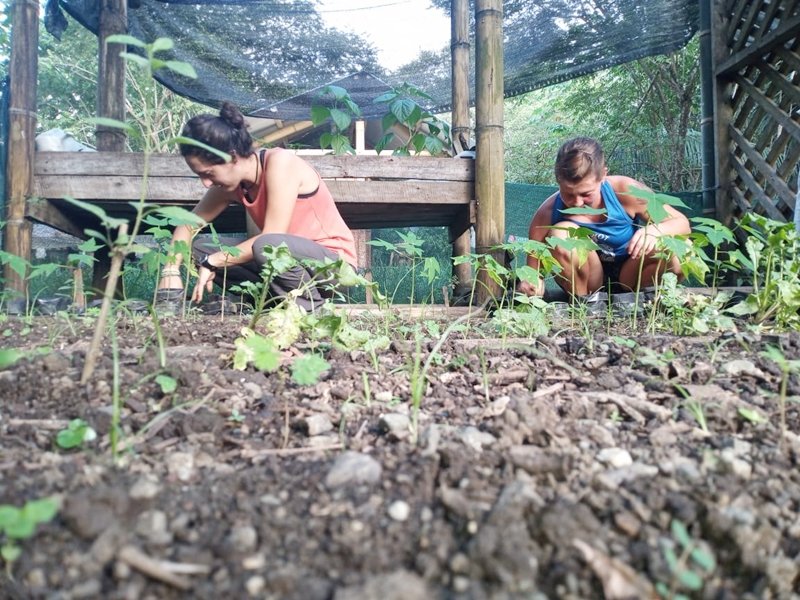
- Help with tree planting and maintenance around the camp
Exact duties vary with the placement's needs, the season and your experience.
Role boundaries
Turtles and eggs are handled only under the direction of the on-site English-speaking coordinator or local staff, and swimming at the camp beach is not permitted. Duties may vary with the placement's needs and depend on the nesting season, staffing levels on camp, and weather, so the exact mix of patrols, clean-ups, and community activities changes week to week.
A typical day and week
The weekly schedules must be flexible due to the nature of our environmental and community work and therefore if there are any changes to the schedule our staff will let you know as soon as possible. In terms of your work load, this will change depending on how many people are on camp, we may need you too help us out a little more than usual, but we will make sure you have time to rest. We will make sure that everyone has a minimum of one complete day off from required activities, however this will be designated by your camp leader and will fit around the weeks activities. If you would like to request a specific day off, please do so before the start of the week so it can be accounted for in the schedule.
Given below is a suggested plan, and might change according to circumstances :
Day 1, Sunday: Arrival in Puerto Jimenez
Arrival at Puerto Jimenez and transfer to a pre booked hostel accommodation in Puerto Jimenez. Arrival package for pickup and stay in San Jose is available at extra charges. There’s no pick up from the airport to the hostel included in Puerto Jimenez. Volunteers go on their own to the accommodation located in close proximity to the airport.
Day 2, Monday: Transfer to Volunteer Camp
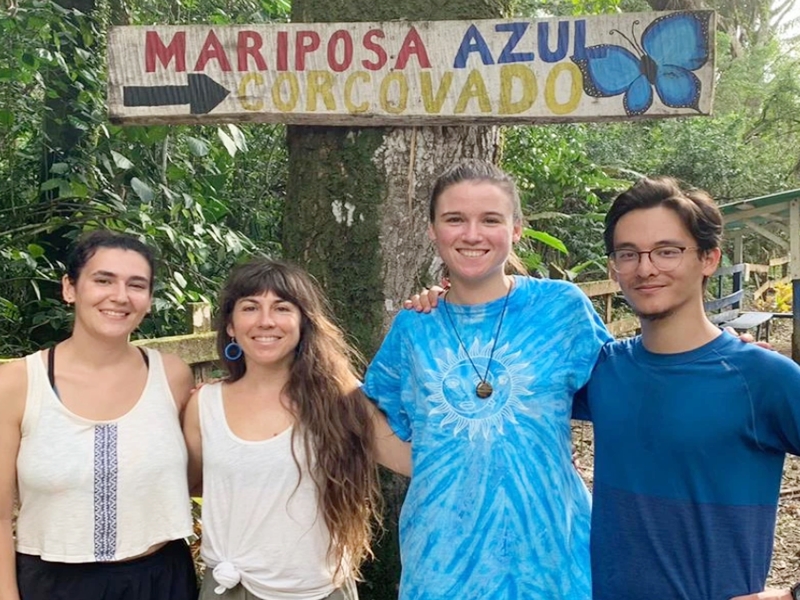
Monday afternoon transfer to Camp Mariposa Azul. Meet and greet with the coordinator at the camp.
Days 3 to Day 8, Tuesday to Sunday: Working at the project site
Day 9, Monday : Return back to San Jose or continue program
Those participants who are doing the program for a week will be taken back to Puerto Jimenez this morning. Others will continue with the program further.
Things to Consider
-
Project Dates – The project is not available in May and June.
-
Pre Stay in San Jose – We can help you in arranging pickup and stay in San Jose before or after your program in Osa Peninsula.
-
Projects starts on Monday and ends on Mondays, volunteers need to be in Puerto Jimenez the night before (included in the project).
-
Minimum is one week, but more convenient to stay for longer
-
Poor Wi-Fi
-
Work can be physically demanding
Timings are the placement's usual pattern; the local team confirms your hours at orientation, and they can change with school terms, clinic rotas, weather and the project's needs.
Who can join and what you need
- Minimum age 18
- No previous conservation experience required, but a genuine interest in environmental work
- Fit and healthy, prepared for physically demanding work outdoors, including several hours of walking on the beach in all weather
- Comfortable working with limited supervision and adapting to a flexible weekly schedule
- Clean criminal background check, issued within 12 months of the start date
- Valid travel/medical insurance, either your own policy or the one Volunteering Solutions arranges
- Responsible, patient, and proactive attitude toward camp life and shared work
The placement, its limits and your part in it
This is a community-driven conservation project on the Osa Peninsula, run with local staff who live and work on the camp, including community members who previously worked in gold mining or poaching and now hold roles supporting patrols, tours, and volunteer coordination. An English-speaking volunteer coordinator lives on site, sets the weekly agenda, and runs the daily patrols and activities alongside local team members.
Turtles and nests are only handled under staff direction, following the project's animal welfare approach, and volunteers do not take on decisions about relocating nests or treating injured animals themselves. Your contribution is practical and supporting: walking patrols, recording data, protecting nests, and helping with clean-ups and community education sessions, work that fits into the wider patrol schedule run by the local team rather than being led independently by volunteers.
Our standards
- Responsible volunteer travel policyHow we choose, run and review every project
- Animal welfare policyOur rules for wildlife, marine and animal-care projects
- Certified B CorporationSocial and environmental performance verified by B Lab
- How we volunteer responsibly in Costa RicaCountry-level partner context and standards
Start dates
Weekly start dates, year-round — pick any week across the next two years.
Program fees by duration
Prices include your $249 booking deposit — which is deducted from your total program fee. Your deposit stays valid for one year, during which you may enroll in multiple programs. A 5% international banking fee applies to credit-card payments in USD or AUD.
| Duration | Total price | |
|---|---|---|
| 1 week | $984 | |
| 2 weeks | $1,296 | |
| 3 weeks | $1,500 | |
| 4 weeks | $1,800 | |
| 5 weeks | $2,100 | |
| 6 weeks | $2,400 | |
| 7 weeks | $2,700 | |
| 8 weeks | $3,000 |
Indicative conversion — your booking is charged in the currency you choose at checkout.
✓ What you're paying for
- Pre departure information and support
- Pre departure handbook
- Pre-departure online (mindfulness) meeting
- Arrival on Sundays at Puerto Jimenez
- 1 overnight in Puerto Jimenez in a hostel
- Monday afternoon 1:30pm with colectivo/bus to Camp Accommodation
- Meet & greet with English volunteer coordinator at the camp
- Including meals (mostly vegetarian)
- Follow up online (mindfulness) meetings
- Free activities; night walks, jungle walks, game & movie night, pizza night etc.
- Poor Wifi
- Return bus ticket back to Puerto Jimenez on Monday
- Certificate of Participation(On Request)
Not included
- Airfare
- Visa
- Vaccinations
- Pre and Post project stay in San Jose
- Return Airport Drop
Accommodation & meals
Airport Transfer
Participants need to arrive at Puerto Jimenez on a Sunday. You also have the option of booking airport pickup and pre stay in San Jose at extra charges.
There’s no pick up from the airport to the hostel included in Puerto Jimenez. Volunteers go on their own to the accommodation.
Accommodation
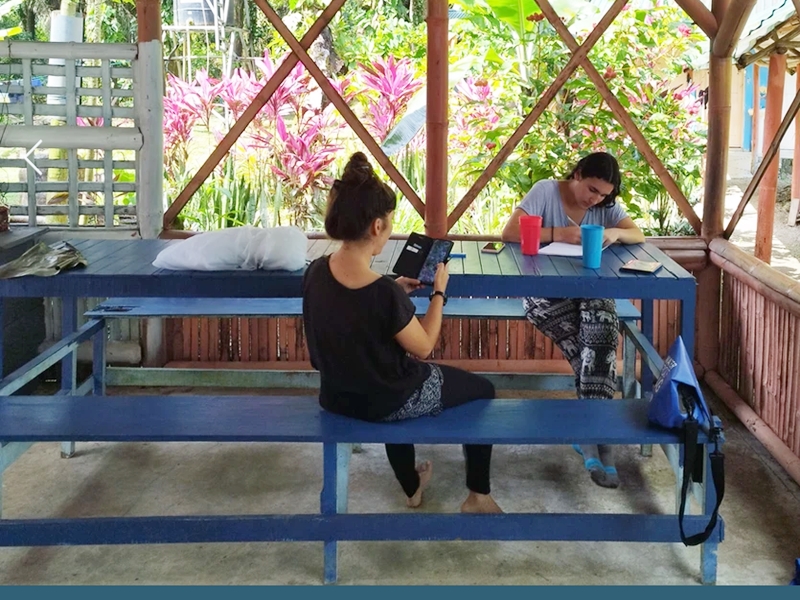
The rustic camp is made up of two mixed dormitory-style cabins with 8-10 volunteers per cabin, staff cabins, a communal kitchen, a chill-out area and a garden area with fruiting trees, a small greenhouse and a chicken coop. There is basic solar electricity and WiFi on the project, as well as western toilets and clean drinking water.
There are lots of areas to explore in search of wildlife!! We share our space with some awesome domestic animals. The camp is equipped with the following :-
- Clean drinking water
- Single beds
- Shared accommodation
- Shower and toilet block
- WiFi
- Basic solar power
- Handwashing laundry station
- Parking / camping area
- Communal area
- Fully equipped kitchen
An English speaking volunteer coordinator is living at the camp and will make each week a clear agenda with work and fun activities.
Orientation
All volunteers are given an orientation before starting the program by the project coordinator.Orientation is conducted by the local staff and covers topics such as Volunteer Roles and Responsibilities, Rules and Expectations, Safety and Introduction to your project and placement.
Meals
All meals are included at the camp and mostly vegetarian meals are provided.
During your Free Time
There are a lot of different activities around the Osa Península. Some of the activities are :-
- Corcovado National Park
- Surfing in Matapalo
- Horse-riding – Chocolate tour
- Whale and dolphin tour
- Waterfall hike
- Guided gold-mining tour
- Plus a lot of free activities: night walks, jungle walks, beach cleans, game and movie night, pizza nights, etc.
- Beach nearby the camp is NOT allowed for swimming however you can enjoy activities such as beach playing games, looking for animals or taking in the awesome views.
Life on the program

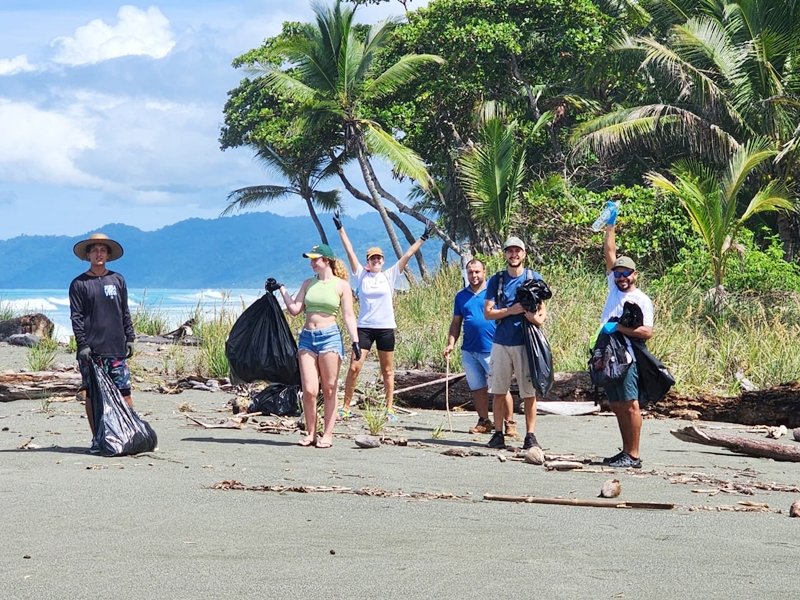
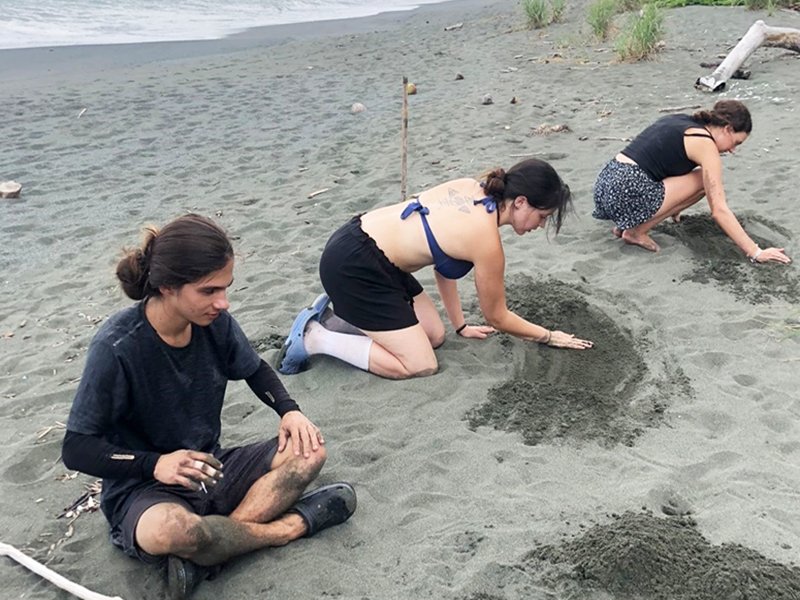
Getting there and who looks after you in Costa Rica
Arrival at Puerto Jiménez
You arrive independently in Puerto Jiménez on a Sunday; there is no airport pickup included to the pre-booked hostel there. An optional pickup and pre-stay package in San José can be added at extra cost.
First night in Puerto Jiménez
You spend the Sunday night at the hostel in Puerto Jiménez before transferring to camp.
Transfer to Camp Mariposa Azul
On Monday afternoon you travel by colectivo/bus to the camp, where you meet the English-speaking coordinator living on site.
Orientation
Local staff run an orientation covering your role and responsibilities, camp rules, safety, and an introduction to the project before work begins.
First project days and ongoing support
Work at the project site runs from Tuesday through Sunday, with the on-site coordinator setting the week's patrol and activity schedule and providing day-to-day support.
From volunteers in Costa Rica
Frequently asked questions
What do volunteers actually do on this project?
You join morning or night turtle patrols, record nesting data, tag flippers, protect and sometimes relocate nests, help excavate hatched nests, release hatchlings, and take part in beach clean-ups, plastic sorting, English lessons, and tree planting.
Do I need conservation experience to join?
No previous experience is required, but you should have a genuine interest in environmental work and be prepared for physically demanding outdoor tasks.
What is a typical day like?
Days are built around patrols rather than fixed office-style hours: morning patrols run about 3-5 hours and night patrols about 4-7 hours, with beach clean-ups, English lessons, or tree planting filling the rest of the schedule, which the camp coordinator sets week to week.
How long can I stay and when do placements start?
Placements run 1–8 weeks, starting every week (sundays), with the next start date on 20 Sep 2026. The project does not run in May and June.
What does the program cost and what is included?
Prices start at $984, deposit included. This covers your Sunday-night hostel stay in Puerto Jiménez, the Monday transfer to camp, all meals at camp (mostly vegetarian), the return bus back to Puerto Jiménez, and pre-departure support materials.
What is not included in the price?
Airfare, visa costs, vaccinations, and any pre- or post-project stay in San José are not included, though a San José pickup and stay package can be added at extra cost.
Where do I stay and what are the meals like?
You stay in mixed dormitory-style cabins at the rustic camp, sharing with other volunteers, with a communal kitchen, chill-out area, and garden. All meals are included and are mostly vegetarian.
Is there airport pickup?
There is no pickup included from the airport to the hostel in Puerto Jiménez; you travel there independently. A pickup and pre-stay package in San José can be arranged for an extra charge.
What support is available if something goes wrong?
An English-speaking volunteer coordinator lives at the camp full time, and the local team provides a 24-hour emergency contact throughout your stay.
Do I need a visa, vaccinations, or insurance?
Visa and vaccination requirements are not covered by the program fee; guidance on these is sent before departure. Travel and medical insurance is compulsory, either your own policy or the one Volunteering Solutions arranges.
Is a background check required?
Yes, a clean criminal background check issued within 12 months of your start date is required, since the role includes community education activities.
Can I swim or handle turtles freely at the beach?
Swimming is not permitted at the camp beach, and turtles and nests are only handled under the direction of staff during patrols and related tasks.
Related pages
Schedule a meeting with a program advisor
We're here to help — a 20-minute one-on-one with detailed info, expert advice and application guidance.
Book a free meetingMore projects in Costa Rica

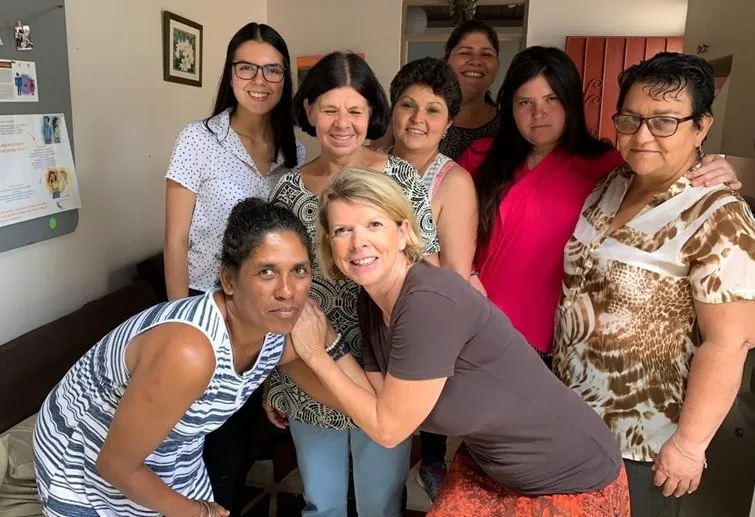
Women Empowerment in San Ramon de Alajuela
Join the Women Empowerment Program in Costa Rica with Volunteering Solutions and contribute to a life-changing initiative that…
Turtles, Wildlife & Permaculture Volunteer Experience
Live and volunteer in one of Costa Rica’s most biodiverse coastal regions while protecting endangered sea turtles, restoring…

Childcare Volunteer Program in Costa Rica
Help nurture Costa Rica’s youngest minds by volunteering in community childcare centers, bringing care, creativity, and hope to…