 English (US) ▾
 Nederlands
 English (UK)
 Deutsch
 Italiano
 Português
 Español
 Français
Women’s Empowerment Volunteering Abroad: What You’ll Actually Do, Costs and How to Choose
Blog · August 31, 2026 · 11 min read · By Sahil
Women’s empowerment volunteering abroad means supporting a local organization that helps women and girls gain literacy, employable skills, confidence and an income of their own. In practice, most volunteers spend their days doing one of three things: teaching English or basic literacy, helping run vocational classes (tailoring, hairdressing, computing, beauty therapy, handicrafts), or supporting the workshops and small businesses the women themselves run. With Volunteering Solutions these placements start from US$285 for a week in Kathmandu and run up to four-week programs in Latin America. This guide covers what the work really involves, what it costs, whether men can join, and how to judge whether a project is genuinely useful — using our own program data rather than marketing copy.
What is women’s empowerment volunteering abroad?
Women’s empowerment volunteering abroad is placement work with a community organization whose purpose is to increase women’s independence — economic, educational or social. Volunteers do not run the program; local staff do. The volunteer’s role is to add capacity to classes and workshops that already exist: teaching a language, sharing a practical skill, mentoring adolescent girls, or helping the project sell what its members make.
It sits alongside — and often overlaps with — teaching and community development volunteering. The difference is who the beneficiary is: adult women and adolescent girls, rather than young children or a whole village.
What does a women’s empowerment volunteer actually do all day?
This is the question most provider pages dodge, so here is the honest version, project by project, from our own program descriptions.
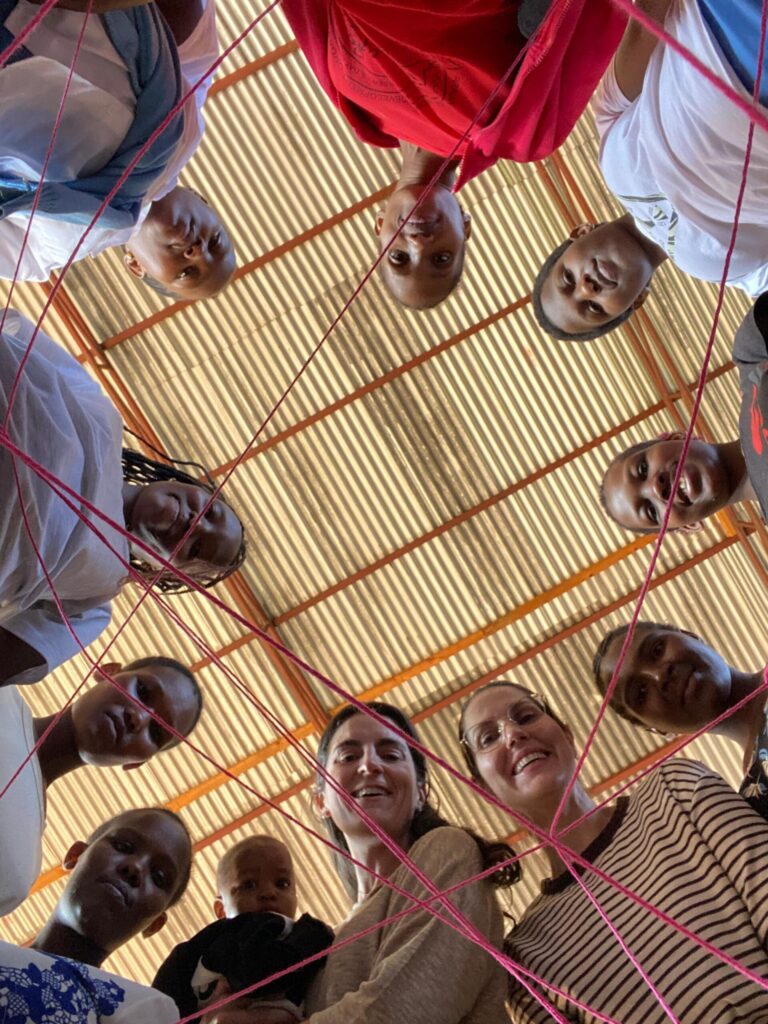
In Arusha, Tanzania, the center gives a second chance to young women who could not finish school because of an early pregnancy. It houses more than 30 young mothers and their babies at a time and trains them in cooking, hairdressing and tailoring, while their children are cared for in a Montessori daycare on site. Volunteers help across the whole operation — teaching cooking, assisting in the pre-school, helping with tailoring and handicrafts, and supporting marketing and fundraising.
In Córdoba, Argentina, the mornings are workshops — textile, knitting, crochet, recycling, porcelain, technology — run by and for women facing social risk. Volunteers join in, and once they are part of the group they help organize the fairs and events where the women sell what they have made. In San Ramón de Alajuela, Costa Rica, the emphasis is financial: budgeting, money management, entrepreneurship coaching, and helping market the participants’ products online.
| Placement | Where | What volunteers actually do |
|---|---|---|
| Nepal | Kathmandu village | Basic English for homemakers; conversation and communication with young women |
| India — Delhi | Delhi NGO centers | Adult literacy, computer training, income-generating classes (sewing, embroidery, knitting, beauty therapy) |
| India — Jaipur | Slum center, Jaipur | Free stitching and beautician classes; English and life-skills workshops for adolescent girls |
| Tanzania | Arusha | Cooking, tailoring and handicraft teaching; daycare support; marketing and fundraising |
| Morocco | Rabat / Salé | Literacy, work-related English or French, computer literacy, mentoring girls |
| Sri Lanka | Galle | English language and life-skills classes for rural women |
| Costa Rica | San Ramón de Alajuela | Financial literacy, entrepreneurship coaching, product marketing, confidence workshops |
| Argentina | Córdoba | Textile and craft workshops; organizing sales fairs; food delivery; Saturday build days |
| Cambodia | Phnom Penh | NGO support matched to your profession — microfinance, vocational training, human rights, admin |
Will you be teaching a skill, or teaching English?
Here is the sentence most organizations will not print, taken directly from our own Delhi program page: “unless you have practical skills and experience in beauty therapy, computing, sewing, embroidery or knitting, you will be teaching English as a second language.”
That is the single most useful thing to understand before you book. Women’s empowerment projects need two kinds of help — language and vocational skills — and the vocational side is the harder one to fill. If you can actually cut hair, run a sewing machine, keep books, build a spreadsheet or coach someone through starting a micro-business, say so on your application, because you will be routed to work that very few volunteers can do.
If you cannot, that is completely fine and it is what most volunteers are in for. You will teach English, literacy and communication, and you will be genuinely useful doing it — but go in expecting a classroom, not a workshop. Facilities are often basic; the Delhi project notes there may only be a blackboard and chalk, and encourages volunteers to bring their own materials.
Are you working with grown women, or with adolescent girls?
Both, and the split changes the job considerably.
Adult placements — Nepal’s homemakers, Sri Lanka’s rural women, the mothers in Arusha, the workshop members in Córdoba — are peer-to-peer. You are working with adults who have decided to be there, and the atmosphere is closer to an evening class or a co-operative than a school.
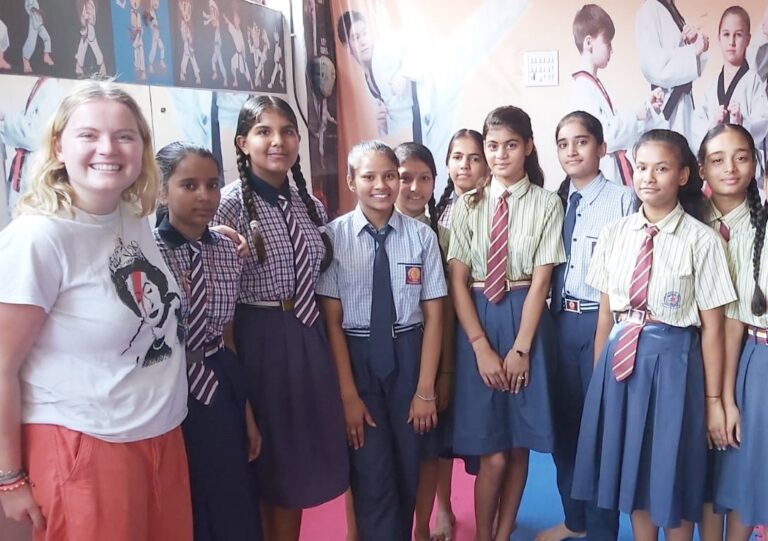
Girls’ education placements are different. In Jaipur, volunteers run English classes for girls aged 12–17 and deliver workshops on health, hygiene and career orientation. That is safeguarding territory: our safeguarding policy applies, and it is worth reading before you apply rather than after. Rajasthan is also the context that makes this work matter — the program cites a female illiteracy rate in the state far above the national average.
If you specifically want to work with younger children instead, the childcare and community development route is the better fit, and we cover it in detail in our childcare volunteering guide.
Can men volunteer on women’s empowerment projects?
Mostly yes — with one clear exception in our catalogue. The Sri Lanka program in Galle accepts female volunteers only, and states so plainly in its eligibility requirements. Every other women’s empowerment placement we run — Nepal, Delhi, Jaipur, Arusha, Rabat, San Ramón, Córdoba and Phnom Penh — is open to volunteers of any gender.
That said, individual placements inside a program can be women-only even where the program is not: a shelter, a counselling session or a session on reproductive health may be closed to male volunteers, and your in-country coordinator will tell you which parts of the timetable those are. If you are a man drawn to this cause, the safest approach is to ask at enquiry stage exactly which activities you will be able to join, so the answer arrives before you have booked a flight.
How much does women’s empowerment volunteering cost?
Prices below are the real starting fees on our program pages at the time of writing, with the minimum stay and age rules that go with them. They cover accommodation, meals (two or three a day depending on the country), airport pickup, orientation and 24-hour in-country support; flights, visas, insurance and local transport are extra. Always check the program page for current pricing before you budget.
| Program | From | Minimum stay | Minimum age | Open to |
|---|---|---|---|---|
| Nepal — Kathmandu | $285 | 1 week | 17 | All genders |
| India — Delhi | $301 | 1 week | 17 | All genders |
| India — Jaipur | $350 | 1 week | 18 | All genders |
| Tanzania — Arusha | $375 | 1 week | 17 | All genders |
| Morocco — Rabat | $440 | 1 week | 18 | All genders |
| Sri Lanka — Galle | $835 | 2 weeks | 18–60 | Women only |
| Cambodia — Phnom Penh | $970 | 5 weeks | 18 | All genders |
| Argentina — Córdoba | $1,650 | 4 weeks | 18 | All genders |
| Costa Rica — San Ramón | $1,652 | 4 weeks | 18 | All genders |
The pattern is worth noticing: South Asia and East Africa are three to five times cheaper than Latin America, and they also allow one-week stays, while Argentina and Costa Rica require a month. If budget is the deciding factor, read our guide to volunteering abroad for free, which does the arithmetic on the genuinely fee-free alternatives. If you are a student, university funding routes can cover a good part of it. There is also a European option — a social inclusion and community program in Valencia, Spain — though that one is broader than women’s empowerment alone.
How do you handle the language barrier?
You handle it differently in each country, and the program copy is specific about it.
In Jaipur, the women do not speak English at all, so the teaching method is interactive sessions, visual arts and non-verbal communication; the adolescent girls understand some English and are far more interested in personality development and career orientation. In Nepal, the homemakers are absolute beginners, so pre-school-level teaching is enough — which is why that placement explicitly welcomes volunteers from non-English-speaking countries who can communicate in decent English. Working with the younger women in Nepal needs more fluency, because they can already read and write.
In Morocco, French is as useful as English: schooling and administration run in French, and volunteers teach “work-related English or French”. In Sri Lanka, the women are usually literate in Sinhala or Tamil — English is the skill being added, not the medium you can fall back on.
What do you actually need to join?
Less than people assume. No degree, no TEFL certificate and no prior teaching experience are required on any of these placements — the Nepal program states outright that TEFL certification is not needed. What is required is an age minimum (17 in Nepal, Delhi and Arusha; 18 everywhere else, with an upper limit of 60 in Sri Lanka), fluency or near-fluency in the teaching language, and in Sri Lanka’s case a clean criminal background check.
The softer requirements matter more than the paperwork. Several of these programs ask for flexibility and cultural sensitivity in writing, because the subject matter — domestic violence, reproductive health, land rights, women leaving abusive situations — is heavy, and volunteers are there to support the local staff who handle it, not to lead on it.
How do you tell a good women’s empowerment project from a bad one?
This cause attracts a particular kind of bad program: the photogenic one, where volunteers arrive, run a “workshop” nobody asked for, take pictures and leave. Four questions separate the real thing from the performance.
Who decided what gets taught? If the curriculum was designed by the women themselves or the local organization, good. If it was designed by the sending organization for volunteers to deliver, be sceptical. Does the project keep running when no volunteer is there? Every project listed above is staff-run and continuous; volunteers add capacity to it. Is there an income at the end of it? Empowerment that stops at a certificate is weaker than empowerment that ends in a tailoring business, a hairdressing job or a market stall. And what happens to the photographs? Consent to be photographed is not implied by being in a class.
We are a certified B Corporation with in-country teams in every destination we run, and we would rather tell you a placement is mostly English teaching than sell you a story about transforming a village in two weeks. If you want to compare specific programs side by side, our roundup of the best women’s empowerment volunteer programs does exactly that.
When is the best time to go?
Adult women’s placements are the most flexible thing we run, because they do not depend on a school calendar the way teaching placements do — the classes and workshops continue year-round. The exception is the girls’ education side in Jaipur, which follows the Indian school year, and Morocco, where hours shorten during Ramadan; our Morocco guide has the detail on that.
Weather is the bigger factor. Kathmandu and northern India are unpleasant during the monsoon and very hot from April to June; Tanzania’s long rains fall in April and May; Costa Rica’s driest months are December to April. Weekends are yours in all of these programs, so pick the season you would actually want to travel in.
Frequently asked questions
What is women’s empowerment volunteering abroad?
It is volunteering with a local organization that helps women and adolescent girls gain literacy, employable skills, confidence and independent income. Volunteers typically teach English or basic literacy, help run vocational classes such as tailoring, hairdressing or computing, or support the small businesses the women themselves run.
How much does it cost to volunteer on a women’s empowerment project?
With Volunteering Solutions it starts at US$285 for one week in Kathmandu, US$301 in Delhi and US$375 in Arusha, Tanzania. Latin American placements are considerably higher — from US$1,650 in Córdoba, Argentina and US$1,652 in San Ramón, Costa Rica — and require a four-week minimum. Fees include accommodation, meals, airport pickup, orientation and 24-hour in-country support; flights, visas and insurance are not included.
Can men volunteer on women’s empowerment programs?
Yes, on eight of our nine placements. The Sri Lanka program in Galle accepts female volunteers only. Elsewhere, volunteers of any gender are welcome, though specific sessions — a shelter visit, a counselling group or a reproductive health workshop — may still be restricted to women.
Do I need a teaching qualification or a degree?
No. None of these placements require a degree, a TEFL certificate or previous teaching experience. You need to be fluent enough in English (or French, in Morocco) to teach beginners, and to meet the age requirement — 17 in Nepal, Delhi and Arusha, 18 elsewhere.
What if I have a practical skill like sewing or hairdressing?
Say so on your application. Volunteers with real experience in tailoring, beauty therapy, computing, bookkeeping or small-business coaching are placed directly into vocational training, which is the hardest role to fill. Without one of those skills, you will almost certainly be teaching English as a second language instead.
How long do I need to stay?
One week is the minimum in Nepal, Delhi, Jaipur, Arusha and Rabat; two weeks in Sri Lanka; four weeks in Argentina and Costa Rica; five in Cambodia. Longer is better for this cause in particular — trust builds slowly in a group of women who have been let down before — but a short stay on a continuously staffed project is still useful. See our short-term volunteering options if time is tight.
Ready to start?
Browse every placement on our women’s empowerment volunteering hub, or tell us your dates, budget and whether you bring a vocational skill, and we will tell you honestly which projects are the right fit. Popular starting points are Nepal, India, Tanzania and Morocco. If you are traveling alone, our guide to the best programs for solo female travelers is a good companion read, and every booking is covered by our financial protection.

Sahil Sabharwal is part of the team at Volunteering Solutions, a certified B Corporation. He writes about affordable volunteer abroad programs, gap years and traveling responsibly.