 English (US) ▾
 Nederlands
 English (UK)
 Deutsch
 Italiano
 Português
 Español
 Français
Wildlife Conservation Volunteering Abroad: Costs, Ethics and What You Will Actually Do
Blog · August 26, 2026 · 11 min read · By Saurabh
Wildlife conservation volunteering abroad means joining a sanctuary, rescue center or reserve as short-term field help — cleaning enclosures, preparing food, planting habitat, monitoring species and recording data — usually for one to four weeks, usually from about $580 to $1,650 in program fees, and almost always with far less animal contact than the marketing photos suggest. That last part is the bit most guides skip, so this one starts there.
This guide covers what the work actually involves, how close you really get to the animals, what it costs at real 2026 prices, whether you need a science degree, when to go, and how to tell a genuine conservation project from a paid-for-photo attraction. If you want to browse placements rather than read, our wildlife conservation volunteer programs page lists every project with live pricing.
What is wildlife conservation volunteering?
Wildlife conservation volunteering is unpaid, short-term work with an organization that protects wild animals or their habitat. Volunteers pay a program fee that covers accommodation, in-country support and a contribution to the project, and in return do practical, supervised tasks: habitat restoration, enclosure and food preparation, species surveys, data entry and public education. It is manual and repetitive work, not animal handling.
What does a wildlife conservation volunteer actually do?
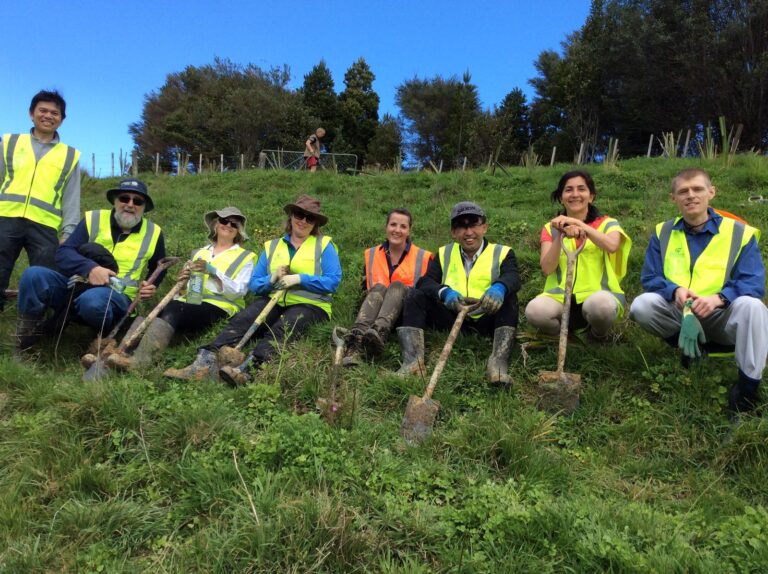
Most of a wildlife volunteer’s day is spent on habitat and husbandry, not on animals. On the Conservation Volunteering Program in New Zealand, that means planting and caring for native trees, cutting tracks, controlling pests and weeds, and helping monitor threatened species. On the Forest Conservation Program in Madagascar on Nosy Komba, it means field survey techniques — species identification, behavioural monitoring, population assessments, pitfall traps, transect surveys and day and night forest searches, plus building an inventory of butterfly and moth species.
At rescue and rehabilitation centers the pattern is similar. At the Borneo Sun Bear Conservation Centre in Malaysia volunteers clean dens and build food and environmental enrichment for bears working through the stages of rehabilitation. At the Amazon Animal Rescue Center in Ecuador — a center that works with the Ecuadorian Environmental Police and Ministry of Environment against wildlife trafficking — volunteers help with animal care and site maintenance for animals that were trafficked, orphaned or kept as pets.
The genuinely field-science placements are rarer. The Kenya Raptor Conservation & Rehabilitation Program at Kilimandege Sanctuary on Lake Naivasha is one: volunteers help with population surveys and banding studies of African Fish Eagles by boat and Augur Buzzards on land, and assist with monitoring the critically endangered Rüppell’s Vulture in Hell’s Gate National Park.
Expect early starts. Madagascar’s forest camp runs breakfast at 05:00, morning activities from 06:00, and a briefing at 18:45 for the next day’s work.
How close do you actually get to the animals?
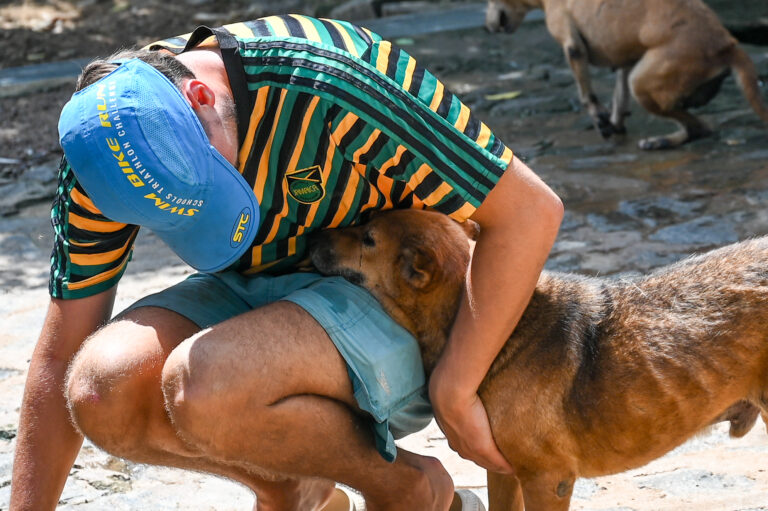
This is the question nobody answers honestly, so here is the honest answer: with wild animals, usually not close at all — and that is the point. The Borneo sun bear project states it plainly in its own program description: “There will be no direct contact with the animals.” Volunteers improve the bears’ living conditions so the bears can be released; they do not pose with them.
With domestic animals the rules are different, and hands-on work is entirely appropriate. Stray dogs, street cats and rescued working horses need handling, grooming, feeding and post-surgery care. That distinction — hands-on with domestic animals, hands-off with wild ones — is the single most useful filter when you are comparing projects.
| Project | Animals | What contact realistically looks like |
|---|---|---|
| Sun Bear Conservation, Malaysia | Bornean sun bears (wild, in rehabilitation) | No direct contact. Den cleaning and food/environmental enrichment |
| Forest Conservation, Madagascar | Lemurs, reptiles, birds, invertebrates (free-living) | Observation only — surveys, species ID, transects, night searches |
| Conservation, New Zealand | Threatened native species (free-living) | Habitat work and monitoring; no handling |
| Wildlife Reserve, South Africa | Big Five, game and birdlife on a 6,000-hectare reserve | Reserve and habitat work; animals viewed at a distance |
| Raptor Conservation, Kenya | Fish eagles, buzzards, vultures | Supervised survey and banding work under permit; veterinary observation |
| Elephant Sanctuary, Thailand | Rescued elephants | Food preparation, habitat and care tasks from a safe distance. No riding, no shows |
| Amazon Animal Rescue, Ecuador | Trafficked and orphaned Amazon wildlife | Food prep, enclosure cleaning and maintenance under staff supervision |
| Dog Care, Sri Lanka | Street dogs (domestic) | Genuinely hands-on — feeding, grooming, socialising, care support |
| Animal Care, Portugal | Street cats (domestic) | Hands-on — trap-neuter-return, feeding, cleaning, post-surgery care |
| Horse Sanctuary, Argentina | Rescued cart horses (domestic) | Hands-on — feeding, grooming, sanctuary and land maintenance |
What’s the difference between wildlife conservation and animal welfare?
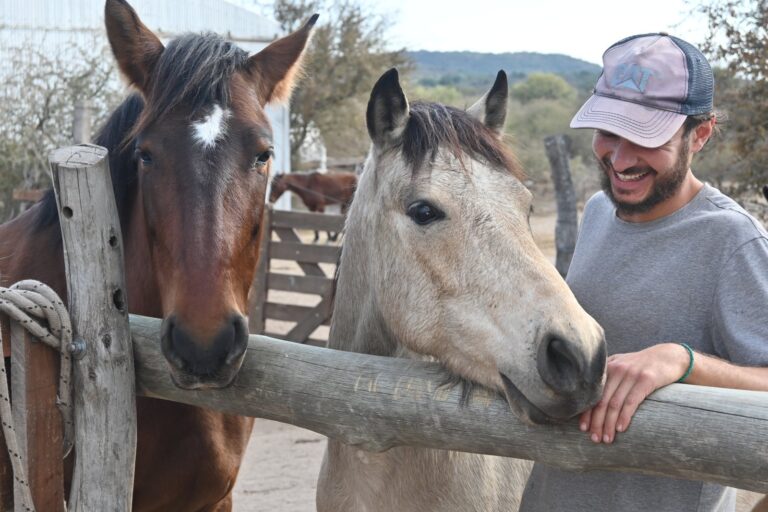
They are often listed together and they are not the same thing. Conservation protects wild populations and the habitat they depend on: tree planting, pest control, surveys, anti-poaching support, rehabilitation for release. Animal welfare improves the lives of individual animals, usually domestic ones: the horse sanctuary near Córdoba, Argentina takes in horses previously used to haul recyclable waste through city streets and gives them 312 hectares to recover on. The Animal Rescue & Rehabilitation Project in Cape Town runs a full veterinary hospital and adoption center for stray dogs and cats in an area where poverty makes pet care impossible.
Both are worth doing. But if your motivation is endangered species and ecosystems, a welfare placement will disappoint you — and if what you actually want is to be around animals every day, a conservation survey placement will too. Choose deliberately.
How much does wildlife conservation volunteering cost?
Program fees for our wildlife and animal projects start at $525 and run to about $1,650, with most one- and two-week placements landing between $600 and $1,300. The fee covers accommodation, in-country support from our teams on the ground, orientation and a contribution to the project; international flights, visas and insurance are separate. Prices below are the current from-price for the minimum stay — always check the program page for current pricing before you budget.
| Country | Project | From (USD) | Min. stay |
|---|---|---|---|
| South Africa | Animal Rescue & Rehabilitation, Cape Town | $525 | 2 weeks |
| New Zealand | Conservation Volunteering | $582 | 1 week |
| Madagascar | Forest Conservation, Nosy Komba | $620 | 2 weeks |
| Sri Lanka | Dog Care Project | $749 | 1 week |
| Thailand | Elephant Sanctuary, Chiang Mai | $840 | 1 week |
| Ecuador | Amazon Animal Rescue Center | $891 | 2 weeks |
| South Africa | Wildlife Reserve Projects | $900 | 1 week |
| Portugal | Animal Care, Porto | $1,043 | 1 week |
| Malaysia | Borneo Wildlife Safari (1 week) | $1,046 | 1 week |
| India | Childcare & Elephant Experience | $1,165 | 2 weeks |
| Costa Rica | Turtles, Wildlife & Permaculture | $1,227 | 2 weeks |
| Kenya | Raptor Conservation & Rehabilitation | $1,250 | 2 weeks |
| Malaysia | Sun Bear Conservation, Borneo | $1,345 | 2 weeks |
| South Africa | Penguin & Marine Bird Rescue | $1,434 | 4 weeks |
| Costa Rica | Wildlife & Animal Rescue Center | $1,543 | 4 weeks |
| Malaysia | Borneo Wildlife Safari & Volunteering | $1,595 | 1 week |
| Argentina | Puma Reserve | $1,650 | 2 weeks |
| Argentina | Horse Sanctuary, Córdoba | $1,650 | 2 weeks |
Two things worth noticing in that table. First, cost tracks the destination’s cost of living far more than it tracks the animals — Argentina and Costa Rica are expensive because Argentina and Costa Rica are expensive, not because pumas cost more than sun bears. Second, remote field camps and specialist veterinary facilities cost more to run than urban shelters. If budget is the binding constraint, read our guides to affordable volunteer abroad programs and whether you can volunteer abroad for free — the second one does the arithmetic on the fee-free alternatives honestly, including where they fall short.
Do you need a science degree or previous experience?
No. Not one of our wildlife projects requires a biology degree, a veterinary qualification or prior conservation experience. What they require is a reasonable level of physical fitness, a willingness to do dirty and repetitive work, and the discipline to follow protocol.
Fitness is a real requirement, not a formality. Madagascar’s forest program states that reaching survey sites involves climbing over rocks and up steep mountain trails. The Penguin & Marine Bird Rescue Center in South Africa asks for volunteers who are comfortable working outdoors and getting their hands dirty. New Zealand’s conservation program asks for a reasonable level of fitness for track work.
On age: most wildlife placements require you to be 18 or over at the time of joining. Two exceptions are worth knowing — the Sri Lanka dog care project accepts volunteers from 16, and the India childcare and elephant experience from 17. If you are under 18 and looking for wildlife work, start with our high school volunteer abroad programs.
When should you go?
For habitat and rescue-center work, any time of year works — the animals need feeding in February and in August alike. For species-specific work, the season decides.
Sea turtle work is the clearest example. On the Costa Rica turtles, wildlife and permaculture project, nesting season for Olive Ridley, Green and Hawksbill turtles runs June to February — night and early-morning beach patrols, nest marking, hatchery work and hatchling releases. From March to May, outside nesting season, volunteers move to permaculture, reforestation and environmental education instead. In Madagascar’s sea turtle monitoring program, nesting runs November to April, and from May to October volunteers work on identifying areas of turtle activity and re-establishing nesting beaches.
The practical lesson: ask what the project does in your travel window, not what it does at its peak. A good project will tell you plainly. If you are specifically drawn to the ocean, our marine conservation volunteering guide covers reefs, turtles and dive requirements in detail.
How do you spot an unethical wildlife project?
Volunteering Solutions is a certified B Corp, and our animal welfare policy is published rather than implied. Use these red flags on any provider, including us.
- Cub petting, walking with lions, or any hands-on session with a big cat. Cubs bred for petting do not go back to the wild; many end up in captive hunting or lifelong captivity.
- Elephant riding, bathing shows or performances. A sanctuary that stages shows is an attraction, not a sanctuary. Our guide to ethical elephant volunteering in Thailand covers this in depth.
- Selfie and close-contact photography sold as a highlight. If animal contact is the marketing hook, the animals are the product.
- “Orphans” that are never released. Ask directly: how many animals were released last year, and to where? A rehabilitation center can answer. A breeding facility changes the subject.
- No answer on where the money goes. You are entitled to a written breakdown of what your fee covers.
- No conservation content at all. A genuine project can explain its research question, its release protocol or its habitat target without being asked twice.
The reverse also holds. Green flags: a stated no-contact rule for wild species, permits named for research work, local staff leading the work, and a project that tells you the unglamorous parts before you book.
Which country should you choose?
If you want big-mammal habitat and reserve work, look at South Africa and Kenya. For rainforest species and rescue centers, Costa Rica, Ecuador and Malaysian Borneo. For island biodiversity and survey work, Madagascar. For Asia’s rescued elephants, Thailand. For a first trip that is easy to organize, New Zealand, Portugal and Sri Lanka combine one-week minimums with straightforward entry requirements.
Short on time? Several of these run from a single week — see our one-week volunteer abroad programs and short-term opportunities. Planning something longer? Start with gap year volunteering or the wider environment and conservation category. For a ranked shortlist of individual projects, see our roundup of the best wildlife conservation volunteer programs.
Frequently asked questions
Can I work directly with lions, tigers or other big cats?
Not on any responsible program. Direct contact with big cats — cub petting, walking with lions, feeding by hand — has no conservation value and is strongly associated with breeding facilities that supply captive hunting. Reputable projects keep volunteers and wild predators separated, and we do not offer hands-on big cat placements.
How much does wildlife conservation volunteering cost?
Our wildlife and animal projects start at $525 for two weeks in South Africa and $582 for one week in New Zealand, with most placements between $600 and $1,300 and specialist or remote projects up to $1,650. Fees cover accommodation, in-country support, orientation and a project contribution. Flights, visas and insurance are extra. Check the program page for current pricing.
Do I need a biology or veterinary degree?
No. None of our wildlife projects require a degree or previous experience. Physical fitness matters more — several projects involve steep terrain, early starts and outdoor work in heat. Specialist tasks such as raptor banding are done under supervision and permit.
How long do I need to go for?
Minimum stays range from one week to four. One-week options include Thailand’s elephant sanctuary, New Zealand conservation, the Sri Lanka dog care project and Borneo wildlife programs. Rescue centers in Costa Rica and the South Africa penguin project ask for four weeks, because training volunteers is only worth it if you stay long enough to be useful.
Is wildlife volunteering actually useful, or is it just tourism?
It depends entirely on the project. Habitat restoration, species monitoring, enclosure enrichment and veterinary support are all real work that centers are chronically short-staffed for. Paid animal contact is not. The test is simple: if the project’s value to you is measured in photographs, its value to the animals is probably zero.
What’s the difference between conservation and animal welfare volunteering?
Conservation protects wild populations and habitat — surveys, planting, pest control, rehabilitation for release. Welfare improves the lives of individual animals, usually domestic ones such as stray dogs, street cats and rescued horses. Hands-on work is normal and appropriate in welfare projects, and a red flag in wild-species projects.
Ready to plan a wildlife placement?
Tell us your dates, your budget and which animals you care about, and our team will tell you honestly which projects fit — including when the answer is “not this one, and here’s why”. You can get in touch here, browse every wildlife conservation program, or read more about who we are — a certified B Corp that has supported more than 25,000 volunteers across 24 countries since 2007.

Saurabh Sabharwal is the founder of Volunteering Solutions and its parent B Corporation, Impact Explorers. He has championed ethical, affordable volunteer travel since 2007 and writes about how to volunteer abroad responsibly.